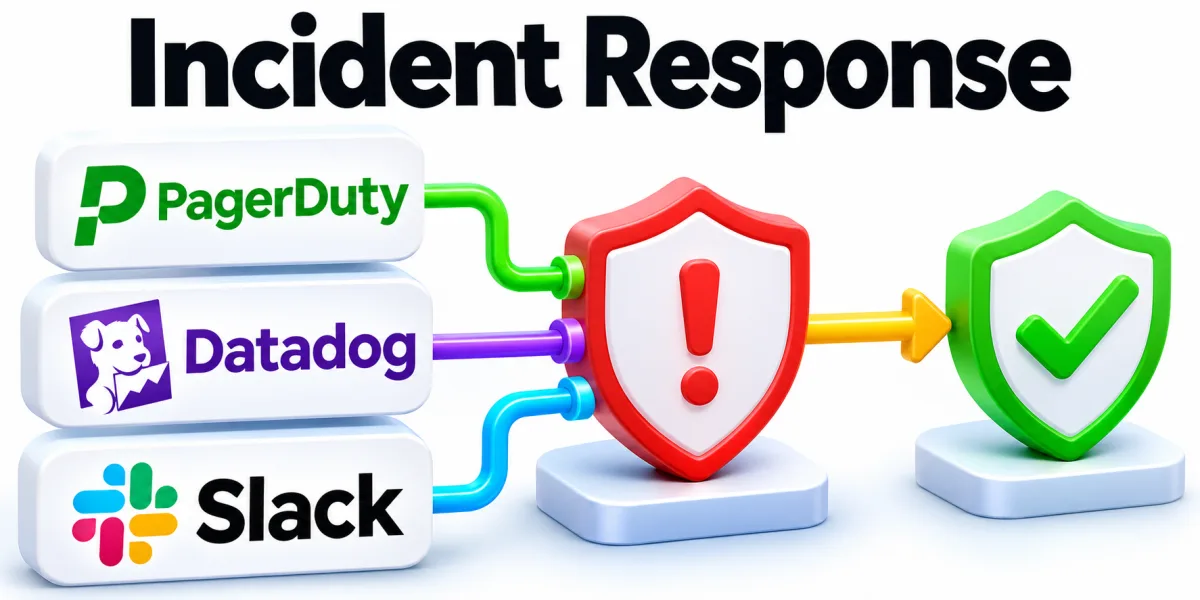
Incident response is the practical work of assessing impact, coordinating mitigation, and restoring dependable service. The details matter most when a decision has consequences for several parts of the business.
Start with the urgent symptoms and record available evidence before making changes that affect recovery. Define the immediate question before deciding how much work to take on.
What Should Responders Do When a Service Fails?

A responder may choose to roll back a recent release while another verifies recovery through key workflows. Document the expected behavior and the signals that would tell the team to investigate further.
Track what each action changes and what evidence supports returning the service to normal operation. Check those signals on a recent case before relying on the same approach more broadly.
Assess and Organize the Response
Record impact, affected services, and recent changes so the team starts from shared observations. Use a representative example and record any assumptions that would limit how broadly the decision applies.
Assign separate responsibility for response coordination, technical investigation, and communication when needed. Confirm the outcome under realistic conditions and note what someone needs to do when the expected result fails.
Mitigate Safely
Choose a reversible step that addresses the current impact and record why it was selected. Run a focused check before applying the same decision across a wider set of cases.
Keep diagnostic evidence available while monitoring for side effects from the mitigation. Record both the expected result and what you observed so another person can evaluate the choice.
Verify Recovery and Hand Off
Test representative user workflows and look for delayed errors before closing the incident. Describe the decision in terms that make sense to both the owner and the people using the result.
Document unresolved work and leave clear ownership for follow-up investigation and corrective changes. Track what changes after implementation and schedule a review once there is enough evidence to compare results.