

Design, implement, integrate, migrate, and govern a CRM around dependable customer data, practical workflows, user adoption, measurable operations, and maintainable custom development for growing B2B organizations across marketing, sales, and service teams.
What CRM Development and Consulting Services Include
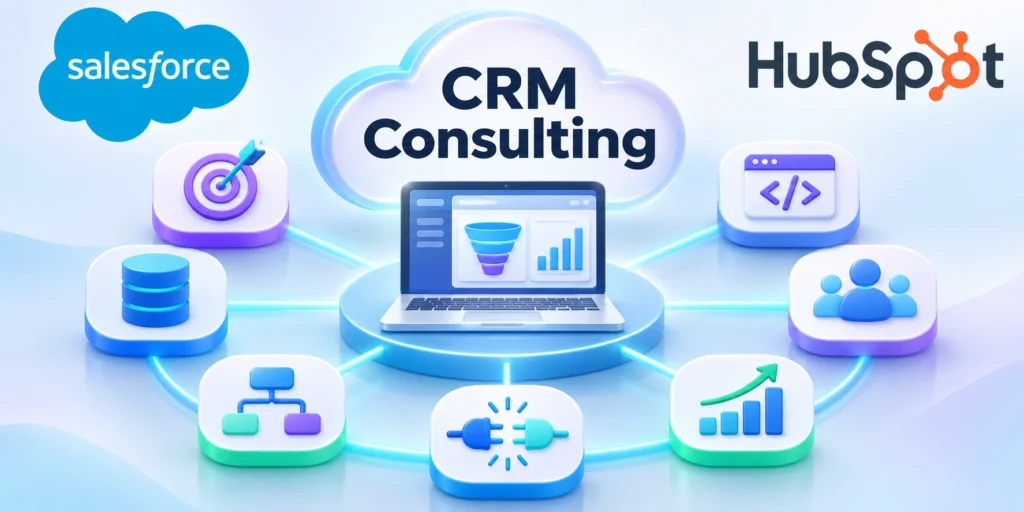
CRM development and consulting services connect customer strategy, data, workflows, integrations, governance, adoption, and platform engineering around measurable commercial outcomes.
The work should improve how teams acquire, serve, retain, and understand customers. Software configuration alone cannot repair unclear ownership or inconsistent operating decisions.
Strategy, implementation, and continuous improvement
An engagement may begin with discovery, platform selection, architecture, migration, custom development, automation, reporting, or an audit of an existing environment.
The correct starting point depends on the decision at risk. A mature organization may need optimization, while a fragmented team may require foundational redesign.
Review these practical points for Strategy implementation continuous:
- Define customer and revenue outcomes
- Map users, processes, and decisions
- Design data and permission models
- Configure workflows and integrations
- Establish adoption and governance routines
Consultants should separate business requirements from historical preferences. Every requested field, stage, object, notification, and integration needs a defensible purpose.
A useful scope names owners, acceptance evidence, dependencies, exclusions, and review dates. This makes progress observable and prevents configuration from becoming an endless backlog.
Evidence for What CRM Development and Consulting Services Include
Preserve the current baseline, representative evidence, named owner, and operating constraints before approving decisions about what crm development and consulting services include.
Validate the proposed approach with affected users and operators. Record exceptions, dependencies, unresolved risks, and the next review decision before expanding scope.
Consider these operating checks for Evidence What CRM:
- What CRM Development and Consulting evidence
- Accountable owner and reviewer
- Known dependencies and constraints
- Acceptance and follow-up decision
The evidence checkpoint keeps what crm development and consulting services include connected to observable results and accountable follow-up.
Outcomes before features
Typical outcomes include faster qualification, cleaner handoffs, consistent follow-up, trustworthy forecasts, shorter service resolution, and fewer manual reconciliations across systems.
Fase Network treats the CRM as an operating system for customer work. Technology choices follow the process, evidence, and governance the organization can sustain.
When a Business Needs CRM Consulting

Organizations usually seek CRM consulting after growth exposes friction between teams, data, tools, or responsibilities. Symptoms often appear separately although they share structural causes.
Common warnings include missed follow-up, duplicate records, unreliable reports, unclear pipeline stages, excessive spreadsheets, weak adoption, and integrations that fail silently.
Diagnose the operating problem first
A consultant should trace each symptom through people, process, data, and technology. Replacing software without this diagnosis may reproduce the same weakness elsewhere.
Interview users who create, update, interpret, and depend on CRM information. Compare stated procedures with actual behavior and system history.
Use these decision criteria for Diagnose operating problem:
- Sales cannot trust pipeline reports
- Marketing lacks lifecycle visibility
- Service misses customer context
- Leaders reconcile conflicting dashboards
- Administrators manage brittle automation
An audit of current CRM workflows can reveal where delays, duplicate work, and unclear decisions accumulate.
Prioritize problems by customer impact, financial exposure, frequency, reversibility, and evidence quality. The loudest complaint is not always the most consequential constraint.
Evidence for When a Business Needs CRM Consulting
Compare the proposed approach with the current operating reality for when a business needs crm consulting. Include customer impact, maintenance effort, reversibility, and internal capability.
Test a representative path before broad adoption. Document results, remaining uncertainty, assigned actions, and conditions that would require revision or escalation.
Compare these priorities for Evidence When Business:
- When a Business Needs CRM evidence
- Operational impact and ownership
- Failure and recovery evidence
- Revision or expansion criteria
The evidence checkpoint keeps when a business needs crm consulting connected to observable results and accountable follow-up.
Situations that justify outside support
Consulting may also help before a merger, migration, product launch, regional expansion, compliance change, or major redesign of marketing, sales, and service operations.
The initial engagement should remain bounded. A short assessment can establish whether the next investment should involve process repair, platform changes, integration, or training.
Define a CRM Strategy and Business Case

A CRM strategy explains which customer outcomes matter, how teams will achieve them, and what information supports the required decisions. It precedes platform design.
The business case should connect present friction with measurable consequences. Examples include delayed response, weak conversion, inaccurate forecasts, avoidable churn, and inefficient service.
Translate goals into operating capabilities
Broad goals such as improving customer experience need operational definitions. Specify the behavior, decision, owner, timing, population, baseline, and expected effect.
Map each outcome to capabilities that the CRM must support. This prevents feature lists from replacing a coherent model of customer work.
Review these practical points for Translate goals into:
- Capture qualified demand consistently
- Assign ownership without delay
- Preserve complete relationship history
- Trigger timely customer actions
- Measure progression and retention
Select a small set of outcome measures and operational health indicators. Document their definitions, data sources, owners, and review cadence before configuring dashboards.
The business case should include implementation effort, migration risk, adoption work, ongoing administration, integration maintenance, and the cost of leaving the problem unresolved.
Evidence for Define a CRM Strategy and Business Case
Make decisions about define a crm strategy and business case traceable to evidence, assumptions, and named responsibilities. Preserve why rejected options did not fit the present context.
Review the result after real use rather than relying only on completion status. Capture support patterns, exceptions, and follow-up work in the operating backlog.
Consider these operating checks for Evidence Define CRM:
- Define a CRM Strategy and evidence
- Option tradeoffs and exclusions
- Observed results and exceptions
- Named follow-up actions
The evidence checkpoint keeps define a crm strategy and business case connected to observable results and accountable follow-up.
Establish boundaries and assumptions
Record assumptions about volume, teams, regions, products, data quality, security, and existing contracts. Test the most influential assumptions before committing to a large program.
Review the case after each implementation phase. Evidence may justify acceleration, redesign, reduced scope, or cancellation without treating the original estimate as a promise.
Select the Right CRM Platform
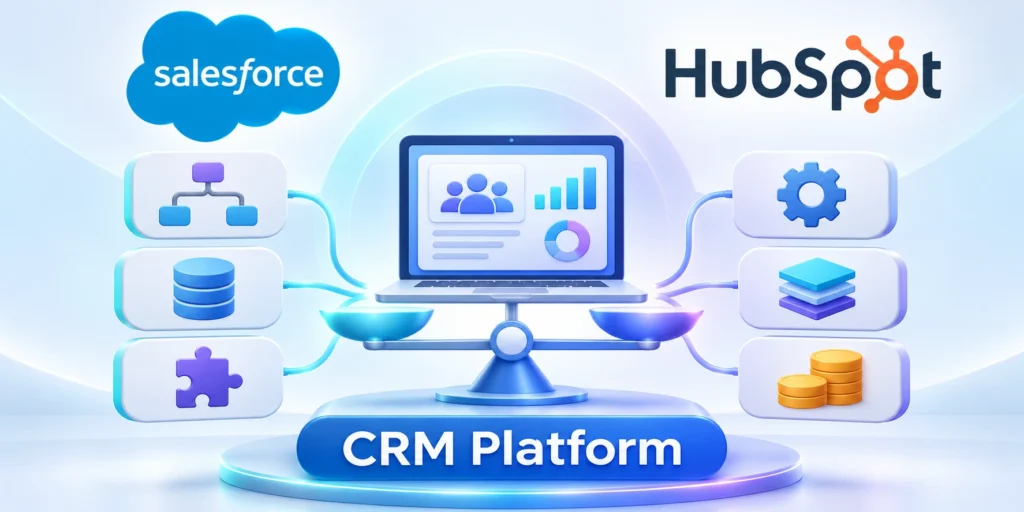
Platform selection should follow requirements, constraints, and operating capacity. Brand familiarity alone cannot determine whether a system fits the organization’s customer model.
Evaluate platforms against representative workflows, data structures, integrations, permissions, reporting needs, extensibility, administration, total cost, and vendor dependencies.
Compare fit with real scenarios
Demonstrations should use realistic scenarios rather than polished generic scripts. Ask vendors to show exceptions, approval paths, data corrections, and administrator maintenance.
A focused HubSpot versus Salesforce comparison can frame important tradeoffs without assuming one platform fits every organization.
| Decision area | Evaluate | Evidence |
|---|---|---|
| Data model | Objects and relationships | Working prototype |
| Operations | Workflow and permissions | Scenario test |
| Ownership | Admin and support effort | Staffing plan |
Score critical requirements separately from preferences. A platform that satisfies every optional request may still fail the few capabilities that determine adoption or control.
Include implementation partners, internal administrators, security, finance, and frontline users in the decision. Each group sees dependencies that a procurement checklist may miss.
Evidence for Select the Right CRM Platform
Define success for select the right crm platform with observable behavior, a representative population, a review date, and an owner who can act on the result.
Separate implementation completion from operational acceptance. A delivered configuration still requires tested behavior, understood limitations, support readiness, and accountable maintenance.
Use these decision criteria for Evidence Select Right:
- Select the Right CRM Platform evidence
- Representative test population
- Support and maintenance owner
- Scheduled evidence review
The evidence checkpoint keeps select the right crm platform connected to observable results and accountable follow-up.
Selection evidence should remain available for future contract, migration, and architecture reviews.
Avoid premature customization
Prototype high-risk scenarios before signing a broad implementation commitment. Test integration behavior, reporting, permission boundaries, and administrator effort with representative data.
The selection record should preserve evaluated options, evidence, assumptions, exclusions, and decision owners. Future teams can then understand why the platform was chosen.
Design the CRM Data Model

The data model defines how the CRM represents people, companies, opportunities, activities, products, subscriptions, cases, and other relationships required by the business.
Poor modeling creates duplicate fields, ambiguous ownership, unreliable reporting, and automation that depends on accidental values. Repair becomes harder as integrations multiply.
Model business concepts explicitly
Begin with the decisions users make and the entities involved. Separate stable identity, changing status, transactional history, and derived measures.
Define every important field with purpose, owner, format, permitted values, source, update method, retention, and downstream consumers. Remove fields without a current use.
Compare these priorities for Model business concepts:
- Identify authoritative customer records
- Define lifecycle and pipeline concepts
- Document object relationships clearly
- Standardize controlled field values
- Assign data stewardship responsibilities
Use custom CRM objects only when standard objects cannot represent a durable business concept without distortion.
Custom objects introduce reporting, integration, permission, and maintenance obligations. Their value should exceed the operational complexity they create for users and administrators.
Evidence for Design the CRM Data Model
Evaluate design the crm data model against customer value, delivery risk, operating cost, internal skill, and future change. Avoid optimizing one dimension while hiding another.
Keep the decision reversible where practical. Preserve migration, transition, rollback, or exit steps before dependencies and production use make correction more expensive.
Review these practical points for Evidence Design CRM:
- Design the CRM Data Model evidence
- Delivery and operational risk
- Internal capability and cost
- Transition and exit path
The evidence checkpoint keeps design the crm data model connected to observable results and accountable follow-up.
Protect semantic consistency
Maintain a compact data dictionary and decision log. Review definitions when products, regions, channels, or processes change rather than allowing local interpretations to spread.
Test the model with real customer journeys and exceptions. A diagram that looks elegant may still fail when one relationship involves several buyers, partners, or contracts.
Plan CRM Implementation in Phases

A phased implementation reduces risk by delivering coherent capabilities in reviewable increments. It avoids a long configuration period followed by one disruptive launch.
Each phase should have an outcome, bounded scope, owners, acceptance evidence, migration plan, training approach, support model, and rollback or remediation path.
Sequence foundations before dependencies
Start with capabilities that establish trustworthy identity, ownership, permissions, and core workflows. Add advanced automation only after the underlying behavior is stable.
The enterprise CRM implementation guide explains how migration and adoption decisions interact across a larger program.
Consider these operating checks for Sequence foundations before:
- Confirm scope and decision rights
- Configure core data structures
- Validate representative workflows
- Migrate controlled data cohorts
- Expand after acceptance evidence
Pilot with a representative group that can expose real exceptions. Avoid choosing only enthusiastic users whose work does not reflect the organization’s hardest conditions.
Define exit criteria before each phase begins. Completion should require tested behavior, reconciled data, trained owners, support readiness, and measured adoption.
Evidence for Plan CRM Implementation in Phases
Preserve the current baseline, representative evidence, named owner, and operating constraints before approving decisions about plan crm implementation in phases.
Validate each implementation phase with affected teams. Record adoption evidence, configuration exceptions, unresolved dependencies, and the next release decision.
Use these decision criteria for Evidence Plan CRM:
- Plan CRM Implementation in Phases evidence
- Accountable owner and reviewer
- Known dependencies and constraints
- Acceptance and follow-up decision
The evidence checkpoint keeps plan crm implementation in phases connected to observable results and accountable follow-up.
Control changes during delivery
Use a change process that records business value, urgency, dependencies, risk, and decision owner. This protects the roadmap without preventing genuinely necessary corrections.
After launch, review incidents, support requests, usage, outcomes, and workarounds. Feed validated improvements into the next phase instead of expanding by assumption.
Develop Custom CRM Objects and Logic

Custom development can represent specialized products, contracts, partner relationships, approvals, entitlements, pricing, or service processes that standard CRM features cannot support cleanly.
The objective is not maximum customization. It is a maintainable extension that preserves platform conventions, user comprehension, auditability, and upgrade resilience.
Define the smallest durable extension
Document the business concept, users, lifecycle, relationships, permissions, reporting needs, integration events, volume, retention, and failure behavior before implementation.
Compare configuration, marketplace products, external applications, and custom code. Select the approach with the best balance of fit, control, cost, and maintenance.
Compare these priorities for Define smallest durable:
- Reuse standard capabilities where suitable
- Isolate custom logic clearly
- Document ownership and dependencies
- Test permissions and bulk behavior
- Monitor errors and processing limits
Complex logic should be deterministic where possible. When several automation tools can update the same record, establish precedence, idempotency, and conflict handling.
Design administrators’ maintenance tasks alongside user workflows. A feature that only its original developer understands creates an operational dependency and future migration cost.
Evidence for Develop Custom CRM Objects and Logic
Compare the proposed approach with the current operating reality for develop custom crm objects and logic. Include customer impact, maintenance effort, reversibility, and internal capability.
Test custom CRM behavior through a representative business path. Document permissions, automation effects, maintenance ownership, and conditions requiring redesign.
Review these practical points for Evidence Develop Custom:
- Develop Custom CRM Objects and evidence
- Operational impact and ownership
- Failure and recovery evidence
- Revision or expansion criteria
The evidence checkpoint keeps develop custom crm objects and logic connected to observable results and accountable follow-up.
Build for change and recovery
Use version control, peer review, test environments, representative data, release notes, monitoring, and rollback procedures appropriate to the platform and business risk.
Review customizations periodically. Retire obsolete fields, code, objects, and automations before they become invisible constraints on reporting, performance, and user behavior.
Automate CRM Workflows Responsibly
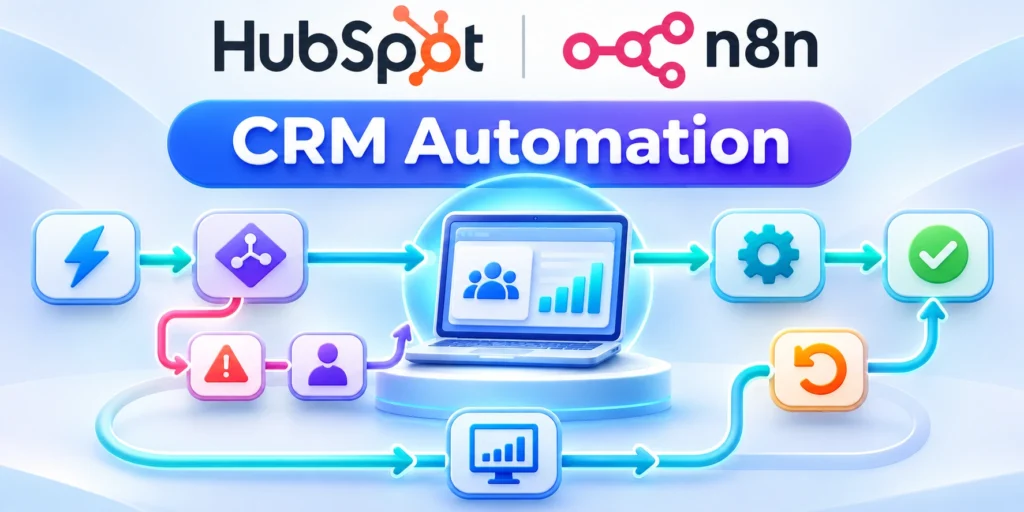
CRM automation can reduce delay, enforce routine controls, and coordinate work across teams. It can also scale bad assumptions and create invisible customer harm.
Automate stable, understood processes before ambiguous ones. Preserve human review wherever context, judgment, fairness, or high-impact exceptions affect the outcome.
Design automation around explicit events
Define each trigger, condition, action, owner, timing, dependency, exception, retry behavior, and completion evidence. Avoid rules whose meaning depends on undocumented field combinations.
Map all automations that can affect the same record. Establish precedence and safeguards so one workflow cannot repeatedly reverse or retrigger another.
Consider these operating checks for Design automation around:
- Name one accountable workflow owner
- Use bounded enrollment criteria
- Prevent repeated unintended actions
- Log failures and manual overrides
- Review performance after changes
Begin with observation or limited cohorts when possible. Compare expected and actual behavior before expanding enrollment to the entire database.
Customer-facing messages require extra care. Verify consent, timing, suppression, personalization, frequency, and handoff paths before allowing automation to communicate at scale.
Evidence for Automate CRM Workflows Responsibly
Make decisions about automate crm workflows responsibly traceable to evidence, assumptions, and named responsibilities. Preserve why rejected options did not fit the present context.
Review automation after real operational use. Capture exceptions, incorrect routing, manual recovery, and follow-up improvements in the CRM backlog.
Use these decision criteria for Evidence Automate CRM:
- Automate CRM Workflows Responsibly evidence
- Option tradeoffs and exclusions
- Observed results and exceptions
- Named follow-up actions
The evidence checkpoint keeps automate crm workflows responsibly connected to observable results and accountable follow-up.
Preserve an understandable control model
Create a register with purpose, owner, dependencies, inputs, outputs, risk, monitoring, and last review. Archive disabled workflows only after documenting replacement or retirement.
Measure operational outcomes rather than activity volume. More automated actions are not valuable when they increase confusion, duplicate outreach, or unreliable records.
Design Pipelines, Lead Routing, and SLAs
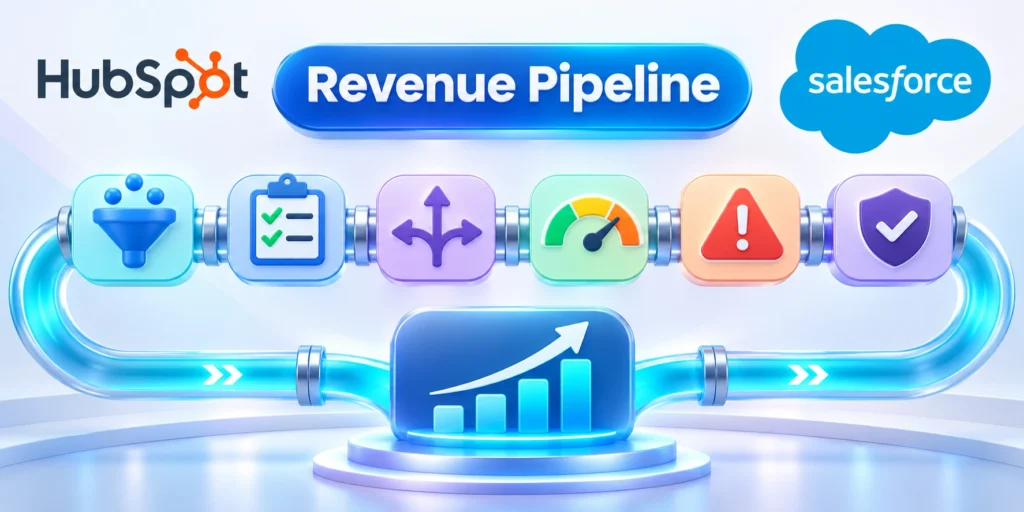
Pipelines translate commercial work into observable stages, responsibilities, and decisions. They should reflect meaningful commitments rather than every internal activity.
Lead routing and service-level agreements then connect each qualified event with an owner, response expectation, exception path, and escalation rule.
Define stages with entry and exit evidence
For every stage, document purpose, required evidence, permitted transitions, owner, aging expectation, and reasons for loss, closure, or disqualification.
Avoid stages that describe vague effort, such as working or engaged. Users need criteria they can apply consistently across teams, regions, and reporting periods.
Compare these priorities for Define stages entry:
- Use evidence-based stage definitions
- Route with transparent priority rules
- Record assignment and reassignment events
- Escalate unowned qualified demand
- Audit SLA exceptions regularly
Routing should consider territory, segment, product, language, capacity, account ownership, and customer context without producing a rule maze administrators cannot maintain.
Use a fallback queue and accountable monitor. Every automation path must handle missing, contradictory, or unexpected values without silently abandoning the record.
Evidence for Design Pipelines, Lead Routing, and SLAs
Define success for design pipelines, lead routing, and slas with observable behavior, a representative population, a review date, and an owner who can act on the result.
Treat configured pipelines as provisional until teams use them. Verify definitions, routing, SLA behavior, escalation, reporting, and accountable ownership.
Review these practical points for Evidence Design Pipelines:
- Design Pipelines Lead Routing and evidence
- Representative test population
- Support and maintenance owner
- Scheduled evidence review
The evidence checkpoint keeps design pipelines, lead routing, and slas connected to observable results and accountable follow-up.
Align incentives with data quality
Review conversion, velocity, aging, reassignment, and exception patterns. Investigate changes in definitions or populations before interpreting movements as performance improvements.
Train managers to coach with the same definitions used by dashboards. Conflicting local interpretations quickly weaken adoption and forecast credibility.
Integrate CRM With Business Systems

CRM integrations connect customer data with marketing, finance, support, product, identity, analytics, commerce, and operational systems. Each connection expands both value and risk.
Integration design should specify authority, direction, timing, transformations, identity matching, consent, failure handling, replay, monitoring, security, and ownership.
Establish contracts before connectors
Define the business event and information contract independently of a specific tool. This reduces accidental coupling and clarifies what each system promises.
The guide to custom API integrations for HubSpot demonstrates how authentication, rate limits, retries, and observability shape dependable delivery.
Consider these operating checks for Establish contracts before:
- Name the system of record
- Define canonical identifiers
- Validate transformed field values
- Make repeated events safe
- Reconcile missed or conflicting updates
Prefer supported APIs and event mechanisms over fragile scraping or undocumented behavior. Record version dependencies and vendor limits that affect reliability.
Design monitoring for business completeness, not only transport success. A request can return successfully while creating the wrong owner, currency, lifecycle, or consent state.
Evidence for Integrate CRM With Business Systems
Evaluate integrate crm with business systems against customer value, delivery risk, operating cost, internal skill, and future change. Avoid optimizing one dimension while hiding another.
Keep integrations recoverable through documented replay and fallback procedures. Preserve field mappings, ownership, monitoring, and transition steps before increasing dependency.
Use these decision criteria for Evidence Integrate CRM:
- Integrate CRM With Business Systems evidence
- Delivery and operational risk
- Internal capability and cost
- Transition and exit path
The evidence checkpoint keeps integrate crm with business systems connected to observable results and accountable follow-up.
Plan for partial failure
Use dead-letter handling, bounded retries, alerts, correlation identifiers, and reconciliation reports appropriate to volume and criticality. Assign an owner for every alert.
Test permission changes, expired credentials, duplicate events, reordered messages, time zones, deletions, and downstream outages before declaring the integration ready.
Migrate and Clean CRM Data

CRM migration is a controlled transfer of business meaning, not a bulk file import. Historical records often contain inconsistent identities, definitions, ownership, and consent.
The migration plan should identify sources, populations, mappings, transformations, exclusions, retention, reconciliation, acceptance evidence, cutover steps, and rollback boundaries.
Profile data before mapping it
Measure completeness, uniqueness, formats, value distributions, relationships, age, ownership, and conflicts. Samples alone may hide problems concentrated in older or regional records.
Classify data by operational need, legal requirement, analytical value, migration risk, and confidence. Not every historical field deserves a place in the target system.
Compare these priorities for Profile data before:
- Inventory every source and owner
- Define identity resolution rules
- Normalize controlled values carefully
- Preserve required relationship history
- Reconcile counts and critical totals
A Salesforce-to-HubSpot migration guide provides a useful example of planning mappings, testing, and cutover without assuming identical platform models.
Clean data with reversible transformations where practical. Preserve source extracts, mapping decisions, exceptions, and validation results outside the production CRM.
Evidence for Migrate and Clean CRM Data
Preserve the current baseline, representative evidence, named owner, and operating constraints before approving decisions about migrate and clean crm data.
Validate migrated records with business and technical owners. Record reconciliation gaps, duplicate patterns, missing history, and the next cleanup decision.
Review these practical points for Evidence Migrate Clean:
- Migrate and Clean CRM Data evidence
- Accountable owner and reviewer
- Known dependencies and constraints
- Acceptance and follow-up decision
The evidence checkpoint keeps migrate and clean crm data connected to observable results and accountable follow-up.
Rehearse cutover with representative cohorts
Run trial migrations in controlled environments. Validate relationships, activities, owners, permissions, reports, automations, and integrations using realistic records and exceptions.
After cutover, freeze or govern legacy changes, monitor exceptions, support users, and reconcile high-value populations. Decommission old access only after obligations are satisfied.
Govern CRM Access, Privacy, and Data Quality

CRM governance defines who can access, change, export, integrate, retain, and interpret customer information. It connects business ownership with technical controls.
The organization should apply least privilege, separation of duties, approval, monitoring, retention, and periodic review according to risk and applicable obligations.
Assign stewardship to business data
Administrators can configure controls, but business owners must define valid use, quality expectations, retention, and accountability for important customer data.
The CRM data governance guide explains how ownership and definitions support a dependable source of truth.
Consider these operating checks for Assign stewardship business:
- Review roles and permissions periodically
- Remove access after role changes
- Monitor exports and integrations
- Define retention and deletion paths
- Measure critical data quality
Data quality controls should focus on decisions and customer impact. A field can be complete yet wrong, outdated, duplicated, or collected without a valid purpose.
Use validation, controlled values, duplicate management, stewardship queues, and exception reporting selectively. Excessive friction encourages users to bypass the system.
Evidence for Govern CRM Access, Privacy, and Data Quality
Compare the proposed approach with the current operating reality for govern crm access, privacy, and data quality. Include customer impact, maintenance effort, reversibility, and internal capability.
Test a representative restricted workflow. Document access exceptions, sensitive fields, retention concerns, remediation ownership, and escalation conditions.
Use these decision criteria for Evidence Govern CRM:
- Govern CRM Access Privacy and evidence
- Operational impact and ownership
- Failure and recovery evidence
- Revision or expansion criteria
The evidence checkpoint keeps govern crm access, privacy, and data quality connected to observable results and accountable follow-up.
Treat governance as operating work
Document incident and correction paths. Teams need to know how to report inappropriate access, inaccurate records, consent errors, and harmful automation quickly.
Review vendors, applications, credentials, permissions, and data flows together. A secure CRM interface cannot compensate for uncontrolled connected tools or exports.
Build CRM Reporting and Executive Dashboards

CRM reporting should answer defined decisions with understood populations, timing, and limitations. Attractive dashboards cannot repair inconsistent stages or missing operational data.
Begin with the question a user must answer, the action that follows, and the acceptable delay. Then define measures, dimensions, filters, ownership, and validation.
Create a governed metric layer
Document each important metric with formula, source fields, inclusion rules, exclusions, time basis, owner, and review cadence. Preserve changes to definitions.
Separate operational monitoring from executive performance reporting. Frontline teams need actionable queues, while leaders need stable trends and explicit uncertainty.
Compare these priorities for Create governed metric:
- Confirm metric purpose and audience
- Use consistent lifecycle definitions
- Expose data freshness clearly
- Reconcile critical totals independently
- Annotate material definition changes
Test reports against representative records and known edge cases. Compare CRM results with controlled source evidence before treating dashboards as authoritative.
Limit dashboards to measures that support decisions. A smaller, trusted view is more useful than dozens of charts that invite conflicting interpretations.
Evidence for Build CRM Reporting and Executive Dashboards
Make decisions about build crm reporting and executive dashboards traceable to evidence, assumptions, and named responsibilities. Preserve why rejected options did not fit the present context.
Review dashboards with the leaders who act on them. Capture definition disputes, missing context, unreliable fields, and improvements in the reporting backlog.
Review these practical points for Evidence Build CRM:
- Build CRM Reporting and Executive evidence
- Option tradeoffs and exclusions
- Observed results and exceptions
- Named follow-up actions
The evidence checkpoint keeps build crm reporting and executive dashboards connected to observable results and accountable follow-up.
Preserve context around changes
Add annotations for migrations, stage redesigns, product launches, territory changes, outages, and major campaigns. Context prevents teams from inventing explanations after the fact.
Review unused reports and subscriptions. Retiring stale dashboards reduces noise, protects sensitive information, and focuses maintenance on decisions that still matter.
Drive CRM Adoption and Change Management
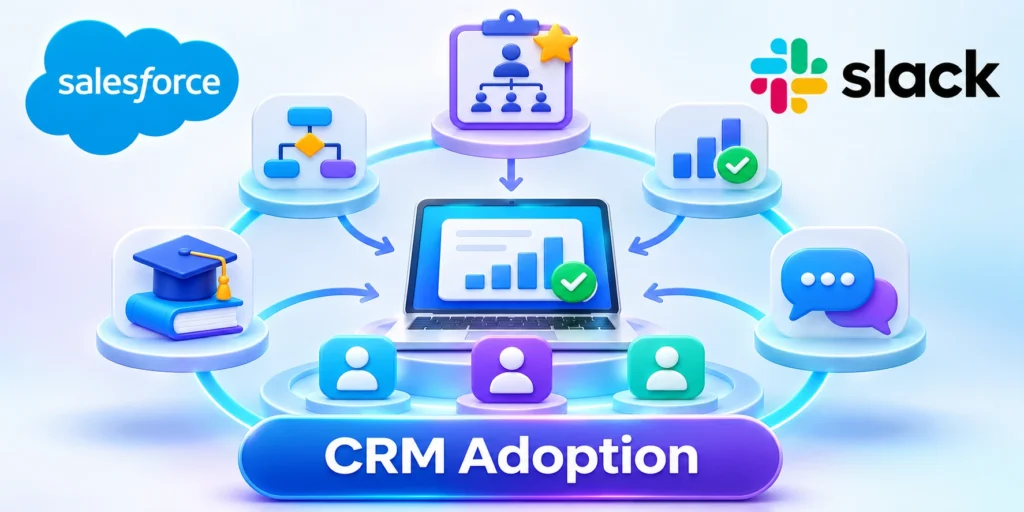
CRM adoption means users perform important work accurately and consistently in the system. Login counts alone do not demonstrate effective use or improved outcomes.
Adoption depends on clear purpose, practical workflows, manager behavior, training, support, feedback, incentives, and visible correction of unnecessary friction.
Design change with users, not around them
Include representative users during discovery, prototypes, acceptance, and rollout. Their feedback should inform decisions without turning configuration into individual preference collection.
Explain what changes, why it matters, who owns each activity, and how users receive help. Managers must reinforce the same operating expectations.
Consider these operating checks for Design change users:
- Train with realistic job scenarios
- Provide role-specific quick guidance
- Staff launch support visibly
- Track errors and workarounds
- Improve friction through evidence
Use adoption measures tied to required behavior, such as timely ownership, complete stage evidence, resolved exceptions, and reliable customer history.
Avoid punishing users for system defects or unclear rules. Separate unwillingness, insufficient training, workflow friction, and technical failure before choosing an intervention.
Evidence for Drive CRM Adoption and Change Management
Define success for drive crm adoption and change management with observable behavior, a representative population, a review date, and an owner who can act on the result.
Operational acceptance requires demonstrated adoption. Confirm role-based training, support coverage, feedback channels, reinforcement ownership, and measurable behavior change.
Use these decision criteria for Evidence Drive CRM:
- Drive CRM Adoption and Change evidence
- Representative test population
- Support and maintenance owner
- Scheduled evidence review
The evidence checkpoint keeps drive crm adoption and change management connected to observable results and accountable follow-up.
Make managers part of the control system
Give managers useful views and a review cadence. Teach them how to interpret exceptions, correct behavior, and escalate design problems without encouraging cosmetic data entry.
Continue enablement after launch. New products, staff, processes, and integrations change what users need, so adoption requires ongoing ownership rather than one training event.
Align CRM With Revenue Operations
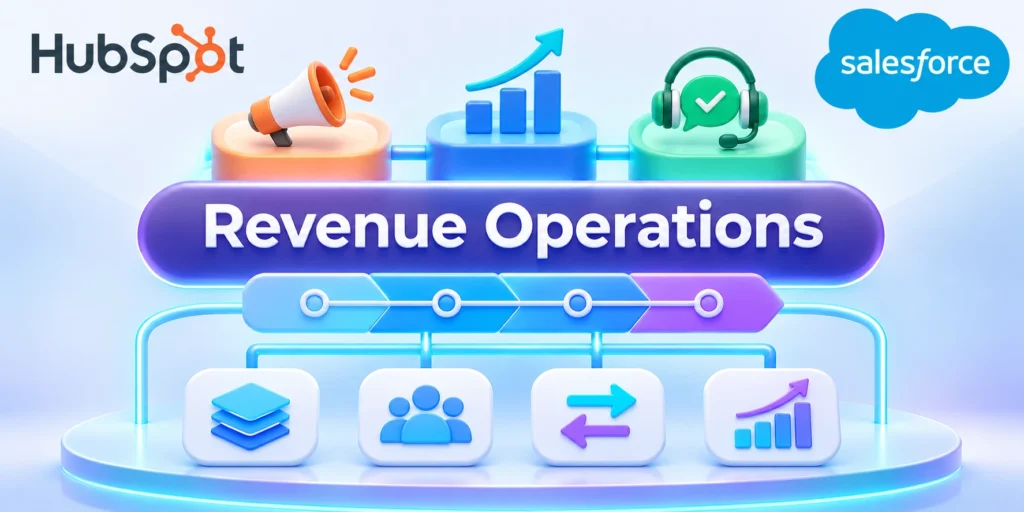
Revenue operations aligns marketing, sales, service, finance, and leadership around shared customer processes, definitions, ownership, and evidence. The CRM supports this model but cannot substitute for it.
Alignment begins with the customer journey and commercial decisions. Departmental convenience should not create conflicting lifecycle stages, identifiers, or performance claims.
Establish shared operating definitions
Define qualified demand, ownership, handoff, opportunity, customer, expansion, renewal, churn, and service commitments with the teams that create and consume those states.
Document where accountability changes and what evidence accompanies each handoff. A notification is insufficient when the receiving team lacks context or capacity.
Compare these priorities for Establish shared operating:
- Use one governed lifecycle model
- Define cross-team handoff evidence
- Reconcile shared customer identifiers
- Align dashboards with decisions
- Review exceptions across functions
Connect planning and measurement to the same definitions. When finance, marketing, and sales use different populations, discussions become reconciliation exercises rather than decisions.
Assign a cross-functional forum to resolve semantic and process conflicts. It should have authority, a bounded agenda, evidence, and named decision owners.
Evidence for Align CRM With Revenue Operations
Evaluate align crm with revenue operations against customer value, delivery risk, operating cost, internal skill, and future change. Avoid optimizing one dimension while hiding another.
Keep revenue operations governance adaptable. Preserve lifecycle definitions, routing rules, metric ownership, exception handling, and change records as the business evolves.
Review these practical points for Evidence Align CRM:
- Align CRM With Revenue Operations evidence
- Delivery and operational risk
- Internal capability and cost
- Transition and exit path
The evidence checkpoint keeps align crm with revenue operations connected to observable results and accountable follow-up.
Avoid centralizing every decision
Use governance proportional to impact. High-risk lifecycle, ownership, and financial definitions deserve stronger controls than optional display preferences or personal views.
Measure whether alignment reduces delays, disputes, rework, and customer repetition. The goal is smoother value delivery, not simply a larger central administration team.
Optimize and Support the CRM Continuously
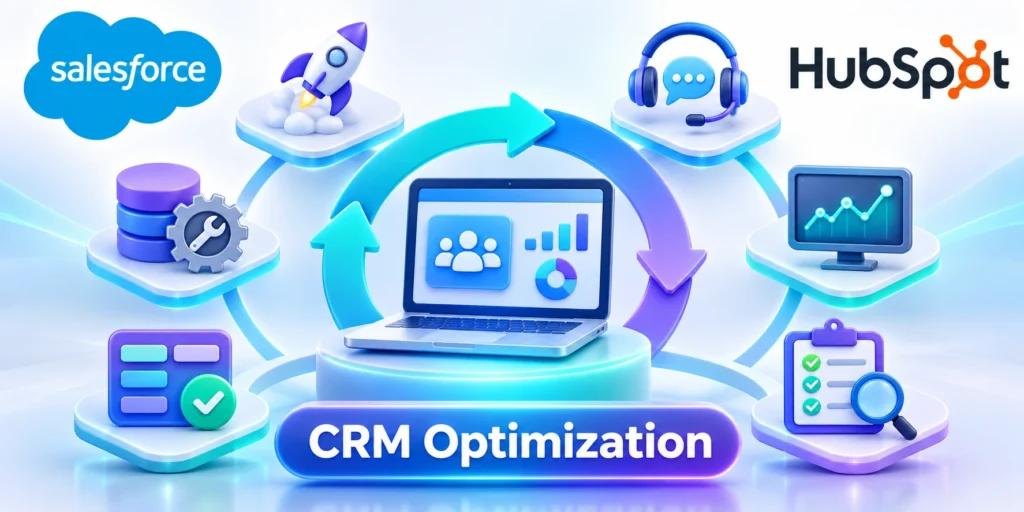
A CRM changes as teams, products, markets, regulations, vendors, and customer expectations evolve. Without ongoing care, fields, workflows, permissions, and reports accumulate debt.
Continuous support should combine incident response, administration, release management, enhancement prioritization, governance, training, and periodic architecture review.
Separate support from improvement work
Define intake paths and service expectations for incidents, access requests, data corrections, questions, and enhancements. Classify each request before assigning urgency.
Maintain a backlog with business value, risk, dependencies, effort, owner, and acceptance evidence. Avoid prioritizing solely by requester seniority or repeated escalation.
Consider these operating checks for Separate support improvement:
- Monitor automation and integration failures
- Review permissions and inactive access
- Retire obsolete fields and reports
- Test vendor release impacts
- Measure support patterns and causes
Use recurring health reviews to identify repeated incidents, workarounds, slow workflows, data drift, unused features, and customizations that no longer justify their cost.
Support documentation should explain current behavior, known limitations, recovery, ownership, and recent changes. Keep it close to the operational team that maintains the system.
Evidence for Optimize and Support the CRM Continuously
Preserve the current baseline, representative evidence, named owner, and operating constraints before approving decisions about optimize and support the crm continuously.
Validate optimization priorities with users, administrators, and leaders. Record friction, business impact, technical debt, and the next improvement review.
Use these decision criteria for Evidence Optimize Support:
- Optimize and Support the CRM evidence
- Accountable owner and reviewer
- Known dependencies and constraints
- Acceptance and follow-up decision
The evidence checkpoint keeps optimize and support the crm continuously connected to observable results and accountable follow-up.
Control the release lifecycle
Use separate environments and representative test data when the platform supports them. Protect sensitive information and avoid copying production data without a justified control.
Review the operating model annually or after major change. Decide whether skills, contracts, architecture, and governance still match the organization’s actual dependency on the CRM.
Estimate CRM Consulting Cost and Timeline

CRM consulting cost depends on scope, platform, data, integrations, customization, users, regions, governance, compliance, training, and the quality of existing documentation.
Timeline estimates depend on decision speed, stakeholder availability, data readiness, test evidence, vendor access, migration windows, and the number of unresolved dependencies.
Estimate by evidence and delivery phase
Begin with a bounded assessment that produces scope options, risks, assumptions, and a recommended sequence. Estimate later phases with the evidence gained during discovery.
Separate one-time implementation from licenses, ongoing administration, integration operations, training, support, optimization, and future platform changes.
Compare these priorities for Estimate by evidence:
- Discovery and operating design
- Configuration and custom development
- Integration and migration work
- Testing, training, and launch
- Support and continuous improvement
Compare options by expected outcome, risk, reversibility, internal effort, and total ownership cost. The lowest implementation price may create the highest maintenance burden.
Use ranges with assumptions instead of false precision. State what can change the estimate and when the organization will revisit it.
Evidence for Estimate CRM Consulting Cost and Timeline
Compare the proposed approach with the current operating reality for estimate crm consulting cost and timeline. Include customer impact, maintenance effort, reversibility, and internal capability.
Test estimates through bounded discovery. Document assumptions, integration complexity, migration uncertainty, client responsibilities, and conditions that change cost or timing.
Review these practical points for Evidence Estimate CRM:
- Estimate CRM Consulting Cost and evidence
- Operational impact and ownership
- Failure and recovery evidence
- Revision or expansion criteria
The evidence checkpoint keeps estimate crm consulting cost and timeline connected to observable results and accountable follow-up.
Protect the critical path
Track dependencies separately from task completion. A configured workflow cannot be accepted when identity rules, source data, permissions, or receiving teams remain unresolved.
Maintain contingency for representative defects and migration reconciliation. Compressing validation near launch often transfers schedule risk into customer-facing operations.
Choose a CRM Development Partner

A suitable CRM partner combines business analysis, platform knowledge, data engineering, integration, change management, governance, and clear communication without forcing unnecessary scope.
Evaluate how the partner diagnoses problems, explains tradeoffs, controls quality, transfers knowledge, handles limitations, and supports the organization after launch.
Request evidence that matches the engagement
Ask candidates to discuss comparable complexity, methods, deliverables, roles, assumptions, testing, security, migration, adoption, and support. References should illuminate behavior, not guarantee results.
Use a representative scenario during selection. Observe whether the partner asks about outcomes, users, data, ownership, exceptions, and operations before recommending configuration.
Consider these operating checks for Request evidence that:
- Named accountable delivery roles
- Clear scope and change controls
- Practical testing and acceptance plan
- Knowledge transfer and documentation
- Transparent risks and dependencies
Confirm who performs architecture, configuration, development, migration, training, and support. Avoid proposals that depend on unnamed specialists appearing after signature.
Contracts should describe deliverables, acceptance, access, intellectual property, confidentiality, data handling, subcontractors, termination, and transition assistance according to risk.
Evidence for Choose a CRM Development Partner
Make decisions about choose a crm development partner traceable to evidence, assumptions, and named responsibilities. Preserve why rejected options did not fit the present context.
Review partner capability through a representative workshop or pilot. Capture process understanding, technical judgment, transparency, and the decision to continue or stop.
Use these decision criteria for Evidence Choose CRM:
- Choose a CRM Development Partner evidence
- Option tradeoffs and exclusions
- Observed results and exceptions
- Named follow-up actions
The evidence checkpoint keeps choose a crm development partner connected to observable results and accountable follow-up.
Prefer maintainable decisions
Evaluate recommendations against platform conventions and future operations. Custom work should have a documented reason, owner, test strategy, and retirement path.
Choose the partner whose approach fits the organization’s decisions and capacity. Brand badges matter less than disciplined evidence, communication, and sustainable delivery.
Create a CRM Requirements Brief

A CRM requirements brief should describe customer work, decisions, data, users, controls, and evidence without pretending every implementation detail is already known.
Its purpose is to support discovery and comparison. It should expose uncertainty and decision ownership rather than freeze early assumptions into a procurement checklist.
Describe outcomes and users
State the customer or business outcome, current friction, affected population, baseline, owner, and expected decision. Separate required outcomes from preferred features.
Identify each user group and the work it performs. Include administrators, managers, analysts, support teams, integration owners, and occasional users affected by CRM information.
Compare these priorities for Describe outcomes users:
- Name the outcome and baseline
- List user roles and decisions
- Describe current process failures
- Identify customer impact and urgency
- Assign requirement decision owners
Use representative scenarios to show how work begins, changes ownership, encounters exceptions, and concludes. Scenarios reveal gaps that isolated feature statements often hide.
Document what will remain outside the CRM. The brief should prevent the platform from becoming an accidental replacement for every operational system.
Define data and integration boundaries
List important entities, identifiers, lifecycle states, sources, consumers, volumes, retention, sensitivity, and quality concerns. Mark uncertain ownership or definitions explicitly.
For each integration, describe the business event, direction, timing, required fields, authority, reconciliation, monitoring, and team responsible for failures.
Express controls and acceptance evidence
Describe permission boundaries, approvals, segregation, audit needs, retention, deletion, consent, and reporting obligations according to the organization’s actual risk.
Define how users and reviewers will recognize acceptable behavior. Include normal paths, important exceptions, bulk operations, correction, recovery, and administrator maintenance.
Review these practical points for Express controls acceptance:
- Specify permission and approval boundaries
- Define representative acceptance scenarios
- Include failure and recovery expectations
- Name training and support owners
- Record reporting definition owners
Avoid absolute requirements without context. Words such as real-time, seamless, flexible, secure, and intuitive need observable definitions and justified tolerances.
Prioritize requirements by outcome, risk, dependency, and timing. A short set of critical capabilities supports a better decision than hundreds of unranked requests.
Keep the brief changeable
Record the reason, owner, impact, and date when important requirements change. This preserves decision history without treating the original document as permanent truth.
Use the brief to compare options, scope prototypes, and guide acceptance. It should remain understandable to business owners and technical teams throughout delivery.
Measure CRM Program Success

CRM program success should combine customer outcomes, operational performance, data reliability, adoption, system health, and delivery evidence. No single dashboard provides the complete answer.
Measures should support decisions and corrective action. Avoid rewarding activity that users can inflate without improving customer work or commercial reliability.
Build a balanced measurement model
Select a small set of outcome measures and leading operational indicators. Document definition, population, source, owner, frequency, limitations, and expected response.
Compare measures with baselines and controlled cohorts when practical. Note migrations, process changes, campaigns, product shifts, and definition changes that affect interpretation.
Consider these operating checks for Build balanced measurement:
- Customer response and resolution time
- Qualified handoff completion rate
- Pipeline progression and aging
- Critical data quality exceptions
- Automation and integration reliability
Adoption measures should describe required behavior, not merely access. Examples include timely ownership, complete stage evidence, resolved exceptions, and consistent customer history.
System health should include failed automation, integration backlog, permission exceptions, duplicate creation, support volume, deployment defects, and recovery evidence.
Connect measures with ownership
Create review cadences appropriate to each decision. Frontline queues may require daily attention, while architecture and platform ownership need less frequent strategic review.
Assign investigation before assigning blame. A negative movement may result from changed populations, stronger detection, delayed data, system defects, or genuinely weaker performance.
Evaluate delivery and long-term value
Track whether implementation phases meet acceptance, migration reconciliation, training, support readiness, and recovery expectations. Schedule alone does not demonstrate a successful release.
Review total ownership effort across licensing, administration, integration, data stewardship, support, optimization, and vendor management. Compare this effort with outcomes the CRM enables.
Use these decision criteria for Evaluate delivery long-term:
- Validate phase acceptance evidence
- Monitor support demand after launch
- Review benefits against assumptions
- Measure maintenance and ownership effort
- Retire features without demonstrated value
Benefits should remain attributable where possible. Avoid claiming that CRM changes alone caused revenue movements influenced by pricing, product, market, staffing, or campaigns.
Use quarterly or phase-based reviews to continue, expand, revise, or stop investments. Honest reassessment protects resources and keeps the platform aligned with current work.
Preserve an evidence trail
Maintain definitions, baselines, decisions, release notes, and review outcomes outside individual dashboards. This supports continuity when staff or reporting tools change.
A disciplined measurement model turns CRM optimization into operating work. It also prevents occasional executive attention from replacing consistent ownership and learning.
Choose the Next CRM Step
The most useful next step depends on whether the primary uncertainty concerns strategy, platform fit, data, workflow, integration, migration, adoption, or governance.
Avoid beginning with a broad implementation proposal when the organization cannot yet state the customer outcome, affected users, owner, and acceptance evidence.
Prepare a bounded CRM assessment
Collect the current platform, major workflows, user groups, data sources, integrations, reports, known incidents, business constraints, and the decision leadership needs to make.
Include a few representative records and scenarios without sending sensitive production information unnecessarily. Evidence should clarify the problem while respecting access controls.
Compare these priorities for Prepare bounded CRM:
- Name the customer outcome at risk
- Identify affected teams and owners
- Describe current systems and contracts
- List known failures and workarounds
- Define the first acceptance checkpoint
The assessment should produce options, tradeoffs, risks, dependencies, priorities, and a recommended path. A larger engagement follows only when evidence supports it.
No partner can responsibly guarantee adoption, conversion, or data quality without conditions. Recommendations should state assumptions, responsibilities, and review triggers clearly.
Evidence for Choose the Next CRM Step
Define success for choose the next crm step with observable behavior, a representative population, a review date, and an owner who can act on the result.
Separate proposal completion from CRM readiness. Confirm the first outcome, accountable owner, baseline evidence, decision boundary, and scheduled review before implementation.
Review these practical points for Evidence Choose Next:
- Choose the Next CRM Step evidence
- Representative test population
- Support and maintenance owner
- Scheduled evidence review
The evidence checkpoint keeps choose the next crm step connected to observable results and accountable follow-up.
Contact Fase Network
Use the Fase Network contact page to share the current CRM, business outcome, affected teams, known constraints, and decision your organization needs to make.
We will review the context and propose a focused starting point. Any implementation plan should connect configuration with data, ownership, adoption, and measurable customer work.
FAQ
What do CRM consulting services include?
CRM consulting can include strategy, platform selection, implementation, data modeling, migration, integration, automation, reporting, governance, adoption, support, and custom development.
When should a company replace its CRM?
Replacement is appropriate when verified requirements, risk, ownership cost, or platform constraints justify migration. Process and data problems should be diagnosed before changing software.
How long does CRM implementation take?
Timing depends on scope, users, data, integrations, customization, testing, decisions, training, and launch risk. Phased delivery improves estimates as evidence becomes available.
Can Fase Network develop custom CRM functionality?
Yes. Custom objects, logic, interfaces, integrations, and workflows can be developed when standard configuration cannot meet a validated business requirement sustainably.
How should a business choose between HubSpot and Salesforce?
Compare representative workflows, data, extensibility, administration, integrations, reporting, governance, adoption, total cost, and operating capacity instead of relying on brand assumptions.
What makes CRM data migration risky?
Risk comes from inconsistent identity, relationships, definitions, ownership, consent, transformations, automation, integrations, and weak reconciliation across source and target systems.
How can a company improve CRM adoption?
Clarify purpose, simplify workflows, involve representative users, train by role, align managers, support launch, measure required behavior, and correct evidence-backed friction continuously.
Does CRM automation require human oversight?
Yes. Owners should review assumptions, failures, exceptions, customer impact, consent, and performance, especially when automation makes high-impact or customer-facing decisions.
What information is needed for a CRM assessment?
Useful inputs include outcomes, users, workflows, platforms, data sources, integrations, reports, incidents, workarounds, contracts, owners, constraints, and the decision requiring support.
Can an existing CRM be improved without replacement?
Often yes. Teams can repair definitions, data, permissions, workflows, integrations, dashboards, training, and governance before deciding whether platform constraints require migration.
Contact Us on LinkedIn
Discuss your CRM Development Consulting Services priorities directly through LinkedIn.
 Sergio TimóteoConsulting EngineerDigital Marketing Strategist, CRM Certified Professional, SEO Expert, AI, Social Media, Paid Ads, Real Estate, B2C and B2B Sales. 22+ Years Growing Businesses and Startups with Technology and Innovation.LinkedIn profile