

Plan enterprise AI with consulting services for strategy, use cases, agents, knowledge systems, CRM integration, governance, pilots, production, adoption, and measurable business outcomes across marketing, sales, service, operations, and responsible enterprise transformation.
What Artificial Intelligence Consulting Services Include
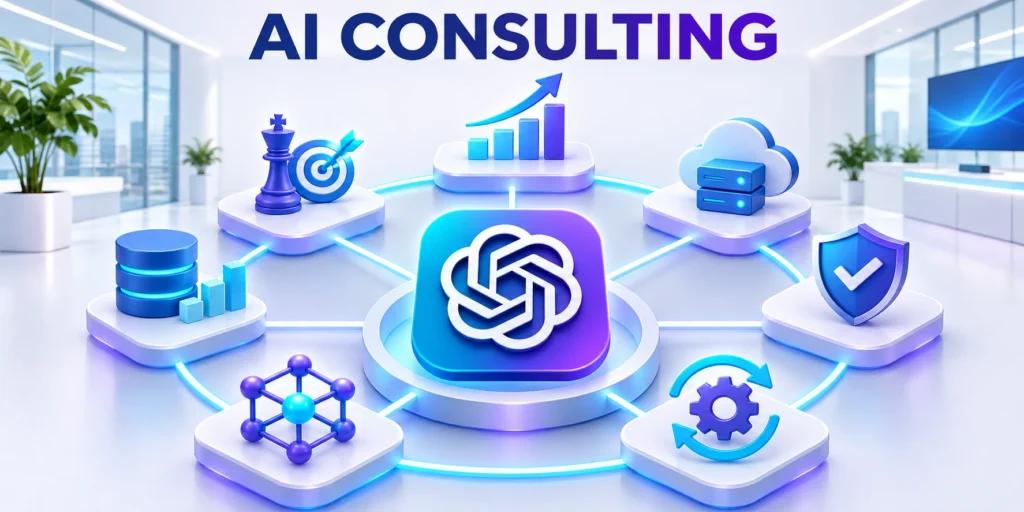
Artificial intelligence consulting connects business priorities with practical systems, responsible controls, measurable outcomes, and the operating capability required to sustain them.
The service may cover strategy, workflow design, data readiness, architecture, implementation, evaluation, governance, adoption, and continuous improvement across multiple business functions.
Review these practical points for What Artificial Intelligence:
- Business and workflow discovery
- AI use-case portfolio design
- Architecture and integration planning
- Evaluation and governance controls
- Implementation and adoption support
Consulting solves an operating problem, not a software problem
Companies often begin by evaluating platforms. They compare generative models, automation suites, CRM extensions, chatbots, predictive tools, and AI agents.
Technology matters, but the first question is operational: which decision or workflow should improve, for whom, and under which measurable conditions?
Consider these operating checks for Consulting solves operating:
- Which customer problem should the workflow address?
- Which business result could it influence?
- What data and permissions does it require?
- Where must a human approve or intervene?
- How will failures be detected and corrected?
- What evidence will justify expansion?
Our AI in B2B marketing guide shows how strategy and controlled workflows prevent disconnected experiments.
The engagement should clarify what automation can improve, what remains inherently human, and what the organization should not automate.
The service scope
A complete service can span strategy, architecture, implementation oversight, testing, training, governance, and continuous optimization.
Not every client needs every component. Scope should reflect business maturity, risk, available data, existing systems, and internal capability.
Use these decision criteria for service scope:
- AI and automation readiness assessment
- Use-case discovery and prioritization
- Customer-data and workflow audit
- Platform and integration architecture
- Vendor selection and proof-of-concept design
- Prompt, model, rule, and agent workflow design
- Testing, evaluation, and quality assurance
- Privacy, security, and risk controls
- Training, adoption, and operating governance
- Performance measurement and optimization
The consultant may configure systems directly or coordinate internal teams and vendors. Responsibilities must be explicit before implementation begins.
Clients should know who owns data mapping, integration, model configuration, content review, security approval, deployment, monitoring, and incident response.
When Enterprise AI Consulting Creates Value

Consulting becomes valuable when an organization has meaningful AI opportunities but lacks the shared decisions, technical foundations, or delivery discipline needed to pursue them safely.
The strongest signal is not executive enthusiasm alone. It is a costly business constraint that AI might improve and that leadership can measure.
Compare these priorities for When Enterprise AI:
- Repeated manual coordination
- Uncontrolled AI experimentation
- Fragmented customer information
- Slow decision cycles
- Scaling pressure across teams
Teams are overwhelmed by repetitive coordination
Marketing teams often spend substantial time moving data, rewriting variations, checking records, routing requests, summarizing calls, and assembling reports.
Some work is automatable. Other work contains decisions, exceptions, or customer sensitivity that require experienced review.
Review these practical points for Teams are overwhelmed:
- Campaign briefs require repeated manual assembly.
- Lead records arrive incomplete or inconsistent.
- Sales waits for research before responding.
- Content teams repeat the same source analysis.
- Reports require fragile spreadsheet consolidation.
- Customer questions move between disconnected systems.
A consultant maps the work before automating it. This reveals waste, dependencies, exception paths, and controls that a tool demonstration may overlook.
Automation should remove avoidable friction without hiding important decisions or reducing accountability.
AI experiments exist, but value remains unclear
Many organizations have scattered experiments across content, analytics, chat, prospecting, and personalization. Few share consistent evaluation or governance.
Leaders may know usage counts yet remain unable to explain quality, savings, pipeline influence, risk, or sustainable adoption.
Consider these operating checks for AI experiments exist:
- Inventory active tools, pilots, and unofficial usage.
- Connect each use case to a business process.
- Document data, permissions, costs, and owners.
- Evaluate output quality and downstream consequences.
- Stop duplicative or unjustified experiments.
- Prioritize a smaller portfolio with decision gates.
Consulting provides a common standard. It helps leadership compare unlike experiments using value, feasibility, risk, and strategic alignment.
The result should be a governed roadmap rather than an expanding collection of subscriptions.
Build an Enterprise AI Strategy
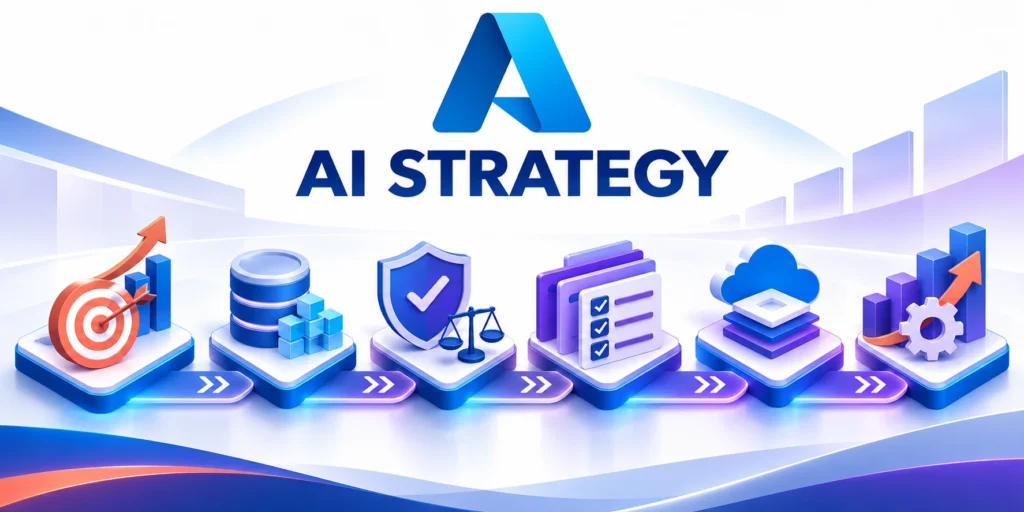
An enterprise AI strategy converts broad ambition into a bounded portfolio of decisions, capabilities, investments, and controls that support company operating priorities.
It should explain where AI creates advantage, where conventional automation remains better, and which experiments deserve funding before architecture or vendor commitments expand.
Use these decision criteria for Build Enterprise AI:
- Define measurable strategic business outcomes
- Choose durable decision principles
- Set explicit investment boundaries
- Assign named executive accountability
- Create review and stop criteria
Begin with a decision-oriented brief
The brief should describe the business problem, affected workflow, desired decision, systems, constraints, stakeholders, available evidence, and implementation capacity.
It should not require a predetermined tool unless procurement or architecture has already established that constraint.
Compare these priorities for Begin decision-oriented brief:
- Commercial objective and current bottleneck
- Teams and customers affected
- Current systems and data sources
- Known risks and compliance context
- Prior experiments and results
- Budget and timing constraints
- Decisions the engagement must enable
If the problem remains unclear, request a bounded discovery engagement instead of a large implementation proposal.
Discovery should produce evidence, priorities, architecture options, and a decision about whether to proceed.
Identify value pathways
Automation can create value through speed, quality, capacity, consistency, customer relevance, revenue progression, risk reduction, and improved management information.
Count each benefit once and explain the conditions required for it to occur.
Review these practical points for Identify value pathways:
- Reduced repetitive production or coordination
- Faster response to qualified interest
- Higher approval and reuse of marketing assets
- Improved lead routing and sales acceptance
- More relevant lifecycle communication
- Earlier detection of data or campaign problems
- Reduced manual error and process variance
- Better visibility into customer progression
Some value can be monetized confidently. Other value should remain a qualitative strategic benefit rather than a fictional financial estimate.
Use conservative, expected, and upside scenarios with explicit assumptions about adoption, quality, volume, conversion, margin, and timing.
Identify and Prioritize AI Use Cases
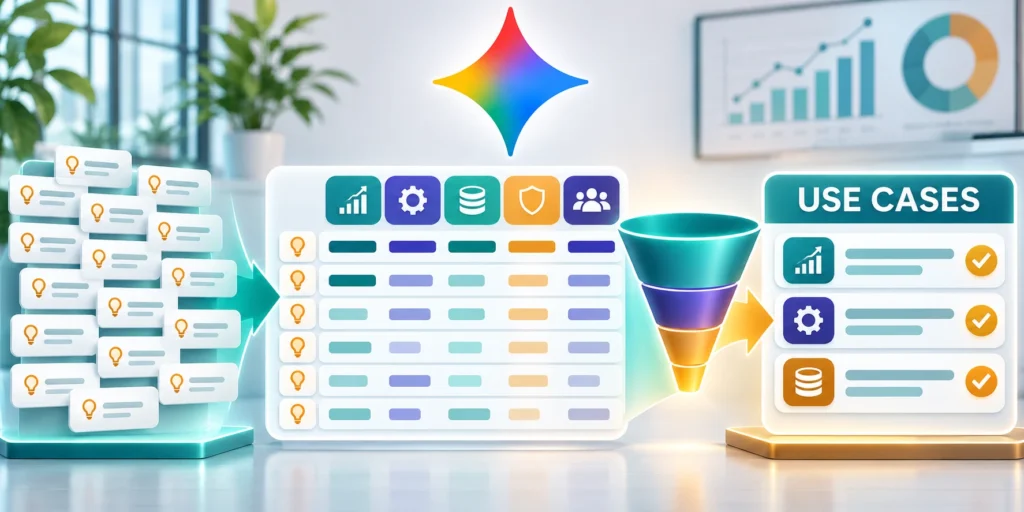
A useful AI portfolio begins with business problems, affected users, available evidence, and the decisions that must improve rather than a list of fashionable technologies.
Prioritization should balance expected value, feasibility, data readiness, adoption effort, risk, reversibility, and the time required to produce trustworthy evidence.
Consider these operating checks for Identify Prioritize AI:
- Define the decision or workflow
- Estimate measurable value
- Confirm data availability
- Assess risk and reversibility
- Select a representative pilot
Phase two: use-case prioritization
Use cases should compete for attention using consistent criteria. Executive enthusiasm alone should not determine the roadmap.
A scoring model can compare expected value, feasibility, evidence, risk, adoption, strategic fit, and time to learning.
| Criterion | Question |
|---|---|
| Business value | Which measurable problem could improve? |
| Feasibility | Are data, integrations, skills, and owners ready? |
| Risk | What harm could an incorrect action create? |
| Learning speed | How quickly can the assumption be tested? |
| Adoption | Will the people involved use the workflow? |
| Strategic fit | Does the capability support a priority process? |
The first pilot should be meaningful enough to matter and bounded enough to recover from failure.
A narrow production workflow often teaches more than a broad laboratory demonstration with no real owner.
Predictive scoring and prioritization
Predictive models estimate an outcome using historical patterns. Marketing teams may prioritize leads, accounts, offers, content, or next actions.
A score is useful only when it changes a defined decision and performs acceptably on current, representative data.
Use these decision criteria for Predictive scoring prioritization:
- Define the decision the score will support.
- Select an outcome with reliable historical labels.
- Exclude information unavailable at prediction time.
- Separate training, validation, and later test periods.
- Compare performance with a simple baseline.
- Define how people use and challenge the score.
- Monitor drift, bias, and business consequences.
Historical outcomes may reflect past targeting or unequal treatment. Consultants should examine whether the model repeats decisions the organization should improve.
A lower-risk pilot can preserve human review. Our predictive lead scoring guide explains practical validation and routing controls.
Assess Process and Technology Readiness
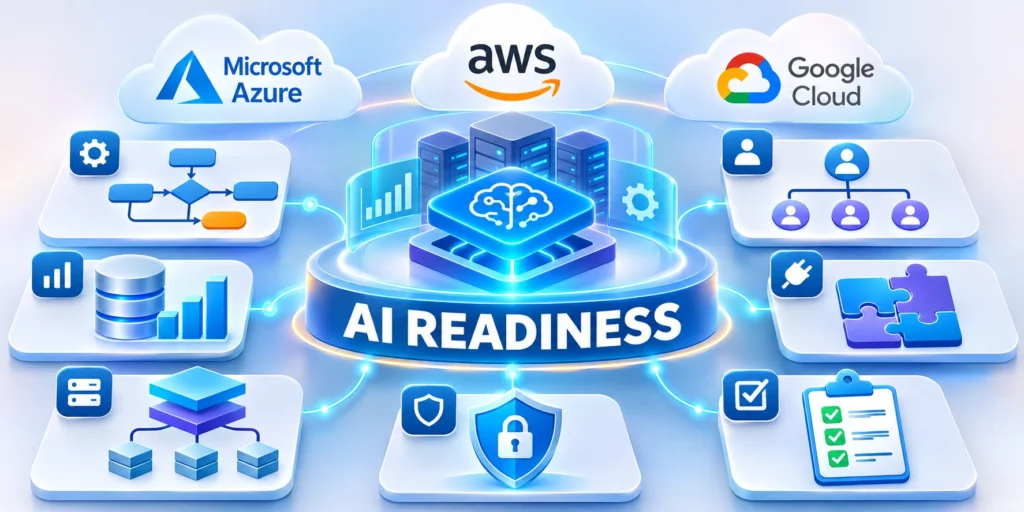
Readiness depends on more than model access. Teams need understandable processes, accountable owners, dependable data, integration paths, evaluation criteria, and capacity to respond when outputs fail.
The assessment should expose dependencies and constraints early, allowing leaders to redesign the initiative before expensive implementation decisions become difficult to reverse.
Compare these priorities for Assess Process Technology:
- Map current business workflows
- Identify authoritative source systems
- Review representative data quality
- Confirm viable integration options
- Assess accountable operating ownership
Map the current architecture
The architecture map shows systems, data objects, ownership, integrations, transformations, permissions, destinations, and failure points.
It should reflect actual operations, including spreadsheets, manual imports, unofficial tools, and workarounds that formal diagrams omit.
Review these practical points for Map current architecture:
- Website and application events
- CRM contacts, accounts, opportunities, and activities
- Marketing automation lists, campaigns, and consent
- Advertising audiences and conversion signals
- Customer success and service interactions
- Data warehouse or customer-data platform
- AI models, vector stores, prompts, and tools
- Business intelligence and monitoring systems
The map exposes duplication and unsafe shortcuts. Our CRM data enrichment guide covers controlled updates and record ownership.
Not every source needs immediate integration. Minimum viable context often creates faster, safer learning.
Define authoritative data and identity
Every important field needs an authoritative source, definition, update rule, permitted use, owner, and acceptable quality threshold.
Identity resolution must account for people, companies, domains, devices, anonymous activity, shared emails, subsidiaries, and changing employment.
Consider these operating checks for Define authoritative data:
- Define the business entities and relationships.
- Select durable identifiers where possible.
- Document deterministic and probabilistic matching rules.
- Set merge, split, and conflict procedures.
- Preserve source lineage and timestamps.
- Test false matches and missed matches.
- Monitor quality after deployment.
Poor identity resolution can send messages to the wrong person, misroute leads, duplicate activity, and distort performance reporting.
The design should prefer explainable matching for consequential actions and route uncertainty for review.
Design AI Agents and Workflow Automation

AI agents can coordinate tools and decisions across a bounded workflow, while deterministic automation remains preferable for predictable actions that require consistent execution.
The design should give each component only the permissions, context, tools, and autonomy needed for its defined purpose, with visible escalation and recovery paths.
Use these decision criteria for Design AI Agents:
- Define a bounded objective
- Limit tools and permissions
- Specify human approvals
- Record actions and evidence
- Design recovery and shutdown
Automation, AI assistance, and agentic workflows
Traditional automation follows predefined triggers and rules. AI assistance produces predictions, classifications, summaries, recommendations, or generated material within a controlled process.
Agentic workflows can select actions, use tools, and pursue bounded objectives. Greater autonomy creates greater requirements for permissions, monitoring, and recovery.
| Approach | Example | Primary control |
|---|---|---|
| Rule-based automation | Send a confirmation after a form submission | Trigger logic and data validation |
| Predictive AI | Estimate the likelihood of lead progression | Data quality, validation, and drift monitoring |
| Generative AI | Draft a campaign variation from approved evidence | Source grounding and human approval |
| AI agent | Research an account and recommend a next action | Tool permissions, boundaries, logs, and escalation |
These approaches can coexist. Reliable deterministic rules often remain preferable for compliance, billing, consent, identity, and irreversible changes.
A mature design uses AI where judgment or unstructured information adds value, while preserving rules where predictability matters most.
Phase three: solution and control architecture
The architecture defines inputs, processing, models, business rules, actions, permissions, review points, monitoring, fallbacks, and system ownership.
It should describe the normal path and the exception path. Edge cases determine whether automation remains safe under pressure.
Compare these priorities for Phase three solution:
- Workflow diagram and decision boundaries
- Data dictionary and source lineage
- Model and vendor selection rationale
- Prompt, rule, and tool specifications
- Human review and escalation design
- Security and privacy controls
- Evaluation plan and acceptance criteria
- Logging, alerts, and recovery procedure
The consultant should make important assumptions visible. Hidden assumptions become hidden failure modes after launch.
Architecture should remain proportional. A simple rule may outperform a complex model when data is limited or the decision is stable.
Connect AI to CRM and Business Systems
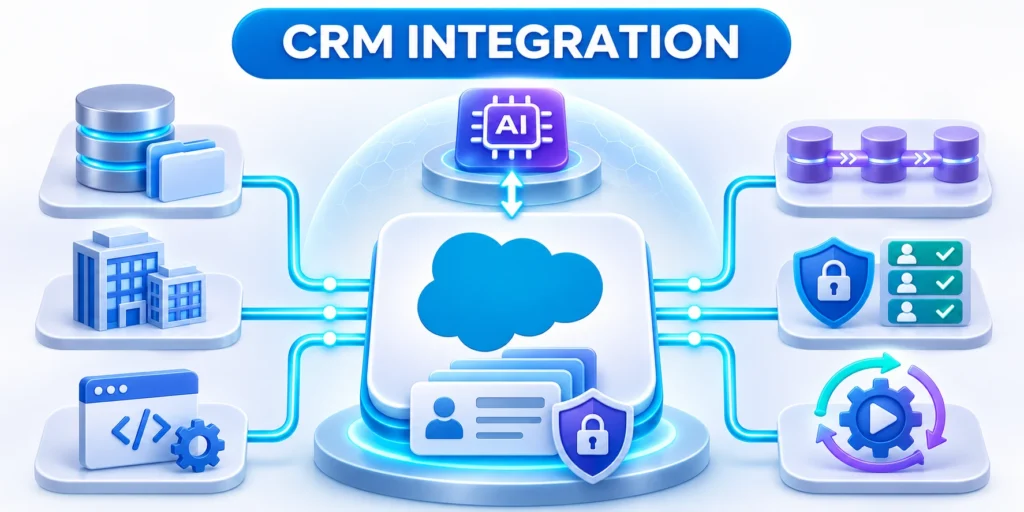
Business value usually depends on connecting AI with CRM, service, finance, product, communication, knowledge, and operational systems rather than creating an isolated assistant.
Integration design must define ownership, direction, timing, identity, permissions, validation, reconciliation, monitoring, and failure handling for every important data exchange.
Review these practical points for Connect AI CRM:
- Map authoritative systems of record
- Define durable event contracts
- Use minimal integration permissions
- Validate every system write
- Monitor and reconcile failures
Data fragmentation blocks personalization
AI cannot develop reliable context when customer information remains duplicated, inaccessible, contradictory, or collected without defined permission.
Salesforce’s 2026 research identifies disconnected data and data quality as major barriers to responsive, personalized marketing.
Consider these operating checks for Data fragmentation blocks:
- CRM stages use inconsistent definitions.
- Contact and company identities do not resolve reliably.
- Consent status differs across platforms.
- Campaign history cannot be connected with sales outcomes.
- Service interactions remain unavailable to marketing.
- Important context exists only in unstructured notes.
A consultant can define the minimum trustworthy data foundation before expanding personalization or autonomous actions.
This may reduce initial scope, but it prevents automation from scaling incorrect records or inappropriate messages.
Design integration and observability
Automated systems need reliable triggers, idempotent actions, retry rules, timeouts, dead-letter handling, logs, alerts, and manual recovery paths.
Idempotent means a repeated request does not create an unintended duplicate effect. This matters when networks or vendors retry failed operations.
Use these decision criteria for Design integration observability:
- Unique event or transaction identifiers
- Input and output validation
- Rate limits and usage budgets
- Timeout and retry strategy
- Failure queues and responsible owners
- Structured logs without unnecessary sensitive data
- Model, prompt, and workflow version tracking
- Rollback or safe-disable mechanism
Observability should answer what happened, which version acted, what information was used, and how the outcome was resolved.
Without these records, teams cannot investigate errors or evaluate whether changes improved the system.
Apply AI to Marketing Automation

Marketing automation remains an important AI consulting domain when organizations need more relevant content, faster experimentation, stronger segmentation, and better coordination with revenue teams.
The objective is not unlimited content production. It is a governed system that improves useful decisions while preserving brand accuracy, consent, evidence, and human accountability.
Compare these priorities for Apply AI Marketing:
- Segment audiences responsibly
- Ground generated content
- Personalize within consent
- Review claims and tone
- Measure qualified outcomes
Generative content operations
Generative AI can support research synthesis, outlines, campaign variations, repurposing, summaries, translations, and structured first drafts.
It should not replace evidence, subject expertise, editorial judgment, brand accountability, or approval for consequential claims.
Review these practical points for Generative content operations:
- Ground outputs in approved source material.
- Separate instructions from untrusted retrieved content.
- Require citations or traceability where useful.
- Apply claim and brand review before publication.
- Protect confidential and personal information.
- Record model, prompt, source, reviewer, and version.
- Measure approved output, not generated volume.
The workflow should define what happens when sources conflict, evidence is missing, or the model produces unsupported language.
Quality must precede speed. Our generative AI content workflow guide explains grounding, review, and controlled adoption.
Personalization and next-best action
Personalization can select content, offers, timing, or channel according to verified customer context and lifecycle state.
The goal is relevance, not surveillance. More data does not automatically create a better customer experience.
| Context | Possible action | Control |
|---|---|---|
| Known lifecycle stage | Offer stage-appropriate education | Stable stage definitions |
| Explicit topic interest | Recommend related evidence | Consent and relevance limit |
| Service issue | Suppress promotional outreach | Current service-data access |
| High-intent account activity | Alert the assigned seller | Account matching and review |
| Customer renewal window | Coordinate helpful success content | Contract and relationship context |
Consultants should define suppression rules as carefully as activation rules. Sometimes the most respectful automated action is sending nothing.
Testing should examine relevance, customer response, progression, complaints, opt-outs, and unintended segment differences.
Improve Sales and Customer Operations

AI can help sales and customer teams prioritize work, summarize interactions, route requests, prepare responses, surface risk, and recommend a practical next action.
Reliable operations keep relationship ownership with accountable people and use automation to improve context, consistency, response speed, and follow-through rather than replace judgment.
Consider these operating checks for Improve Sales Customer:
- Prioritize relevant opportunities
- Summarize account context
- Route requests accurately
- Recommend next actions
- Escalate sensitive decisions
Lead qualification, routing, and sales handoff
AI can summarize inquiries, enrich records, classify intent, identify missing information, and recommend routing within established business rules.
The workflow must preserve ownership, response expectations, fallback queues, consent, and a visible reason for important decisions.
Use these decision criteria for Lead qualification routing:
- Validate the submission and consent state.
- Match the person and organization carefully.
- Extract relevant context without inventing facts.
- Apply deterministic eligibility and territory rules.
- Use AI for bounded classification or recommendation.
- Route uncertain cases to a monitored queue.
- Record outcomes for later evaluation.
False confidence can be costly. An unqualified lead routed quickly is not better than a carefully reviewed lead routed slightly later.
Our AI chatbot qualification guide shows how routing, human handoffs, and customer experience work together.
Conversational qualification and service
Conversational systems can answer bounded questions, collect requirements, schedule meetings, retrieve approved resources, and transfer customers to people.
They need clear identity disclosure, scope boundaries, safe fallbacks, accessible alternatives, transcript controls, and monitored human handoffs.
Compare these priorities for Conversational qualification service:
- Define supported and unsupported topics.
- Ground answers in maintained knowledge sources.
- Provide escalation for uncertainty or sensitivity.
- Avoid collecting unnecessary personal information.
- Test adversarial, ambiguous, and multilingual inputs.
- Monitor abandonment, resolution, and correction rates.
A chatbot should not imitate certainty. It should acknowledge limits and connect the user with an appropriate human path.
Customer experience is the outcome. Deflection rate alone can reward a system that blocks access to help.
Choose Models, Platforms, and Vendors
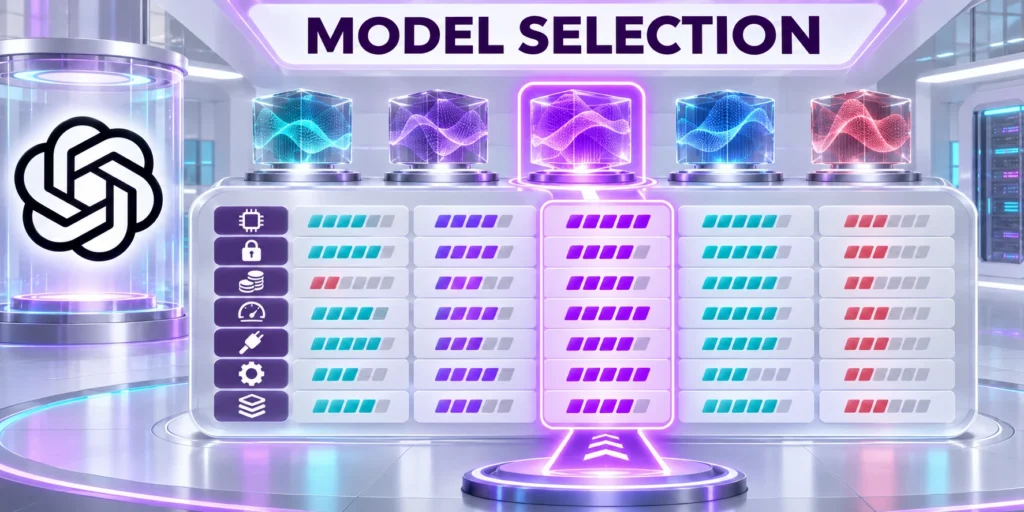
Model and platform selection should follow documented requirements for quality, latency, cost, privacy, integration, administration, observability, portability, and support.
A controlled evaluation reduces dependence on demonstrations and enables decision makers to compare viable options against representative work and explicit failure conditions.
Review these practical points for Choose Models Platforms:
- Define representative test cases
- Compare quality and latency
- Review data handling
- Model total operating cost
- Plan portability and exit
Select technology against requirements
Tool selection should compare workflow fit, integration, data control, security, evaluation, usability, cost, support, and exit options.
A compelling demonstration is not evidence that the product will work with the client’s real data and operating constraints.
| Requirement | Evaluation question |
|---|---|
| Workflow fit | Can it support the real process and exceptions? |
| Integration | Can it integrate without fragile manual work? |
| Data governance | Where is data stored, retained, and reused? |
| Model control | Can models, prompts, and outputs be tested? |
| Security | Do access, logging, and incident controls fit? |
| Economics | How do usage, support, and switching costs behave? |
A short proof of concept should test the hardest requirement, not reproduce the vendor’s easiest demonstration.
Vendor claims need verification against current documentation, contractual terms, security evidence, and client-specific testing.
Evaluate the method
Ask how the firm selects use cases, audits data, evaluates models, tests risk, measures value, and transfers ownership.
A credible answer should be specific without pretending that discovery has already occurred.
Consider these operating checks for Evaluate method:
- How will you map the current workflow?
- Which evidence prioritizes use cases?
- How do you evaluate output quality?
- What controls match different risk levels?
- How are model and vendor changes managed?
- Which metrics determine pilot success?
- How will our team maintain the system?
Beware of methods that reduce every problem to prompt writing or a preferred platform.
The firm should be willing to recommend process repair, simpler automation, or no automation when evidence supports that choice.
Plan AI Architecture and Production Operations

AI architecture must connect model services, enterprise data, applications, identity, integration, evaluation, observability, and operational support without creating unnecessary platform dependence.
Production planning should define environments, deployment controls, monitoring, capacity, ownership, change management, incident response, recovery, and lifecycle decisions before business reliance expands.
Use these decision criteria for Plan AI Architecture:
- Separate development and production environments safely
- Define accountable production service ownership
- Automate repeatable quality evaluation gates
- Monitor production quality and total operating cost
- Prepare tested recovery and replacement options
Consulting versus platform implementation
A platform implementation configures a selected product. Strategic consulting determines whether that product, workflow, and operating model fit the business problem.
The distinction matters because successful configuration cannot rescue weak data, unclear ownership, unsuitable use cases, or unsupported customer promises.
Compare these priorities for Consulting versus platform:
- Implementation asks how to configure the chosen system.
- Consulting asks whether the system should be chosen.
- Implementation delivers workflows and integrations.
- Consulting defines priorities, requirements, controls, and economics.
- Implementation confirms technical operation.
- Consulting evaluates business impact and organizational adoption.
Many engagements need both. The client should still separate strategic advice from vendor incentives and understand every material dependency.
Explore Fase Network’s consulting approach to understand how marketing strategy, automation, AI, and revenue operations can work as one system.
Establish incident and change management
Teams need a defined response when automation sends inappropriate content, leaks information, misroutes a lead, or changes behavior unexpectedly.
The response should protect customers, stop further harm, preserve evidence, restore service, and improve controls.
Review these practical points for Establish incident change:
- Clear reporting channel
- Named incident owner
- Safe-disable or rollback capability
- Severity classification
- Customer and stakeholder communication criteria
- Root-cause review
- Corrective action and retesting
Change management should cover prompts, models, tools, data sources, rules, integrations, permissions, and user interfaces.
Material changes may require renewed evaluation even when the workflow name remains unchanged.
Design Knowledge and Retrieval Systems
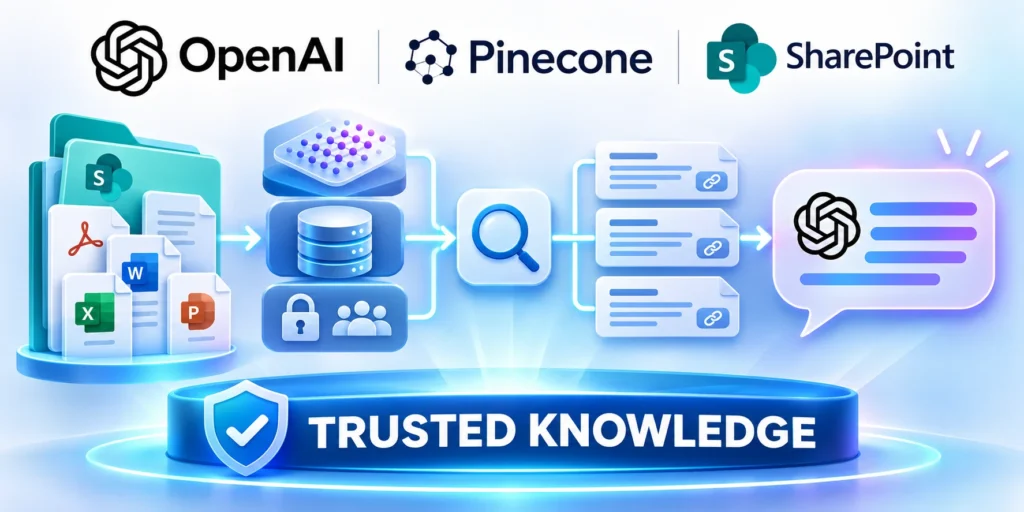
Knowledge and retrieval systems ground AI responses in approved information, helping teams answer questions, summarize evidence, and support decisions without relying only on model memory.
The design must control which sources are available, how content is segmented and retrieved, how permissions are enforced, and how users verify supporting evidence.
Consider these operating checks for Design Knowledge Retrieval:
- Select authoritative business content
- Preserve document access controls
- Define representative retrieval tests
- Expose clear supporting evidence
- Monitor content freshness and gaps
Build an authoritative knowledge foundation
Start with information owners, approved repositories, content types, permissions, update cadence, retention, and the questions users genuinely need the system to answer.
Remove obsolete duplicates and identify conflicting guidance before indexing. Retrieval cannot create trustworthy answers when the underlying knowledge remains contradictory or unmanaged.
Use these decision criteria for Build authoritative knowledge:
- Assign content owners
- Remove obsolete duplicates
- Resolve conflicting guidance
- Preserve source metadata
- Define update responsibilities
Segment content according to meaning and usage rather than arbitrary length alone. Preserve titles, dates, product boundaries, audience, and access labels as retrieval metadata.
Create a review path for unanswered questions and weak evidence. Those gaps should improve the knowledge base instead of becoming permanent prompt workarounds.
Evaluate retrieval and grounded answers
Build test questions from real tasks, including common requests, ambiguous wording, restricted information, outdated documents, conflicting sources, and questions the system should refuse.
Evaluate retrieval relevance separately from answer quality. A well-written response can still be unsafe when it cites the wrong source or omits decisive evidence.
Compare these priorities for Evaluate retrieval grounded:
- Test common user questions
- Include restricted examples
- Measure retrieval relevance
- Verify cited evidence
- Record unanswered questions
Require responses to expose supporting evidence where practical. Users should distinguish retrieved facts, model interpretation, uncertainty, and actions requiring human confirmation.
Monitor content freshness, retrieval failures, unsupported answers, permission violations, and user corrections after deployment. Use findings to improve sources, indexing, evaluation, and workflow design.
Establish Human Oversight and Decision Rights
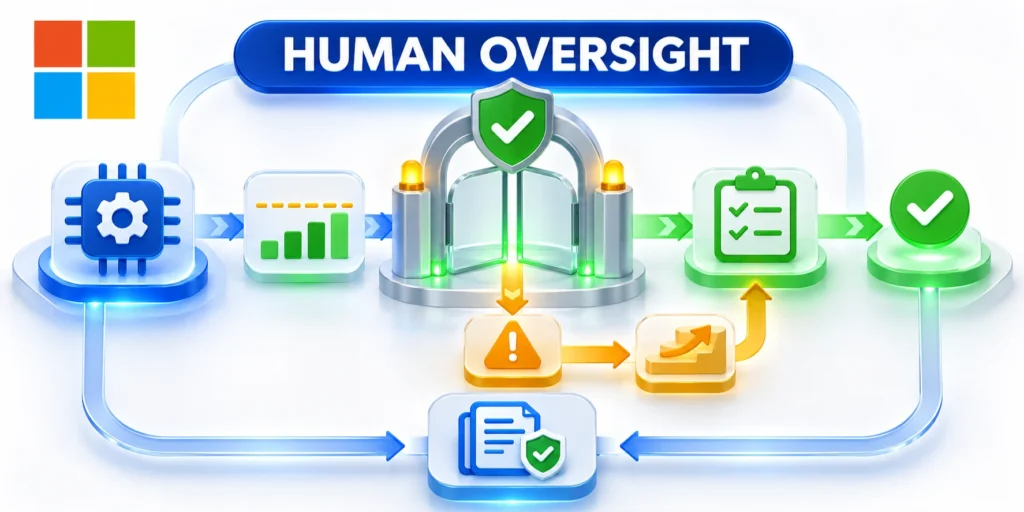
Human oversight works only when decision rights, review expectations, escalation routes, and stop authority are explicit for the people operating and governing each AI workflow in production.
Controls should reflect the consequence of an error, the sensitivity of the information, the degree of autonomy, and the difficulty of safely reversing an action.
Review these practical points for Establish Human Oversight:
- Name accountable business and technical owners
- Define proportional human approval thresholds
- Document visible operational escalation routes
- Train reviewers for sound contextual judgment
- Preserve explicit emergency stop authority
Define cross-functional ownership
Marketing should not own every decision alone. Data, security, legal, sales, service, technology, and executive leadership may hold essential responsibilities.
Ownership should follow the process and risk, not organizational fashion.
Consider these operating checks for Define cross-functional ownership:
- Executive sponsor sets priorities and risk tolerance.
- Business owner defines the workflow outcome.
- Marketing operations manages process and platform configuration.
- Data owner maintains definitions and quality.
- Security reviews access, vendors, and incidents.
- Legal or privacy specialists advise where required.
- Users provide operational feedback and exception evidence.
A RACI chart can clarify who is responsible, accountable, consulted, and informed for major activities.
It should not replace direct ownership. Every production workflow needs one accountable business owner.
Train for judgment, not only buttons
Training should explain capabilities, limits, data responsibilities, review standards, escalation, and the business logic behind the workflow.
Users need practice with realistic examples, including difficult cases that require refusal, correction, or human intervention.
Use these decision criteria for Train judgment not:
- Purpose and permitted use
- Data classification and handling
- Quality and approval standards
- Common failure patterns
- Escalation and incident reporting
- Feedback and correction process
- Performance interpretation
Managers need separate training on supervision. They should know how to inspect samples, review metrics, authorize changes, and respond to incidents.
Training should continue after launch because models, workflows, data, and organizational needs change.
Evaluate Accuracy, Reliability, and Safety

AI evaluation should measure whether the system performs acceptably on representative work, known edge cases, adversarial inputs, operational constraints, and high-consequence failures.
A passing demonstration is insufficient. Teams need repeatable test sets, acceptance thresholds, traceable evidence, monitoring, and a response plan for quality degradation.
Compare these priorities for Evaluate Accuracy Reliability:
- Build representative business test sets
- Define measurable quality acceptance thresholds
- Test known operational failure modes
- Measure required human correction effort
- Monitor production quality drift
Phase four: prototype and evaluation
A prototype tests whether the design can perform the intended task using representative examples and realistic constraints.
Evaluation should cover technical performance, business usefulness, user experience, operational reliability, risk, and cost.
Review these practical points for Phase four prototype:
- Create a representative test set.
- Include normal, ambiguous, adversarial, and failure cases.
- Define expected outcomes and unacceptable behaviors.
- Compare the system with the current baseline.
- Measure reviewer agreement and correction effort.
- Test permissions, logging, and fallback paths.
- Record limitations before pilot approval.
Generated outputs require task-specific evaluation. Fluency is not accuracy, relevance, compliance, or business usefulness.
Acceptance criteria should be agreed before stakeholders see favorable examples, reducing selective judgment.
Measure efficiency and quality together
Automation can reduce direct effort while increasing review, exception handling, vendor management, or downstream correction.
A complete assessment includes net time, approved output, error severity, customer impact, and the cost of maintaining controls.
| Dimension | Example measure |
|---|---|
| Speed | Median cycle time to approved output |
| Effort | Net human time including review and correction |
| Quality | Approval rate and weighted error rate |
| Adoption | Share of eligible work completed with the system |
| Customer | Resolution, progression, complaints, and opt-outs |
| Commercial | Qualified pipeline, conversion, and retention |
Weight errors by consequence. A minor formatting defect and a false customer claim should not count equally.
Quality thresholds should reflect the use case, audience, and ability to correct an error before harm occurs.
Protect Access, Privacy, and Business Information

AI systems can expose sensitive information through prompts, retrieved context, logs, integrations, outputs, training processes, or excessive permissions if boundaries remain unclear.
Protection begins with data minimization and identity controls, then extends through vendors, applications, retention, monitoring, incident response, and documented change management.
Consider these operating checks for Protect Access Privacy:
- Classify permitted business information
- Enforce consistent least privilege
- Separate sensitive operating environments
- Control retention and audit logging
- Prepare tested incident response
Use risk tiers
Risk depends on the action, data, audience, scale, reversibility, and potential harm. The same model can support low-risk and high-risk workflows.
NIST’s AI Risk Management Framework offers a voluntary foundation for integrating trustworthiness into AI design, deployment, use, and evaluation.
| Illustrative tier | Marketing example | Possible control |
|---|---|---|
| Low | Internal topic grouping | Periodic sample review |
| Moderate | Draft campaign copy | Human approval before activation |
| High | Personalized offer recommendation | Verified data, testing, monitoring, and escalation |
| Very high | Autonomous action using sensitive information | Specialist review or exclusion from automation |
Risk tiers should determine evidence, review, access, documentation, monitoring, and approval requirements.
They should be revisited when audience, data, autonomy, vendor, or scale changes.
Protect data throughout the workflow
Data protection begins before a prompt or model call. It covers collection, purpose, access, transfer, processing, retention, output, and deletion.
Consultants should identify when specialist privacy, legal, or security advice is required instead of presenting general guidance as definitive counsel.
Use these decision criteria for Protect data throughout:
- Collect only information needed for a defined purpose.
- Confirm the permitted use and consent state.
- Restrict access using least privilege.
- Prevent confidential data from entering unapproved tools.
- Understand vendor training and retention terms.
- Redact sensitive values where possible.
- Define deletion and subject-request procedures.
Logs need special care. They support investigation but can become a secondary store of sensitive prompts, outputs, and customer information.
Retention should balance operational evidence with minimization, contractual duties, and applicable requirements.
Build a Controlled AI Pilot

A controlled pilot tests one valuable workflow with representative users, bounded data, explicit controls, measurable baselines, and a reversible path back to the existing process.
The purpose is to reduce uncertainty and learn how the system behaves under realistic conditions before broad adoption increases cost, exposure, and organizational dependence.
Compare these priorities for Build Controlled AI:
- Choose one bounded business workflow
- Capture the current performance baseline
- Limit scope and system permissions
- Observe representative business users
- Define evidence-based expansion criteria
Phase five: controlled pilot
The pilot introduces the workflow to a limited audience, team, region, channel, or process under monitored conditions.
It tests integration, human behavior, customer response, economics, and exception handling that prototypes cannot reproduce fully.
Review these practical points for Phase five controlled:
- Named business and technical owners
- Limited audience and duration
- Baseline and comparison method
- Human approval for material actions
- Daily or weekly monitoring cadence
- Pause conditions and rollback procedure
- Structured user and customer feedback
- Decision date with documented criteria
Pilot success does not automatically justify full scale. Teams must assess whether data, support, cost, and controls can sustain broader use.
A failed pilot can still create value when it resolves an important assumption before a larger investment.
Days 31–60: build and evaluate
The second month implements a bounded prototype, representative evaluation set, integrations, review interface, logs, alerts, and recovery path.
Users should participate before launch because workflow friction may not appear in technical testing.
Consider these operating checks for Days 31 60:
- Configure the minimum viable workflow.
- Test normal, difficult, and adversarial cases.
- Measure quality against the baseline.
- Verify access, logging, and fallback controls.
- Train pilot users and managers.
- Correct blocking issues and retest.
- Approve limited production exposure.
The prototype should remain reversible. Teams need a known manual process if the automation is disabled.
Acceptance should depend on predefined evidence, not a few impressive outputs.
Move from Pilot to Production

Production deployment requires stronger ownership, monitoring, support, release management, documentation, capacity planning, security review, and change control than a successful pilot alone demonstrates.
Scale in deliberate stages so teams can observe performance, adoption, cost, and failure patterns while rollback and human alternatives remain practical.
Use these decision criteria for Move Pilot Production:
- Confirm accountable production service ownership
- Automate repeatable production quality evaluation
- Deploy through controlled release stages
- Monitor operating cost and quality
- Maintain tested rollback and fallback options
Phase six: deployment and continuous optimization
Deployment expands the workflow in stages while preserving monitoring, support, training, and change control.
Optimization examines quality, adoption, cost, latency, customer outcomes, failure patterns, drift, and the continued validity of business assumptions.
Compare these priorities for Phase six deployment:
- Versioned release and change log
- Role-based training and documentation
- Performance and risk dashboard
- Regular sample review
- Incident and complaint process
- Vendor and model change assessment
- Quarterly value and roadmap review
The operating model should eventually become client-owned. Consultants can remain advisors, but day-to-day accountability should be internal.
Success includes the ability to maintain, challenge, pause, and improve the system without unnecessary dependence.
Days 61–90: pilot and decide
The final month operates the workflow with a limited audience, close monitoring, human oversight, user feedback, and documented incidents.
The decision review compares observed value, quality, cost, adoption, and risk with the original thresholds.
Review these practical points for Days 61 90:
- Monitor operational and customer outcomes.
- Review samples and correction patterns.
- Track usage and total operating cost.
- Investigate incidents and near misses.
- Gather user and stakeholder feedback.
- Update architecture, controls, and business case.
- Decide whether to stop, revise, continue, or scale.
Scale should occur in controlled stages. Broader volume can change model behavior, support demand, cost, and failure consequences.
Contact Fase Network about enterprise AI consulting to discuss your workflow, data constraints, priorities, and safest next decision.
Measure Cost, Adoption, and Business Outcomes

Measurement should connect technical performance and user adoption with the business outcome that justified the investment, while exposing total cost and unintended consequences.
Leaders need a baseline, a credible comparison, sufficient observation time, transparent assumptions, and decision thresholds for continuing, changing, expanding, or stopping the system.
Consider these operating checks for Measure Cost Adoption:
- Measure the baseline
- Track quality and adoption
- Calculate total operating cost
- Connect results carefully
- Define continuation thresholds
Establish a baseline
The baseline documents current cost, time, quality, volume, customer outcomes, failure rates, and business results before automation changes the process.
Without a baseline, teams may attribute normal variation or unrelated improvement to the new system.
Use these decision criteria for Establish baseline:
- Labor time by role and activity
- Cycle and response time
- Error, correction, and rework rates
- Approval and abandonment rates
- Lead acceptance and opportunity progression
- Customer satisfaction, complaints, and opt-outs
- Technology and vendor costs
- Operational incident frequency
Baseline quality matters. If current work is poorly measured, the pilot may need an observation period before reliable comparison.
Use ranges when inputs remain uncertain and document every material assumption.
Calculate total cost of ownership
Total cost includes discovery, implementation, integration, data work, licenses, usage, monitoring, review, training, support, incidents, and eventual replacement.
Usage-based AI costs can vary with volume, context size, model choice, retries, and generated output.
Compare these priorities for Calculate total cost:
- Estimate fixed implementation and transition costs.
- Model recurring platform and model usage.
- Include human review and exception handling.
- Add monitoring, security, and governance effort.
- Estimate rework, incidents, and support.
- Test low, expected, and high-volume scenarios.
- Include switching and exit costs.
A cheaper model may require more correction. A higher platform fee may replace several tools. Compare the complete system, not isolated prices.
The business case should be updated after the pilot using observed usage, quality, adoption, and maintenance requirements.
How an AI Consulting Engagement Works

A consulting engagement should move from discovery and prioritization through architecture, evaluation, pilot delivery, adoption, and measured production improvement with clear executive decision gates.
Scope and staffing vary, but clients should always understand responsibilities, deliverables, ownership, dependencies, commercial terms, operating support, and the evidence required before each expansion.
Review these practical points for AI Consulting Engagement:
- Discover important business workflows and operating constraints
- Prioritize measurable enterprise AI opportunities
- Design sustainable technical architecture and governance controls
- Pilot carefully with representative enterprise business users
- Transfer durable internal operating capability and improve continuously
Inspect the actual delivery team
The people selling the engagement may not perform it. Confirm named roles, availability, senior oversight, and subcontractor responsibilities.
Relevant experience can involve the workflow, industry, data environment, sales motion, risk profile, or organizational transformation.
Consider these operating checks for Inspect actual delivery:
- Marketing strategy and operations expertise
- CRM and automation architecture
- Data engineering and analytics
- AI evaluation and application design
- Security, privacy, and governance coordination
- Change management and training
- Executive communication and business-case development
Ask for work samples or references appropriate to the engagement. Protect confidential information and respect reasonable reference limitations.
Case studies should state starting conditions, scope, timeframe, other contributors, and how each claimed result was measured.
Budget by phase
Phased funding allows evidence from discovery and pilots to shape later implementation scope.
It reduces commitment before data quality, integration effort, adoption, and workflow suitability are understood.
Use these decision criteria for Budget by phase:
- Fund readiness and use-case discovery.
- Approve architecture and evaluation design.
- Build and test a bounded prototype.
- Authorize a controlled production pilot.
- Review observed costs, quality, and adoption.
- Approve staged scale with operating support.
Each gate should identify evidence, decision owner, budget range, and the consequence of stopping.
Stopping after discovery can be a successful outcome when evidence shows that foundational work or another solution deserves priority.
Frequently Asked Questions
These answers address common questions about selecting, implementing, governing, and measuring artificial intelligence consulting services for enterprise teams.
What are artificial intelligence consulting services?
Artificial intelligence consulting services help organizations choose, design, implement, govern, and improve AI systems around measurable business needs and responsible operating practices.
The scope may include strategy, use cases, data, architecture, integration, evaluation, security, adoption, production support, and continuous improvement.
How is AI consulting different from traditional automation consulting?
Traditional automation focuses on deterministic triggers and rules. AI consulting also addresses probabilistic outputs, evaluation, grounding, model behavior, human oversight, and changing performance.
Strong programs combine both approaches and reserve AI for decisions or content where it adds meaningful value.
Which AI use case should a company implement first?
Choose a meaningful but bounded workflow with measurable friction, available evidence, accountable owners, representative users, manageable risk, and a practical fallback.
Avoid selecting the first pilot solely because it produces an impressive demonstration or uses the newest model.
Does a company need perfect data before starting an AI initiative?
No, but the pilot needs data that is sufficiently accurate, permitted, representative, accessible, and understood for the intended decision.
Use the readiness assessment to document gaps and determine whether remediation, narrower scope, or a different use case is necessary.
How long does an AI consulting engagement take?
A focused assessment may take several weeks. Architecture, pilot delivery, evaluation, adoption, and staged production deployment may require several months.
Timing depends on workflow complexity, data readiness, integration, procurement, risk review, stakeholder availability, and decision speed.
How much do artificial intelligence consulting services cost?
Cost varies with scope, seniority, systems, data work, integration, evaluation depth, governance, training, support, and implementation responsibility.
Compare total ownership cost and decision value rather than consulting fees alone. A phased engagement can reduce uncertainty before larger spending.
Can an AI consultant guarantee revenue or cost savings?
No responsible consultant controls market demand, product fit, customer behavior, internal adoption, operational execution, or every factor affecting financial outcomes.
A credible engagement defines assumptions, contribution pathways, baselines, measurement, responsibilities, and decision thresholds without guaranteeing outcomes beyond its control.
How should an enterprise AI system be governed?
Governance should define owners, risk tiers, permitted data, access, evaluation, human oversight, monitoring, incidents, changes, documentation, and stop authority.
Controls should become stronger as autonomy, sensitivity, scale, irreversibility, and potential harm increase.
Should the consulting partner also implement the AI system?
Implementation continuity can help, but clients should understand vendor incentives, ownership, portability, responsibilities, and independent review before combining advisory and delivery roles.
The best model depends on internal capacity, architecture, risk, procurement, and the need for specialized implementation skills.
How should AI consulting success be measured?
Measure quality, cycle time, human effort, adoption, errors, customer outcomes, incidents, business contribution, and total operating cost against an explicit baseline.
Contact Us on LinkedIn
Discuss your Artificial Intelligence Consulting Services priorities directly through LinkedIn.
 Sergio TimóteoConsulting EngineerDigital Marketing Strategist, CRM Certified Professional, SEO Expert, AI, Social Media, Paid Ads, Real Estate, B2C and B2B Sales. 22+ Years Growing Businesses and Startups with Technology and Innovation.LinkedIn profile