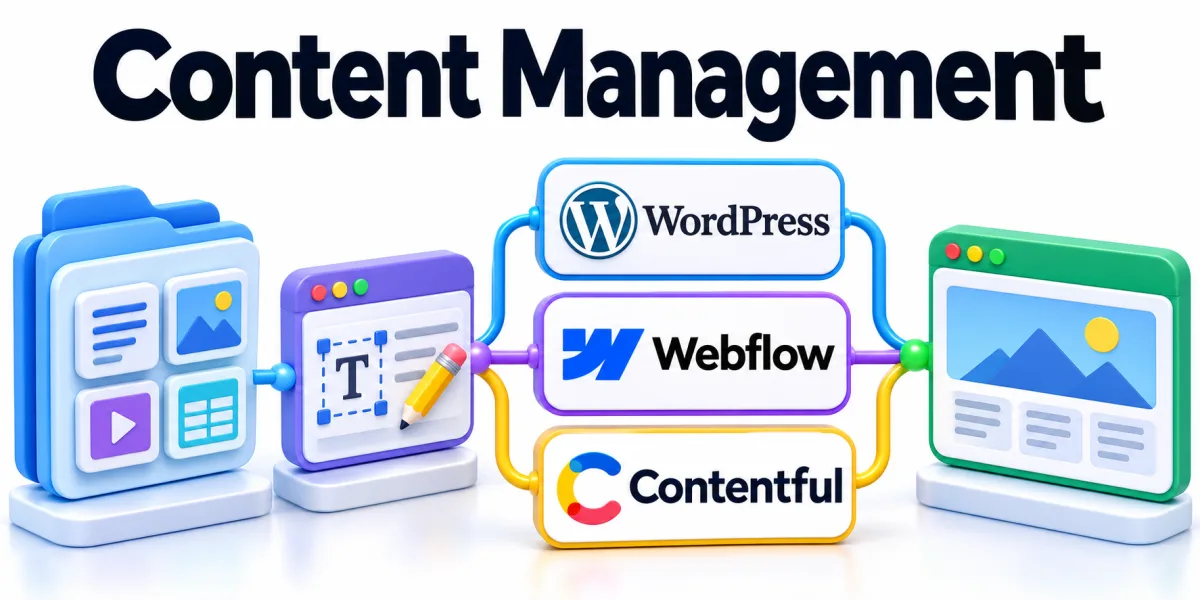
A content management system shapes how teams create, approve, and update the information buyers see. Its editing experience, technical model, and integration options all affect day-to-day publishing work.
This collection covers content modeling, WordPress, headless delivery, multilingual sites, integrations, and platform comparisons. It helps teams choose a CMS or improve their current setup around editorial needs.
Which Content Management System Fits Your Publishing Team?

Start by listing the content types the team maintains, from landing pages and articles to reusable proof points. Document where each item appears and who may change it.
Use common publishing tasks to compare platforms. Ask editors to revise a page, preview a localized version, and restore an earlier revision using realistic access and approval roles.
Model the Content and Its Relationships
Separate information with its own lifecycle from the layout where it appears. Give items consistent fields and relationships so editors can find and update them across relevant pages.
Try the model with atypical content before applying it across the site. Check whether editors can represent missing fields, multiple product versions, or differences between languages without awkward workarounds.
Balance Editorial Control and Integrations
Define which parts of the page an editor controls and how changes reach the public site. For headless delivery, test previews, publishing delays, and recovery if a build fails.
For CRM or commerce integration, map which system owns each record and how errors appear. A simple end-to-end test can catch missing consent fields or broken references before launch.
Plan Migration and Long-Term Ownership
Inventory URLs, media, relationships, and redirects before selecting a migration approach. Run a trial on representative content and compare the old and new pages for missing data or functionality.
Clarify who will own platform updates, permissions, and integrations after launch. Factor export options and long-term maintenance into the decision, especially when the site supports multiple markets.