

Build a nearshore software development capability with clear ownership, practical engagement models, reliable delivery controls, and measurable engineering outcomes for United States organizations working with Latin American product teams across complex delivery programs.
What Nearshore Software Development Services Include
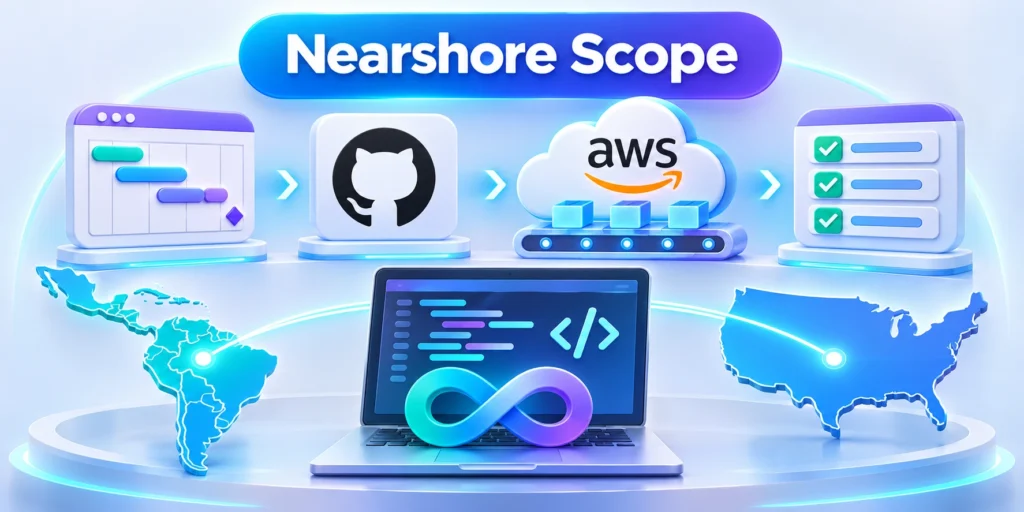
Nearshore software development combines product engineering with a delivery team located in a nearby region. United States clients gain meaningful workday overlap without building every capability internally.
The service can cover discovery, application delivery, integrations, quality assurance, cloud operations, and ongoing improvement. Its value depends on accountable ownership, not geography alone.
A delivery model, not only a location
A dependable nearshore partner joins business context with engineering execution. The team understands the intended outcome, supported users, operating constraints, and evidence required for release.
Location supports the model through compatible hours and practical travel. However, collaboration still requires explicit roles, documented decisions, accessible repositories, and predictable communication.
Review these practical points for delivery model not:
- Product discovery and technical planning
- Web and mobile application engineering
- SaaS modernization and integration delivery
- Quality assurance and release automation
- Cloud operations and ongoing support
The engagement should produce working software, reusable knowledge, and operational visibility. Clients need access to code, environments, documentation, delivery evidence, and current priorities.
Commercial terms must match uncertainty. A stable feature backlog supports capacity planning, while unclear product assumptions require discovery and shorter commitment boundaries.
Evidence for What Nearshore Software Development Services Include
Preserve the current baseline, representative evidence, named owner, and operating constraints before approving decisions about what nearshore software development services include.
Validate the proposed approach with affected users and operators. Record exceptions, dependencies, unresolved risks, and the next review decision before expanding scope.
Consider these operating checks for Evidence What Nearshore:
- What Nearshore Software Development Services evidence
- Accountable owner and reviewer
- Known dependencies and constraints
- Acceptance and follow-up decision
The evidence checkpoint keeps what nearshore software development services include connected to observable results and accountable follow-up.
Work the team can own
The provider may own delivery planning, engineering practices, test execution, and release coordination. Strategic product priorities and consequential business decisions remain client responsibilities.
Successful engagements make those boundaries visible. Each decision has an owner, required input, deadline, escalation path, and record available to both organizations.
When a Nearshore Development Model Fits

Nearshore delivery fits organizations needing sustained technical capability, faster execution, or specialist access. It works best when leadership can provide priorities and reachable decision owners.
The model can support a new product, an existing platform, or a modernization program. The strongest cases involve ongoing collaboration rather than isolated task purchasing.
Business conditions that support the model
A buyer should identify the constraint before selecting a delivery model. The problem may involve capacity, architecture, quality, release speed, integration work, or product ownership.
Nearshore teams add value when the roadmap contains connected decisions. Shared context then improves estimation, technical consistency, test coverage, and recovery from unexpected conditions.
Use these decision criteria for Business conditions that:
- A qualified product owner is available
- Work requires several engineering disciplines
- Collaboration benefits from daily overlap
- The roadmap extends beyond one release
- Leadership accepts transparent delivery evidence
The organization also needs dependable access to stakeholders, systems, and realistic users. Delayed approvals can neutralize the time-zone advantage and create expensive idle capacity.
Start with a bounded problem when confidence is limited. A focused pilot can test collaboration, technical judgment, delivery quality, and the buyer’s own readiness.
Evidence for When a Nearshore Development Model Fits
Compare the proposed approach with the current operating reality for when a nearshore development model fits. Include customer impact, maintenance effort, reversibility, and internal capability.
Test a representative path before broad adoption. Document results, remaining uncertainty, assigned actions, and conditions that would require revision or escalation.
Compare these priorities for Evidence When Nearshore:
- When a Nearshore Development Model evidence
- Operational impact and ownership
- Failure and recovery evidence
- Revision or expansion criteria
The evidence checkpoint keeps when a nearshore development model fits connected to observable results and accountable follow-up.
Situations where nearshore is the wrong answer
A short commodity task may suit a specialist freelancer or established product. Highly restricted work may require on-site access, specific certifications, or another operating arrangement.
Nearshore is also unsuitable when the buyer expects immediate scale without onboarding. Context transfer, access provisioning, architecture review, and relationship building require planned effort.
Nearshore vs Onshore and Offshore Development

Onshore, nearshore, and offshore describe proximity, yet proximity influences only part of delivery. Buyers should compare communication, access, governance, talent, cost, and transition risk together.
The best model depends on the product and organization. A regulated workflow, experimental product, or mature maintenance backlog can require different levels of overlap and control.
Compare operating tradeoffs
Onshore teams may offer easier local access and familiar commercial norms. They can also carry higher rates or limited availability for particular technology combinations.
Offshore teams can provide broad capacity and extended working hours. Large time differences may help overnight processing, but they can slow decisions requiring real-time discussion.
Review these practical points for Compare operating tradeoffs:
- Compare total delivery cost, not hourly rates
- Measure usable collaboration hours
- Verify ownership and escalation paths
- Test written and spoken communication
- Plan transition before signing
Nearshore delivery often balances workday overlap with a broader talent market. That balance still depends on team stability, leadership quality, and disciplined documentation.
Buyers should compare representative scenarios instead of sales claims. Ask each provider to explain a failed deployment, changing requirement, urgent defect, and unavailable stakeholder.
Evidence for Nearshore vs Onshore and Offshore Development
Make decisions about nearshore vs onshore and offshore development traceable to evidence, assumptions, and named responsibilities. Preserve why rejected options did not fit the present context.
Review the result after real use rather than relying only on completion status. Capture support patterns, exceptions, and follow-up work in the operating backlog.
Consider these operating checks for Evidence Nearshore vs:
- Nearshore vs Onshore and Offshore evidence
- Option tradeoffs and exclusions
- Observed results and exceptions
- Named follow-up actions
The evidence checkpoint keeps nearshore vs onshore and offshore development connected to observable results and accountable follow-up.
Cost, control, and coordination
Use one comparison period and equivalent scope. Include discovery, management, quality assurance, cloud work, meetings, onboarding, travel, support, and transition responsibilities.
Control improves when the client retains accounts, repositories, infrastructure access, and decision records. Contracts should support replacement or exit without losing operational knowledge.
| Model | Strong fit | Main constraint |
|---|---|---|
| Onshore | Local access | Higher cost |
| Nearshore | Shared workday | Requires governance |
| Offshore | Broad capacity | Limited overlap |
Choose the Right Engagement Model
Engagement structure determines how priorities, cost, and delivery risk are shared. The contract should reflect how much is known and how frequently decisions may change.
No model removes uncertainty. Effective agreements create review points, transparent evidence, and workable change mechanisms instead of pretending the initial plan will remain perfect.
Match commercial structure to uncertainty
Staff augmentation supplies individuals working inside the client’s operating system. It fits organizations already equipped to direct work, integrate specialists, and govern technical decisions.
A dedicated team owns a broader delivery capability. It usually includes stable engineering roles, shared practices, and a backlog governed with the client’s product leadership.
Use these decision criteria for Match commercial structure:
- Define the accountable product owner
- Document included roles and availability
- Agree backlog and planning practices
- Set quality and release expectations
- Establish replacement and transition terms
Project delivery fits bounded outcomes with testable acceptance criteria. Fixed pricing becomes risky when discovery is incomplete, dependencies remain unknown, or stakeholder availability is uncertain.
Hybrid arrangements can separate discovery, capacity, and outcome commitments. For example, a short assessment may precede a dedicated modernization team with quarterly delivery checkpoints.
Evidence for Choose the Right Engagement Model
Define success for choose the right engagement model with observable behavior, a representative population, a review date, and an owner who can act on the result.
Separate implementation completion from operational acceptance. A delivered configuration still requires tested behavior, understood limitations, support readiness, and accountable maintenance.
Compare these priorities for Evidence Choose Right:
- Choose the Right Engagement Model evidence
- Representative test population
- Support and maintenance owner
- Scheduled evidence review
The evidence checkpoint keeps choose the right engagement model connected to observable results and accountable follow-up.
Dedicated team and project boundaries
Every agreement should explain what happens when assumptions fail. Include reprioritization, scope change, delayed access, blocked dependencies, urgent incidents, and unfinished transition work.
Review the arrangement after real delivery evidence appears. Team composition, meeting load, planning cadence, and commercial boundaries may need adjustment without replacing the entire partnership.
Product Discovery and Technical Planning

Discovery connects a commercial objective with a feasible delivery path. It reduces avoidable building by testing assumptions about users, workflows, data, integrations, and operational ownership.
The output is not merely a presentation. A useful discovery produces decisions, open questions, prioritized risks, testable scope, and evidence supporting the next investment.
Convert a business objective into buildable scope
Begin with the user and business outcome, then map the current workflow. Identify delays, errors, manual transfers, access limitations, and decisions requiring better information.
Technical discovery examines systems, data ownership, integrations, environments, security boundaries, performance expectations, and support capabilities. Unknown dependencies should become explicit investigation items.
Review these practical points for Convert business objective:
- Problem statement and target users
- Current workflow and measurable baseline
- System context and integration inventory
- Prioritized capabilities and exclusions
- Risks, assumptions, and validation plan
The team should challenge unnecessary features and unsupported deadlines. Removing low-value scope can improve learning, quality, and the probability of reaching a useful production release.
Architecture decisions should remain proportional. Early plans need enough structure for responsible implementation without creating false precision about every future feature.
Evidence for Product Discovery and Technical Planning
Evaluate product discovery and technical planning against customer value, delivery risk, operating cost, internal skill, and future change. Avoid optimizing one dimension while hiding another.
Keep the decision reversible where practical. Preserve migration, transition, rollback, or exit steps before dependencies and production use make correction more expensive.
Consider these operating checks for Evidence Product Discovery:
- Product Discovery and Technical Planning evidence
- Delivery and operational risk
- Internal capability and cost
- Transition and exit path
The evidence checkpoint keeps product discovery and technical planning connected to observable results and accountable follow-up.
A practical project brief
Record the intended outcome, essential journeys, success signals, supported conditions, integrations, data sensitivity, accessibility needs, release boundaries, budget range, and decision process.
Review the brief with business and technical owners. Resolve conflicting expectations before estimates become commitments and before vendors design incompatible approaches.
Nearshore Web Application Development

Web application development should start with the workflow users must complete. Technology choices follow requirements for accessibility, performance, permissions, integration, and continued maintenance.
Nearshore teams can coordinate frontend, backend, data, quality, and cloud work during overlapping hours. That coordination matters when one change affects several system boundaries.
Build around measurable workflows
Frontend engineering turns product rules into accessible interfaces. It must handle supported browsers, responsive layouts, loading states, validation, errors, permissions, and realistic content lengths.
Backend engineering owns business logic, APIs, transactions, background work, and integration behavior. Critical rules should remain testable and avoid duplication across several interfaces.
Use these decision criteria for Build around measurable:
- Define representative user journeys
- Map permissions and data boundaries
- Establish performance expectations
- Document external dependencies
- Test failure and recovery behavior
Data models require particular care because they outlive individual screens. Define relationships, required fields, history, retention, exports, and rules preventing inconsistent records.
Acceptance criteria should describe observable outcomes. A finished interface is insufficient when the workflow loses data, creates duplicates, hides errors, or cannot recover safely.
Evidence for Nearshore Web Application Development
Preserve the current baseline, representative evidence, named owner, and operating constraints before approving decisions about nearshore web application development.
Validate web prototypes with real roles across supported browsers and integrations. Log accessibility, performance, and workflow gaps before expanding the release.
Compare these priorities for Evidence Nearshore Web:
- Nearshore Web Application Development evidence
- Accountable owner and reviewer
- Known dependencies and constraints
- Acceptance and follow-up decision
The evidence checkpoint keeps nearshore web application development connected to observable results and accountable follow-up.
Release boundaries and acceptance criteria
Use feature boundaries that can be tested independently. Confirm user access, data integrity, integration responses, monitoring, support preparation, and rollback before production exposure expands.
The B2B web app development guide explains architecture and launch decisions in greater depth for teams preparing a product build.
Nearshore Mobile Application Development

Mobile applications operate across devices, networks, permissions, and store policies that change independently. Delivery planning must cover those conditions before interface work becomes expensive.
A nearshore team can coordinate design, native integrations, backend services, testing, and release operations. Shared hours help resolve device-specific failures requiring several disciplines.
Design for actual mobile operating conditions
Research where, when, and why people use the application. Field workers, executives, customers, and technicians encounter different connectivity, attention, privacy, and device constraints.
Native development provides direct platform access and platform-specific control. Cross-platform frameworks can share substantial code, but integrations and user expectations still require platform-aware engineering.
Review these practical points for Design actual mobile:
- Identify supported devices and systems
- Define offline and synchronization behavior
- Map permissions and sensitive data
- Test interruptions and background states
- Plan store review and release ownership
Offline requirements need conflict rules, local storage controls, retries, and visible synchronization status. Users must understand whether information is current, pending, or unable to save.
Release planning includes certificates, accounts, privacy disclosures, staged rollout, crash monitoring, support preparation, and rollback options. Store approval timing should not surprise stakeholders.
Evidence for Nearshore Mobile Application Development
Compare the proposed approach with the current operating reality for nearshore mobile application development. Include customer impact, maintenance effort, reversibility, and internal capability.
Run a representative mobile journey on supported devices. Record offline, notification, security, and store-distribution findings before broad rollout.
Consider these operating checks for Evidence Nearshore Mobile:
- Nearshore Mobile Application Development evidence
- Operational impact and ownership
- Failure and recovery evidence
- Revision or expansion criteria
The evidence checkpoint keeps nearshore mobile application development connected to observable results and accountable follow-up.
Native and cross-platform choices
A representative prototype can test camera, location, authentication, notifications, offline storage, and performance before the complete backlog depends on one technology decision.
The native versus cross-platform guide provides a focused framework for comparing mobile architecture choices.
SaaS Product Engineering and Modernization

SaaS products combine customer experience with tenancy, identity, billing, operations, support, and continuous delivery. Engineering decisions must protect each capability as adoption grows.
Nearshore product teams can support discovery through modernization while preserving shared context. Stable ownership reduces repeated onboarding and inconsistent architectural changes across releases.
Support a product across its lifecycle
An early product should validate a specific problem and workflow. It does not need every enterprise feature, yet it needs responsible data, access, deployment, and recovery foundations.
Growth introduces larger datasets, varied customers, integration demand, support volume, and reliability expectations. Teams should measure pressure before replacing an architecture that remains adequate.
Use these decision criteria for Support product across:
- Define product and operational baselines
- Track customer and system constraints
- Separate urgent fixes from roadmap work
- Record architecture decisions and tradeoffs
- Retire unsupported components deliberately
Technical debt becomes harmful when it repeatedly delays valuable change or creates unacceptable risk. A visible register helps distinguish strategic shortcuts from neglected maintenance.
Modernization can isolate unstable modules, add service boundaries, update dependencies, improve tests, or migrate workloads gradually. A complete rewrite is only one possible strategy.
Evidence for SaaS Product Engineering and Modernization
Make decisions about saas product engineering and modernization traceable to evidence, assumptions, and named responsibilities. Preserve why rejected options did not fit the present context.
Observe the modernized product under real workloads. Add adoption friction, tenant exceptions, and operational debt to the prioritized backlog.
Compare these priorities for Evidence SaaS Product:
- SaaS Product Engineering and Modernization evidence
- Option tradeoffs and exclusions
- Observed results and exceptions
- Named follow-up actions
The evidence checkpoint keeps saas product engineering and modernization connected to observable results and accountable follow-up.
Modernize without a disruptive rewrite
Start with a bounded capability and measurable baseline. Run old and new paths carefully, reconcile data, compare outcomes, and retain a documented reversal option.
Our legacy software modernization guide explains incremental migration choices for applications moving toward cloud-based delivery.
API Development and Systems Integration

APIs connect customer journeys, operational systems, and partner platforms. Integration work needs explicit contracts because each dependency can fail, change, or return incomplete information.
Nearshore teams can collaborate directly with business and system owners during overlapping hours. This access shortens diagnosis when several platforms disagree about one transaction.
Treat integrations as maintained products
Define the business event before designing an endpoint. Clarify the source of truth, permitted updates, timing requirements, ownership, and consequences when delivery is delayed.
Contracts should specify fields, validation, authentication, pagination, limits, versions, errors, and idempotency. Examples must include realistic missing values and permission differences.
Review these practical points for Treat integrations maintained:
- Map systems and accountable owners
- Define direction and synchronization timing
- Establish retry and reconciliation rules
- Protect credentials and personal data
- Monitor failures and queue age
Webhooks fit timely events when the source supports dependable delivery. Scheduled polling may better handle recovery, controlled batches, or systems without trustworthy event notifications.
Operational dashboards should reveal volume, failures, retries, delayed records, and unresolved conflicts. Support teams need enough context to act without accessing unnecessary personal information.
Evidence for API Development and Systems Integration
Define success for api development and systems integration with observable behavior, a representative population, a review date, and an owner who can act on the result.
Treat successful deployment as the start of acceptance. Verify contracts, retries, monitoring, support ownership, and change procedures.
Consider these operating checks for Evidence API Development:
- API Development and Systems Integration evidence
- Representative test population
- Support and maintenance owner
- Scheduled evidence review
The evidence checkpoint keeps api development and systems integration connected to observable results and accountable follow-up.
CRM, payment, and operational systems
Test rate limits, duplicate delivery, timeouts, partial responses, credential rotation, schema changes, and unavailable dependencies. Confirm how each failure appears to users and operators.
The custom API development playbook provides implementation guidance for teams designing and operating third-party connections.
Cloud and DevOps Delivery Responsibilities
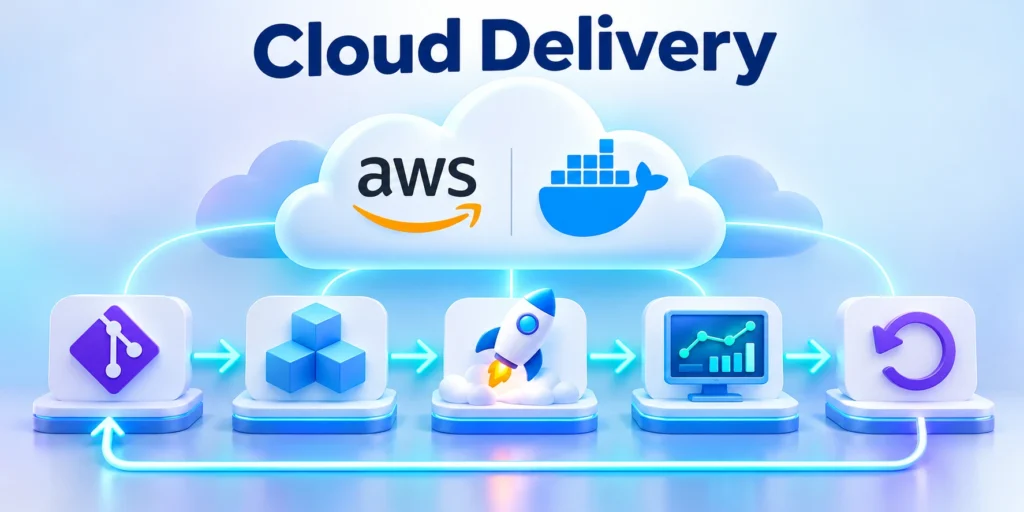
Development and operations meet at every release. A nearshore team should know how changes are built, tested, deployed, observed, supported, and reversed after production exposure.
Cloud choices must match the application and internal capability. Managed services can reduce undifferentiated work, but they introduce limits, pricing models, and provider dependencies.
Connect development with dependable releases
Use separate environments with controlled configuration and representative test data. Infrastructure, application settings, secrets, and deployment permissions require documented ownership and review.
Continuous integration checks code and dependencies before changes merge. Delivery automation packages approved versions consistently, while deployment controls protect production from unreviewed changes.
Use these decision criteria for Connect development dependable:
- Maintain repeatable build pipelines
- Protect credentials and deployment roles
- Record versions and configuration changes
- Monitor releases and user impact
- Test rollback and recovery procedures
Observability should connect logs, metrics, traces, and business signals. Alerts need owners, thresholds, context, and response instructions rather than creating an unattended stream.
The client should retain access to cloud accounts, billing, repositories, pipelines, and monitoring. Provider knowledge must become transferable documentation and practiced operating routines.
Evidence for Cloud and DevOps Delivery Responsibilities
Evaluate cloud and devops delivery responsibilities against customer value, delivery risk, operating cost, internal skill, and future change. Avoid optimizing one dimension while hiding another.
Preserve rollback and environment recovery paths. Document infrastructure ownership, release gates, incident response, and vendor exit dependencies before production growth.
Compare these priorities for Evidence Cloud DevOps:
- Cloud and DevOps Delivery Responsibilities evidence
- Delivery and operational risk
- Internal capability and cost
- Transition and exit path
The evidence checkpoint keeps cloud and devops delivery responsibilities connected to observable results and accountable follow-up.
Ownership after deployment
Define severity levels, support hours, escalation, response expectations, and maintenance responsibilities. Distinguish urgent service restoration from planned product improvements and platform upgrades.
Our separate Cloud, DevOps, and modernization consulting page will address platform strategy and operations, while this service retains responsibility for software delivery collaboration.
Quality Assurance and Automated Testing

Quality assurance tests whether software supports its intended outcome under realistic conditions. It includes behavior, data integrity, accessibility, performance, compatibility, and recovery.
Nearshore collaboration allows testers, engineers, and product owners to investigate failures during shared hours. Rapid discussion is useful when acceptance criteria contain hidden assumptions.
Make quality visible before release
Test planning begins with risk. Identify critical journeys, sensitive records, expensive failures, supported environments, integration boundaries, and conditions requiring specialist assessment.
Automated unit and integration tests protect repeatable behavior. End-to-end tests cover selected journeys, while exploratory testing investigates unexpected interactions and confusing experiences.
Review these practical points for Make quality visible:
- Define acceptance criteria before implementation
- Maintain representative test environments
- Automate high-value regression coverage
- Track defects by business impact
- Preserve evidence for each release
Test data should represent realistic variation without exposing unnecessary personal information. Include missing values, long content, permissions, duplicates, interruptions, and failed dependencies.
Release decisions need a visible record of passed checks, accepted exceptions, unresolved risk, reviewer, and recovery plan. A dashboard percentage alone cannot explain readiness.
Evidence for Quality Assurance and Automated Testing
Preserve the current baseline, representative evidence, named owner, and operating constraints before approving decisions about quality assurance and automated testing.
Validate test coverage with developers, testers, and support. Record escaped defects, flaky tests, environment gaps, and the next quality investment.
Consider these operating checks for Evidence Quality Assurance:
- Quality Assurance and Automated Testing evidence
- Accountable owner and reviewer
- Known dependencies and constraints
- Acceptance and follow-up decision
The evidence checkpoint keeps quality assurance and automated testing connected to observable results and accountable follow-up.
Defects, acceptance, and regression control
Classify defects by consequence, frequency, detectability, and recovery. Correct data loss, access failures, and broken critical journeys before cosmetic inconsistencies with limited impact.
The QA and automated testing guide describes test layers, release gates, and evidence in greater operational detail.
Security, Privacy, and Compliance Boundaries

Software teams must apply responsible controls even when they do not sell standalone cybersecurity services. Architecture, code, access, data, dependencies, and deployment all affect risk.
The client remains accountable for business policies, legal interpretation, risk acceptance, and organizational controls. Specialists may be required for regulated or high-impact environments.
Build responsible controls into delivery
Start by mapping identities, roles, data, systems, and request paths. Apply least privilege, separate environments, protect secrets, and record consequential administrative actions.
Privacy work should identify purpose, permitted data, retention, access requests, transfers, deletion behavior, and processors. Requirements differ across markets and operating relationships.
Use these decision criteria for Build responsible controls:
- Define access and approval boundaries
- Minimize sensitive data exposure
- Review dependencies and licenses
- Protect development and deployment credentials
- Test incident and recovery paths
Compliance claims require evidence beyond technical configuration. Contracts, training, governance, vendors, physical controls, and documented operations may sit outside the engineering engagement.
Establish a clear escalation path for legal, privacy, and security questions. Delivery should pause when an unresolved issue could materially harm customers or the business.
Evidence for Security, Privacy, and Compliance Boundaries
Compare the proposed approach with the current operating reality for security, privacy, and compliance boundaries. Include customer impact, maintenance effort, reversibility, and internal capability.
Test one representative sensitive flow. Document data exposure, access exceptions, residual risk, assigned remediation, and escalation conditions.
Compare these priorities for Evidence Security Privacy:
- Security Privacy and Compliance Boundaries evidence
- Operational impact and ownership
- Failure and recovery evidence
- Revision or expansion criteria
The evidence checkpoint keeps security, privacy, and compliance boundaries connected to observable results and accountable follow-up.
Client obligations and specialist review
Include security and privacy acceptance criteria in the backlog. Review them after architecture, vendor, regulation, data, or operating-model changes affect the original assumptions.
Avoid presenting ordinary development practices as certification or guaranteed protection. Describe verified controls precisely and state the boundaries of any assessment.
Structure the Nearshore Product Team
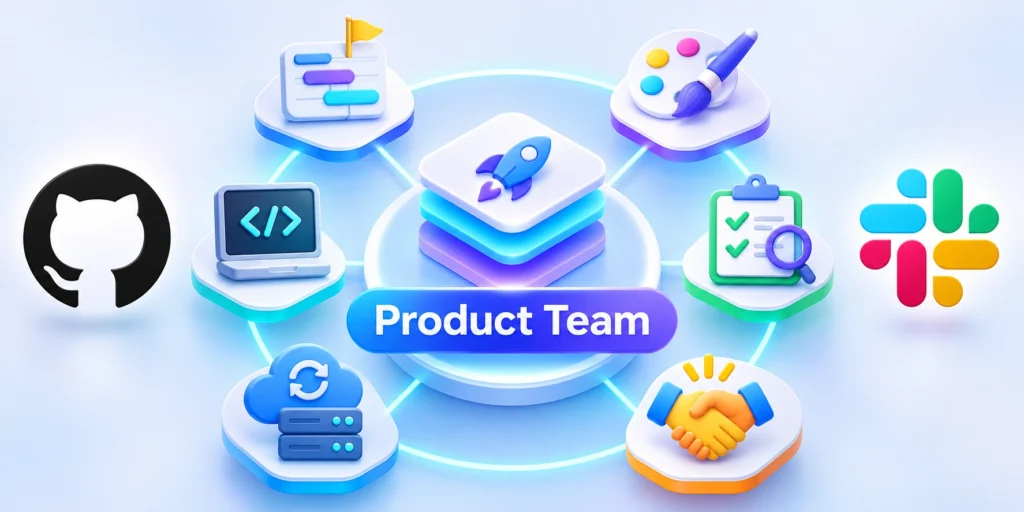
Team design should follow the product’s decisions and delivery risks. Adding roles without clear responsibilities can increase meetings while leaving important work unowned.
A stable core team preserves context across releases. Specialists can join for architecture, accessibility, performance, data, security, or platform work when their expertise becomes necessary.
Assign roles around decisions and delivery
The client product owner sets priorities, resolves business questions, and accepts outcomes. A delivery lead coordinates execution, dependencies, evidence, and communication across both organizations.
Technical leadership protects architecture, engineering standards, and maintainability. Engineers, designers, and quality specialists contribute distinct evidence rather than operating as interchangeable capacity.
Review these practical points for Assign roles around:
- Name product and technical owners
- Define decision and approval authority
- Document role availability and overlap
- Plan specialist access before need
- Establish onboarding and replacement expectations
Avoid excessive management layers between users and delivery teams. Important context should reach the people designing, implementing, testing, and supporting the affected workflow.
Capacity plans must account for reviews, testing, operational work, and maintenance. Treating every available hour as feature production creates hidden queues and neglected reliability.
Evidence for Structure the Nearshore Product Team
Make decisions about structure the nearshore product team traceable to evidence, assumptions, and named responsibilities. Preserve why rejected options did not fit the present context.
Review delivery after several real iterations. Capture handoff delays, unclear ownership, capacity constraints, and improvements in the operating backlog.
Consider these operating checks for Evidence Structure Nearshore:
- Structure the Nearshore Product Team evidence
- Option tradeoffs and exclusions
- Observed results and exceptions
- Named follow-up actions
The evidence checkpoint keeps structure the nearshore product team connected to observable results and accountable follow-up.
Product ownership and technical leadership
Define who can reprioritize work, accept risk, approve releases, and resolve architecture disputes. Escalation should be reachable without bypassing the people responsible for delivery.
Track team stability, onboarding time, decision delay, unfinished work, defects, and support load. These signals reveal structural problems earlier than utilization reports.
Collaborate Across United States Time Zones
Time-zone proximity creates opportunities for live collaboration, but it does not automatically create alignment. Teams still need intentional ceremonies, durable records, and protected focus time.
The working agreement should reflect client locations, team locations, daylight-saving changes, support needs, and decision urgency. Publish the schedule where everyone can find it.
Design communication before work begins
Reserve overlap for decisions, demonstrations, discovery, complex debugging, and relationship building. Routine status information belongs in accessible asynchronous tools rather than recurring meetings.
Written decisions should record context, alternatives, tradeoffs, owner, date, and follow-up. This history supports onboarding and prevents old debates from restarting without new evidence.
Use these decision criteria for Design communication before:
- Publish core overlap hours
- Define response expectations by urgency
- Record decisions and demonstrations
- Protect uninterrupted engineering time
- Review meeting value regularly
Language proficiency must be tested through real delivery discussions. Sales fluency does not prove that technical contributors can explain risk, challenge assumptions, or document operating procedures.
Cultural alignment grows through explicit norms and feedback. Teams should discuss disagreement, escalation, lateness, uncertainty, and mistakes before pressure exposes incompatible expectations.
Evidence for Collaborate Across United States Time Zones
Define success for collaborate across united states time zones with observable behavior, a representative population, a review date, and an owner who can act on the result.
Operational acceptance requires predictable overlap. Confirm decision windows, handoffs, escalation coverage, documentation, and ownership across both teams.
Compare these priorities for Evidence Collaborate Across:
- Collaborate Across United States Time evidence
- Representative test population
- Support and maintenance owner
- Scheduled evidence review
The evidence checkpoint keeps collaborate across united states time zones connected to observable results and accountable follow-up.
Language and cultural alignment
Use a representative workshop during selection. Ask proposed team members to clarify an ambiguous requirement, explain a tradeoff, and document the resulting decision.
Review communication problems as operating issues rather than personal failures. Adjust channels, ownership, context, or cadence, then verify whether delay and rework actually improve.
Govern Delivery and Maintain Visibility
Delivery visibility comes from working evidence, not constant activity reports. Leaders should understand what changed, what remains uncertain, and which decision blocks progress.
Governance must support the team instead of creating an approval maze. Use lightweight records for routine work and stronger review for consequential architecture, data, cost, or release decisions.
Measure progress through working evidence
Demonstrations should use realistic scenarios and current software. Compare completed behavior with acceptance criteria, known limitations, telemetry, and the remaining path toward the business outcome.
Backlogs need clear ordering, dependencies, and ownership. Large items should become testable slices without separating essential validation, data, or recovery from the visible interface.
Review these practical points for Measure progress through:
- Review working software frequently
- Maintain risks and decision logs
- Track blocked work and dependencies
- Record accepted scope changes
- Connect releases to business evidence
Status reporting should distinguish delivered, deployed, adopted, and effective. A feature can exist in production without users completing the intended workflow or receiving measurable value.
Use a small scorecard covering delivery flow, quality, reliability, support, adoption, and commercial outcomes. Avoid optimizing one indicator while another accumulates risk.
Evidence for Govern Delivery and Maintain Visibility
Evaluate govern delivery and maintain visibility against customer value, delivery risk, operating cost, internal skill, and future change. Avoid optimizing one dimension while hiding another.
Keep governance adaptable without losing accountability. Preserve decision logs, metric definitions, escalation paths, and transition steps as the engagement evolves.
Consider these operating checks for Evidence Govern Delivery:
- Govern Delivery and Maintain Visibility evidence
- Delivery and operational risk
- Internal capability and cost
- Transition and exit path
The evidence checkpoint keeps govern delivery and maintain visibility connected to observable results and accountable follow-up.
Risks, dependencies, and escalation
Every material risk needs an owner, consequence, probability, response, trigger, and review date. Closed risks should retain evidence explaining why the exposure changed.
Dependencies require agreements with system owners and vendors. Record required access, response expectations, test conditions, fallback options, and impact when an external commitment slips.
Estimate Nearshore Development Costs

Nearshore pricing reflects roles, seniority, commitment, technology, management, quality, infrastructure, and risk. Hourly rates alone cannot predict the total cost of useful delivery.
Estimate the operating system around engineering. Include discovery, planning, reviews, testing, cloud work, support, onboarding, travel, tools, and transition responsibilities.
Price the operating model, not only hourly rates
Capacity models usually charge for an agreed team or role allocation. They offer flexibility when priorities change, yet the client must provide active product governance.
Project pricing depends on reliable scope and acceptance criteria. Providers add contingency when dependencies, approvals, data, or technical conditions remain uncertain during contracting.
Use these decision criteria for Price operating model:
- Compare equivalent roles and responsibilities
- Separate recurring and one-time costs
- State currency and payment assumptions
- Include management and quality work
- Model transition and termination expenses
Forecast a range rather than a false point estimate. Document the assumptions, exclusions, confidence, and conditions that could materially change cost or timeline.
Cost reviews should connect spending with delivered capability, quality, reliability, and customer evidence. Utilization alone can reward busy teams without proving useful progress.
Evidence for Estimate Nearshore Development Costs
Preserve the current baseline, representative evidence, named owner, and operating constraints before approving decisions about estimate nearshore development costs.
Validate estimates with technical leads and budget owners. Record assumptions, exclusions, uncertainty ranges, and the next cost review before committing.
Compare these priorities for Evidence Estimate Nearshore:
- Estimate Nearshore Development Costs evidence
- Accountable owner and reviewer
- Known dependencies and constraints
- Acceptance and follow-up decision
The evidence checkpoint keeps estimate nearshore development costs connected to observable results and accountable follow-up.
Contracts, invoicing, and change control
Clarify intellectual property, confidentiality, subcontractors, data handling, insurance, liability, acceptance, support, transition, termination, jurisdiction, currency, taxes, and invoicing cadence.
Legal and financial professionals should review consequential terms. Delivery leaders must confirm that the written agreement matches the operating model promised during selection.
Evaluate a Nearshore Development Partner

Partner evaluation should test the proposed team and operating approach. Brand claims, certifications, and polished case studies cannot replace evidence relevant to the buyer’s product.
Begin with the decision criteria, then request representative artifacts. Useful evidence may include architecture records, test strategies, release controls, support runbooks, and anonymized delivery examples.
Verify capability through relevant evidence
Meet the people expected to perform the work. Ask how they would clarify the first workflow, map dependencies, test assumptions, protect data, and respond to a failed release.
References should match the service and complexity. Confirm team continuity, communication quality, problem handling, transparency, and transition behavior rather than requesting only favorable outcomes.
Review these practical points for Verify capability through:
- Interview proposed delivery leaders
- Review representative technical artifacts
- Test communication with real scenarios
- Confirm account and repository control
- Discuss failure, recovery, and exit
Examine commercial alignment. A provider should explain which engagement model fits, what evidence is missing, and when another solution would serve the buyer better.
Avoid selection processes that reward unsupported certainty. Responsible teams expose assumptions, identify client obligations, and recommend a bounded next step before promising a transformation.
Evidence for Evaluate a Nearshore Development Partner
Compare the proposed approach with the current operating reality for evaluate a nearshore development partner. Include customer impact, maintenance effort, reversibility, and internal capability.
Test partnership through bounded discovery or a pilot. Document responsiveness, technical judgment, transparency, unresolved risks, and criteria for expansion.
Consider these operating checks for Evidence Evaluate Nearshore:
- Evaluate a Nearshore Development Partner evidence
- Operational impact and ownership
- Failure and recovery evidence
- Revision or expansion criteria
The evidence checkpoint keeps evaluate a nearshore development partner connected to observable results and accountable follow-up.
Red flags during selection
Other warning signs include generic proposals, unavailable team members, unexplained rate differences, certification claims without scope, and resistance to documenting decisions or acceptance evidence.
Score providers consistently, then discuss disagreements. The final decision should record strengths, risks, conditions, owners, and the evidence required during the first review period.
Run a 90-Day Nearshore Delivery Pilot
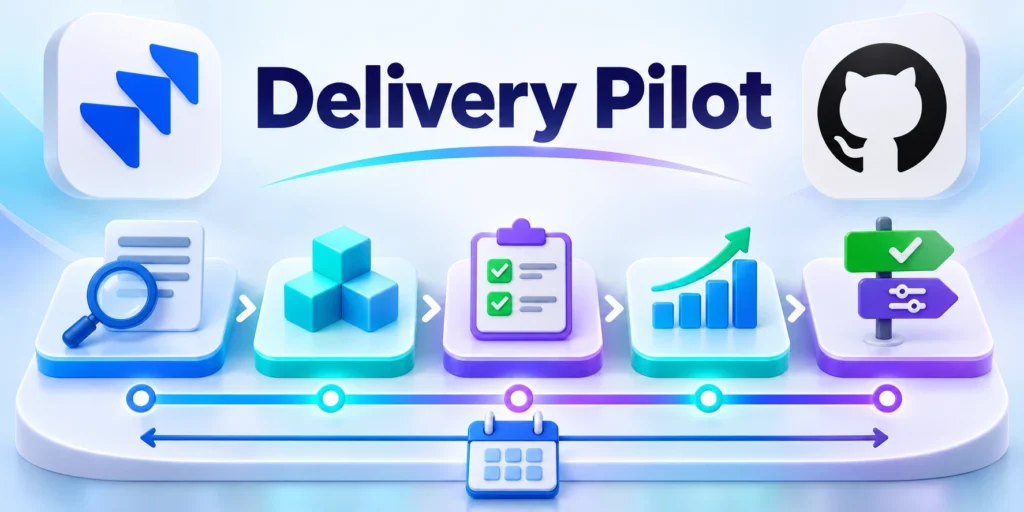
A pilot tests collaboration with real work while limiting exposure. It should produce a useful outcome, delivery evidence, and a defensible decision about expansion.
Choose a representative workflow with meaningful dependencies and manageable risk. Avoid a ceremonial prototype that cannot reveal integration, quality, communication, or operational behavior.
Test the relationship with real work
The first month establishes access, baselines, architecture context, working agreements, and a prioritized slice. Confirm that both organizations can make timely decisions.
The second month delivers and tests the slice. Demonstrations, defects, blocked work, decision quality, and documentation provide stronger evidence than promised velocity.
Use these decision criteria for Test relationship real:
- Confirm outcomes and pilot boundaries
- Provision controlled access and environments
- Deliver one representative vertical slice
- Test release and recovery behavior
- Review evidence and decide next steps
The final month stabilizes the result, transfers knowledge, and evaluates the operating model. Compare progress, quality, reliability, communication, cost, and stakeholder workload with expectations.
Expansion should follow evidence, not sunk cost. Adjust roles, scope, cadence, or commercial structure when the relationship is promising but the initial design needs correction.
Evidence for Run a 90-Day Nearshore Delivery Pilot
Make decisions about run a 90-day nearshore delivery pilot traceable to evidence, assumptions, and named responsibilities. Preserve why rejected options did not fit the present context.
Review the pilot after real delivery cycles. Capture outcome evidence, operating friction, exceptions, and the decision to expand, revise, or stop.
Compare these priorities for Evidence Run 90-Day:
- Run a 90 Day Nearshore evidence
- Option tradeoffs and exclusions
- Observed results and exceptions
- Named follow-up actions
The evidence checkpoint keeps run a 90-day nearshore delivery pilot connected to observable results and accountable follow-up.
Expansion, revision, or exit criteria
Exit planning protects both organizations. Confirm code, documentation, credentials, infrastructure, open work, known defects, financial closure, and support responsibilities before access changes.
A successful pilot creates a believable next backlog and operating agreement. It should not leave the client dependent on undocumented knowledge held by one individual.
Prepare Your Organization for Nearshore Delivery
Nearshore delivery works best when the client prepares decisions, access, product ownership, and feedback before external engineers begin changing production-bound software.
Preparation does not require a finished specification. It requires enough shared context to expose uncertainty, protect customers, and keep the first delivery boundary testable.
Establish internal ownership
Name one product decision owner and one technical counterpart. Clarify who accepts work, resolves priorities, approves access, and coordinates affected business teams.
Give these owners time to participate. A nearshore team cannot compensate for delayed answers, competing instructions, or an absent person responsible for product tradeoffs.
Review these practical points for Establish internal ownership:
- Name product and technical owners
- Reserve decision and review time
- Define escalation contacts and timing
- Identify security and legal reviewers
- Confirm budget and change authority
Document stakeholders who influence requirements, data, operations, customer communication, and release timing. Distinguish contributors from final decision owners to avoid approval ambiguity.
Agree how urgent production decisions differ from roadmap decisions. This protects delivery cadence without allowing emergencies to become a permanent method of prioritization.
Prepare access and environments
Inventory repositories, environments, cloud accounts, credentials, documentation, monitoring, test data, and deployment mechanisms required by the initial scope.
Use client-controlled accounts and supported access methods. Avoid shared personal credentials or infrastructure that the client cannot audit, transfer, or recover independently.
Define the first delivery boundary
Choose a representative outcome that can demonstrate product understanding, engineering quality, collaboration, release discipline, and operational ownership within a bounded period.
Avoid making the pilot either trivial or existential. It should contain meaningful uncertainty without placing the entire business transition on an untested relationship.
Consider these operating checks for Define first delivery:
- State the user and business outcome
- Describe included and excluded behavior
- Provide representative acceptance scenarios
- Identify dependent systems and owners
- Define release and rollback evidence
Capture existing architecture, known defects, support patterns, performance constraints, and planned changes that could influence the boundary. Unknowns should remain visible rather than disguised as assumptions.
Define how completed work reaches users. Acceptance includes integration, testing, security review, deployment, monitoring, documentation, and support readiness where those activities apply.
Create a working communication system
Set recurring planning, demonstration, and risk-review moments. Use written decisions, owner names, due dates, and links to evidence so asynchronous work remains reliable.
Agree which channel handles incidents, blockers, product questions, and general discussion. Important decisions should return to a durable system instead of remaining inside chat history.
Protect continuity from the beginning
Require documentation, version control, reproducible environments, release notes, ownership transfer, and knowledge sharing as normal delivery outputs rather than end-of-contract cleanup.
Plan onboarding and offboarding for every role. Access removal, open work, documentation, credentials, and operational responsibilities should have explicit transition steps.
Use these decision criteria for Protect continuity beginning:
- Keep repositories client controlled
- Record architecture and decision context
- Pair on critical platform knowledge
- Test recovery and release procedures
- Review concentration of key knowledge
Measure whether the internal team can explain the solution and operate essential paths. Dependency risk rises when only one external specialist understands a critical decision.
With these foundations, a nearshore partner can focus on product and engineering work. Without them, coordination debt consumes the time-zone advantage the model should create.
Choose the Next Nearshore Development Step
The right next step depends on current evidence. Some organizations need product discovery, while others need delivery capacity, modernization, integration, or recovery from an existing engagement.
Begin with a bounded assessment that identifies the workflow, users, baseline, systems, constraints, owners, and decision. Avoid requesting a universal estimate without sufficient context.
Start with the smallest useful decision
Prepare a short description of the business problem and current process. Include supported users, affected systems, urgency, existing documentation, known risks, and desired outcome.
Fase Network can define a delivery model, technical assessment, pilot, or complete product engagement. Recommendations should match the evidence rather than force every inquiry into development.
Compare these priorities for Start smallest useful:
- Name the business outcome
- Identify users and system owners
- Gather architecture and workflow evidence
- Define budget and timing boundaries
- Select the first decision checkpoint
The initial conversation should clarify fit, missing information, likely dependencies, and the most responsible next step. It is not a substitute for discovery when uncertainty remains material.
Clients retain control of priorities, accounts, code, and consequential decisions. Our role is to improve delivery evidence, technical judgment, and accountable execution.
Evidence for Choose the Next Nearshore Development Step
Define success for choose the next nearshore development step with observable behavior, a representative population, a review date, and an owner who can act on the result.
Separate proposal completion from engagement readiness. Confirm scope, owner, acceptance criteria, communication rhythm, commercial terms, and the first review.
Review these practical points for Evidence Choose Next:
- Choose the Next Nearshore Development evidence
- Representative test population
- Support and maintenance owner
- Scheduled evidence review
The evidence checkpoint keeps choose the next nearshore development step connected to observable results and accountable follow-up.
Contact Fase Network
Use the Fase Network contact page to describe the product, current constraint, target users, relevant systems, and the decision your team needs to make.
We will review the context and propose a focused starting point. Any larger commitment should follow shared evidence about scope, responsibilities, risk, and expected outcomes.
FAQ
What is nearshore software development?
Nearshore software development uses an engineering team in a nearby country or region. The model seeks practical time-zone overlap, collaboration, and access to relevant capability.
How is nearshore development different from offshore outsourcing?
Nearshore teams generally share more working hours with United States clients. Offshore models may offer broader time separation, which can help or hinder particular workflows.
Which projects fit a nearshore software team?
Nearshore teams can support web applications, mobile products, SaaS platforms, integrations, modernization, quality engineering, and ongoing development when ownership and access are clear.
Does nearshore development always cost less?
Not necessarily. Total cost depends on roles, seniority, quality, rework, management, collaboration, infrastructure, support, and transition rather than geography or hourly rates alone.
Can a nearshore team work during United States business hours?
Many nearshore locations provide meaningful overlap. Confirm the proposed team’s actual schedule, daylight-saving effects, support expectations, and availability for consequential decisions.
Who owns the source code and cloud accounts?
Ownership depends on the agreement. Clients should confirm intellectual property, repository access, cloud control, credentials, documentation, licenses, and transition rights before work begins.
How should a nearshore team be evaluated?
Evaluate the proposed people, relevant artifacts, communication, quality practices, operating model, references, commercial terms, failure handling, account control, and transition readiness.
Should the engagement start with a pilot?
A bounded pilot is useful when capability or collaboration remains uncertain. It should deliver representative work and define expansion, revision, and exit criteria beforehand.
Can nearshore developers maintain an existing application?
Yes, after controlled access and technical discovery. The team should assess architecture, dependencies, tests, environments, incidents, documentation, backlog, and current operating responsibilities.
What information is needed for an initial conversation?
Share the business problem, users, current workflow, systems, constraints, desired timing, budget boundaries, available documentation, and the first decision leadership needs to make.
Contact Us on LinkedIn
Discuss your Nearshore Software Development Services priorities directly through LinkedIn.
 Sergio TimóteoConsulting EngineerDigital Marketing Strategist, CRM Certified Professional, SEO Expert, AI, Social Media, Paid Ads, Real Estate, B2C and B2B Sales. 22+ Years Growing Businesses and Startups with Technology and Innovation.LinkedIn profile