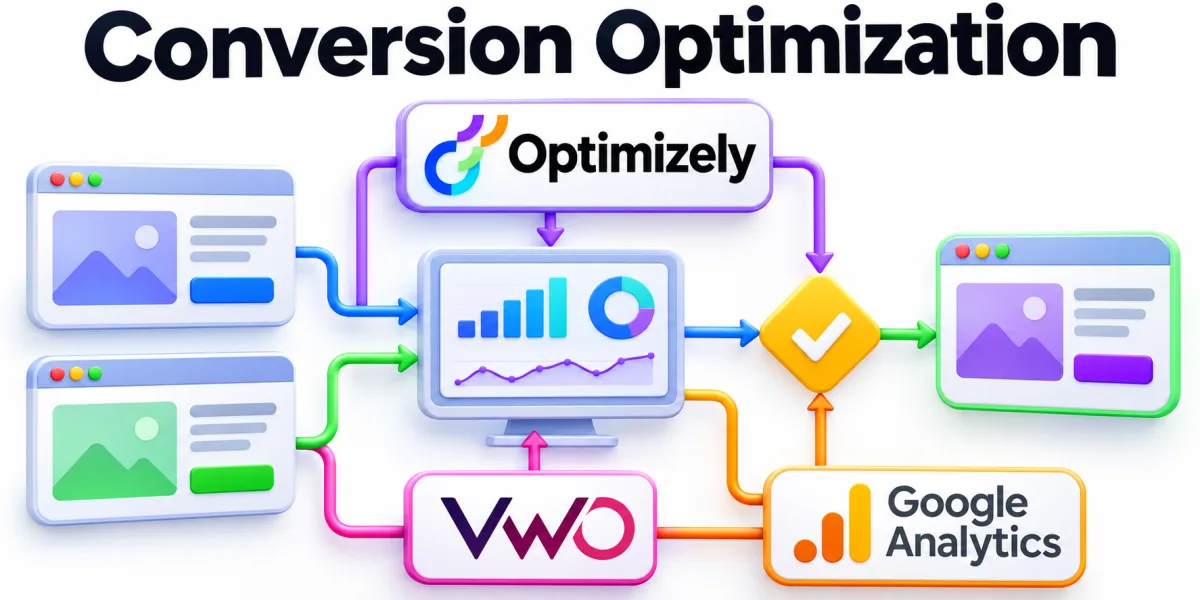
Conversion optimization improves the path from a relevant visit to an action the business values. Start with the decisions people need to make and the evidence available to them.
Begin where visitors hesitate, abandon the page, or submit inquiries that sales cannot serve. The examples below show how to turn that situation into a practical next step.
What Can Improve Conversion on a B2B Page?

A service page may need stronger proof and clearer next-step expectations before its form. Follow that example from the first decision through the point where someone must confirm the outcome.
Compare qualified submissions and useful sales conversations with completion rate after a change. Establish what you can observe today so you have a baseline for assessing changes.
Find the Friction Behind the Metric
Review visitor behavior and listen to customer-facing teams who hear objections directly. Compare the result with a recent case before deciding whether to adjust the process.
Trace a visitor from the referring promise through the page, form, and confirmation. Ask the responsible team to confirm it can repeat the check without relying on undocumented steps.
Make and Test a Focused Change
Address a specific behavior with a testable hypothesis and a meaningful primary outcome. Write down the conditions that could change the decision and agree who will review them.
Check whether tracking and assignment reliably reflect the page changes the experiment compares. Keep an example that shows what can go wrong so the next person has a concrete reference.
Evaluate What the Change Produced
Review who completed the action and whether those records progressed to useful follow-up. Use the result to decide what to keep, change, or investigate during the next review.
Document the effect and any new questions so later experiments can build on the finding. Share the outcome with the people who will handle the next case and record any open questions.