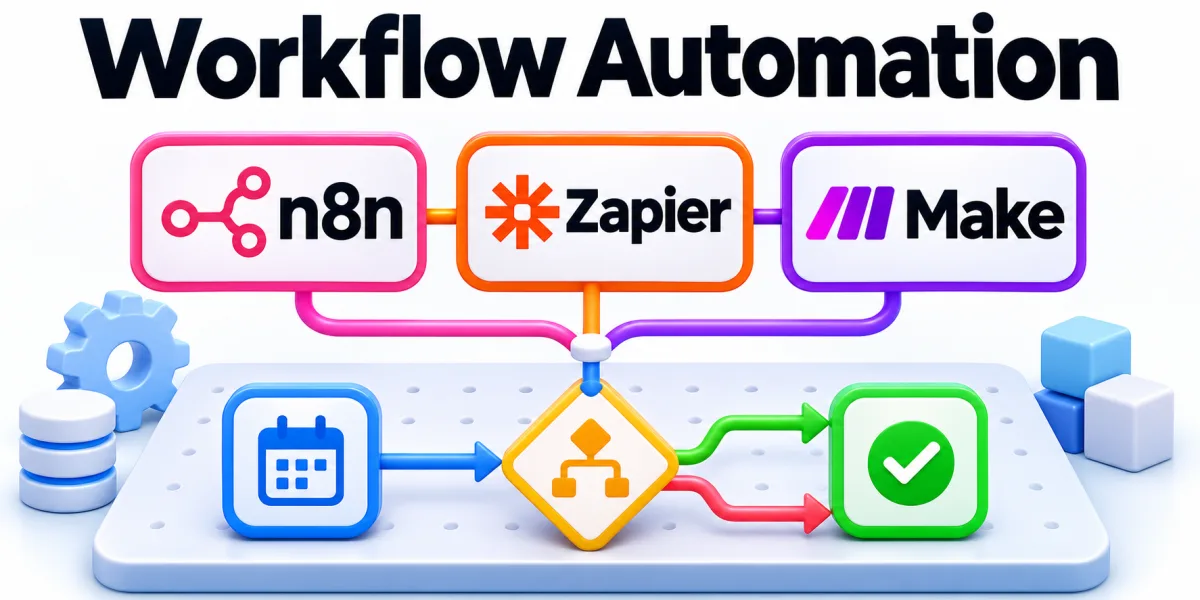
Workflow automation moves work through defined stages and uses different tools depending on the decision. Start with the decisions people need to make and the evidence available to them.
Map routine steps and points requiring judgment before adding models or more complex integrations. The examples below show how to turn that situation into a practical next step.
Which Workflows Benefit From Combining Rules and AI?

A content workflow can use rules for approvals and a model to draft material for review. Follow that example from the first decision through the point where someone must confirm the outcome.
Measure exception volume, turnaround time, and manual corrections to assess the whole automated workflow. Establish what you can observe today so you have a baseline for assessing changes.
Map Triggers and Stage Ownership
Identify the event that starts each step and the information it must produce. Compare the result with a recent case before deciding whether to adjust the process.
Name an accountable owner for steps where an unresolved issue could block later work. Ask the responsible team to confirm it can repeat the check without relying on undocumented steps.
Use Rules and Models Deliberately
Keep predictable routing and validation in explicit rules the team can test. Write down the conditions that could change the decision and agree who will review them.
Evaluate model outputs on representative inputs before using them in downstream decisions. Keep an example that shows what can go wrong so the next person has a concrete reference.
Handle Exceptions and Review Quality
Send cases with missing information or poor outputs to a person with enough context. Use the result to decide what to keep, change, or investigate during the next review.
Trace failures through the workflow and verify that the fix resolves the affected stage. Share the outcome with the people who will handle the next case and record any open questions.