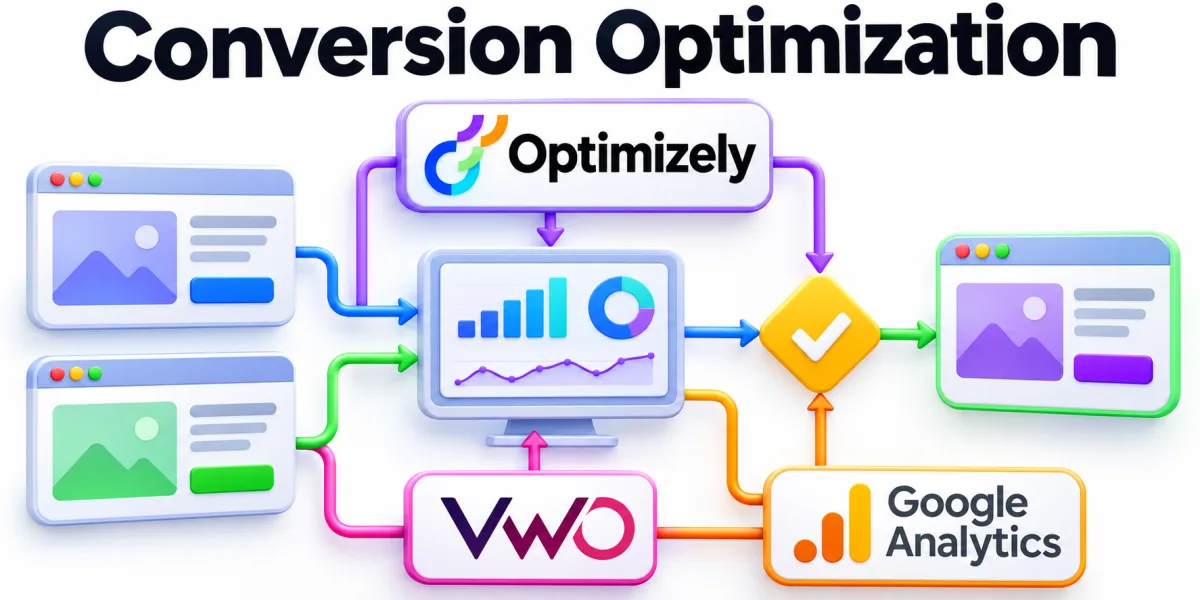
Conversion rate optimization examines the steps people take before completing a valuable action. For B2B teams, the question includes whether the resulting leads are relevant and ready for follow-up.
This archive covers UX friction audits, message match, prioritization, demo requests, and statistical interpretation. Use it to investigate a specific journey and choose changes that can be measured responsibly.
Which Changes Can Improve B2B Conversions?

Trace a visitor from the referring message through the page, form, and confirmation. Note where information becomes unclear, when the visitor must commit, and which objections remain unanswered.
Separate problems you can verify directly from hypotheses you need to test. A broken form can be fixed immediately, while a revised offer may need a controlled experiment.
Diagnose Friction Before Choosing a Test
Review session behavior alongside customer interviews and sales feedback. A long time on a form could reflect confusion, a complex requirement, or time spent gathering information needed to proceed.
Describe the friction in terms of the visitor’s task. Propose a change that addresses that point, such as clarifying what a demo includes before requesting contact details.
Run Experiments With Clear Decision Rules
Pick a primary outcome and set guardrails before launch. Check assignment, tracking, and audience eligibility so the result reflects the change you intended to evaluate on the page.
Plan how long to run the test and which outcomes warrant a decision. Low-volume B2B pages often need a longer observation window or a different research method.
Measure Lead Quality and Record the Learning
Check whether incremental submissions are accepted by sales and progress to useful conversations. A higher completion rate can have limited value if most additional records do not fit the offer.
Record the hypothesis, change, outcome, and interpretation for future teams. Include inconclusive tests, since they can prevent duplicate work and reveal where stronger evidence would improve the next experiment.