


Why B2B Referral Programs Work
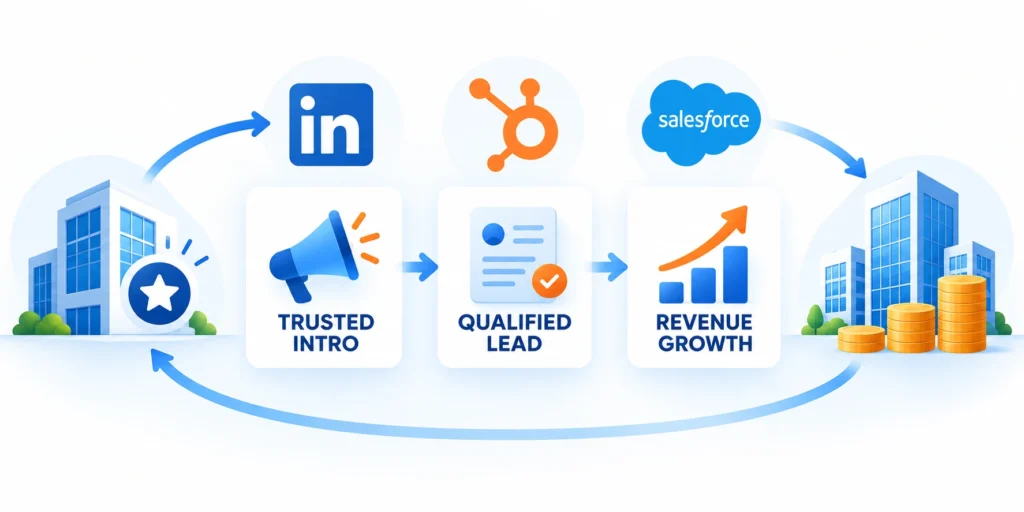
A B2B referral program gives customers, partners, and professional peers a clear way to introduce a company to organizations that may benefit from its work.
It works best as a reliable relationship process, not a request to send names or a promise that every introduction will become revenue.
How a referral can reduce friction
A trusted introduction can reduce the cold-start problem in complex sales. The buyer enters a conversation with context about the problem and the source of the recommendation.
That context can help a seller prepare a more relevant first meeting, but it does not replace qualification, discovery, product fit, or procurement review.
Referrals are a channel, not a shortcut
Referral leads still need the same honest evaluation as other opportunities. A familiar name should not cause a team to skip questions about urgency, ownership, budget, or fit.
Measure whether the program creates qualified conversations and healthy customer relationships, rather than counting introductions as wins.
Protect the advocate’s credibility
A useful program also protects the person making the introduction. It gives them a simple, respectful way to ask permission before sharing another person’s details.
That permission-first approach matters in small professional communities. Poorly handled outreach can damage the advocate’s credibility more than it helps the company.
Connect referrals to acquisition operations
For teams improving broader customer acquisition operations, see this enterprise CRM implementation guide for ways to connect sales processes and customer data.
Keep referral ownership, status definitions, consent records, and response timing aligned with the CRM process so advocates receive consistent and respectful updates.
Use a consistent referral intake
A consistent intake protects advocates and makes it easier for sales teams to compare referral quality across different relationship types.
Keep the intake short enough for advocates to complete, while preserving the information needed to avoid duplicate outreach or unsupported promises.
Collect these details before routing a referral:
- Advocate and relationship type
- Prospect consent context
- Account and buying role
- Problem or opportunity described
- Named sales owner and response date
- Record every approval with a named owner
- Review exceptions before expanding the program
- Keep the process understandable for every participant
| Decision | Owner | Evidence |
|---|---|---|
| Accept referral | Sales owner | Fit and consent |
| Contact prospect | Assigned seller | Introduction context |
| Approve reward | Program owner | Published terms |
| Resolve dispute | Operations lead | CRM history |
Choose the Right Referral Model
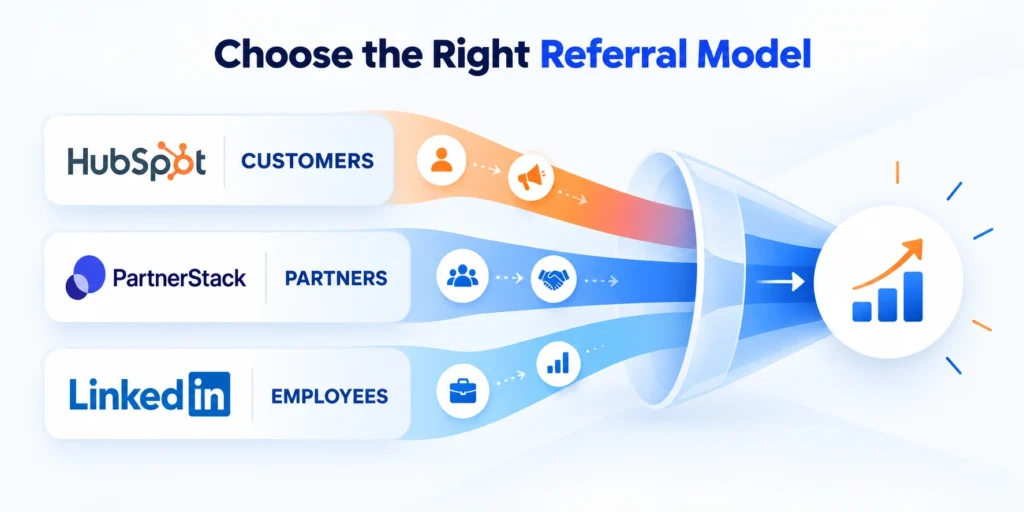
Start by deciding who can make a useful introduction and what relationship they have with the prospective buyer. Different advocates need different rules and support.
A customer referral, a channel partner introduction, and an employee referral are not interchangeable. Each comes with distinct expectations, incentives, permissions, and reporting needs.
Customer referrals
Customers can describe the problem they solved and the experience of working with your team. Ask for an introduction only after you have delivered value and addressed open service issues.
Offer an optional message they can personalize. Do not imply that customers should make claims they cannot support or share confidential details about their employer.
Make the request easy to decline
Invite a specific introduction instead of asking every customer to refer broadly. A clear description of the ideal account helps the customer decide whether anyone comes to mind.
Let the customer say no without follow-up pressure. Continue serving them normally, whether they participate, need more time, or prefer not to make introductions.
Partner referrals
Partners may bring complementary expertise, an established buyer relationship, or a service that fits before or after your offer. Define where ownership changes hands.
Document lead registration, account conflicts, response expectations, deal visibility, and any compensation in the partner agreement. An informal email thread is not a durable operating policy.
Employee and advisor referrals
Employees and advisors can identify relevant organizations, but they should not pressure personal contacts or represent a private opinion as an official customer endorsement.
Set clear boundaries for outreach, disclosure, and conflicts of interest. In regulated sectors, review the policy with the appropriate compliance owner.
Start with one operating model
Choose one primary model for the pilot. You can add another later when the first workflow has an owner, reliable attribution, and a record of handling referrals well.
A single model reveals where consent, routing, reporting, and reward decisions need adjustment before multiple advocate groups create competing rules.
Clarify the advocate experience
Advocates need a clear reason to participate, a simple action, and accurate expectations about what happens after an introduction is accepted.
Transparent terms make the program easier to recommend because advocates do not need to improvise explanations about incentives, privacy, or follow-up.
State these expectations before requesting introductions:
- Who the program is for
- What makes a referral eligible
- How consent is obtained
- When updates are provided
- How rewards are decided
- Record every approval with a named owner
- Review exceptions before expanding the program
- Keep the process understandable for every participant
Design an Advocate-Friendly Offer

The offer should make participation easy without turning a trusted relationship into a transaction. The value may be recognition, useful access, a service credit, or compensation.
Choose the reward only after checking the audience, contract terms, procurement rules, and applicable policies. A large reward can attract poor-fit referrals or create discomfort.
Match the reward to the relationship
A customer may prefer a charitable donation or account credit over cash. By contrast, strategic partners may need a written revenue-sharing arrangement and predictable deal registration.
Some organizations prohibit employees from accepting gifts or referral fees. Provide a no-reward option and never ask an advocate to conceal an incentive.
Disclose incentives clearly
If an incentive could affect how a recommendation is evaluated, disclose that relationship clearly near the recommendation and before a prospect relies on it.
Requirements vary by jurisdiction and context, so ask qualified counsel to review the program where it operates before advocates begin sharing incentives.
Write rules that are easy to understand
State who can participate, what counts as a qualified referral, when rewards are earned, how attribution works, and whom to contact with questions.
Explain what happens when a company is already in the CRM, multiple advocates refer the same account, or the opportunity does not meet your target profile.
Make eligibility rules predictable
Keep exclusions narrow and explain them in plain language. Avoid retroactive changes that leave advocates unsure whether an introduction qualified.
Before launch, ask a customer or partner unfamiliar with the draft to explain the rules back to you. Clarify any point they interpret differently than intended.
Build a respectful handoff process
A referral workflow should preserve the advocate relationship while giving the prospect a clear and timely next step with an accountable owner.
Escalate exceptions through one documented path. That prevents a referral from being lost between systems or contacted by several representatives at once across the complete referral process.
Use these controls for the referral handoff:
- Confirm permission before outreach
- Check for existing account activity
- Assign one accountable owner
- Acknowledge the advocate promptly
- Record the next decision clearly
- Record every approval with a named owner
- Review exceptions before expanding the program
- Keep the process understandable for every participant
Build the Referral Workflow
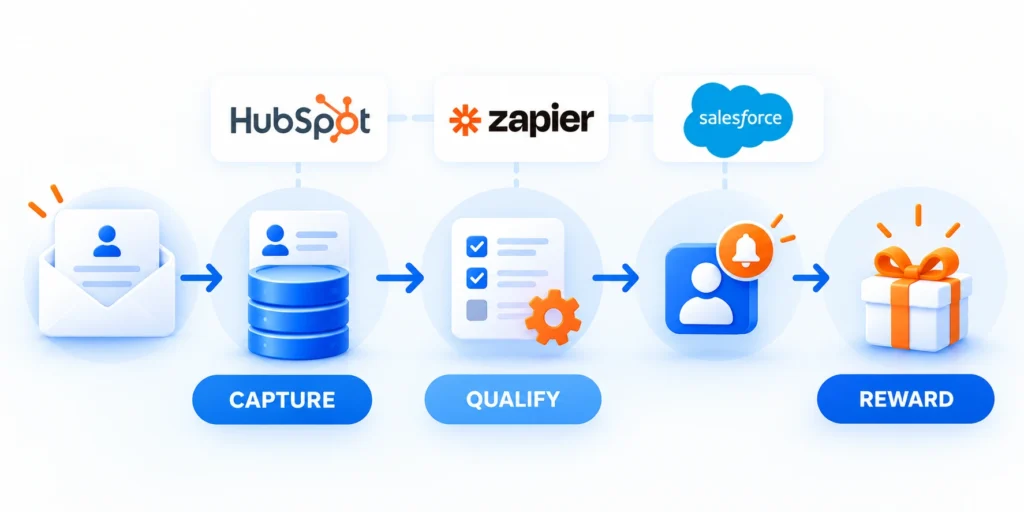
A program becomes dependable when every introduction receives a clear owner, a timely response, and a consistent CRM record. The first workflow can be lightweight.
Use the CRM fields your team can maintain. Adding many new fields before the process is understood usually creates inconsistent data rather than better attribution.
A practical intake sequence
A predictable intake gives advocates confidence that their introduction will receive respectful handling and that referral credit will not be decided informally.
Use these steps to process each introduction:
- Ask the advocate to confirm that the prospect is open to an introduction.
- Capture advocate, referred organization, contact, date, and context in one intake form or CRM workflow.
- Check for an existing account, active opportunity, partner claim, or prior referral before assigning credit.
- Assign an owner and acknowledge receipt to the advocate without exposing confidential prospect information.
- Qualify the opportunity using the same criteria applied to other leads.
- Update the referral status and send a brief outcome note when appropriate.
- Apply the reward only after the published eligibility condition is met.
For a simple CRM setup, start with a referral source field, advocate contact, referral date, referred account, status, owner, and reward eligibility.
Test the flow with one internal record before inviting advocates. Confirm that duplicate detection, ownership assignment, notifications, and reporting behave as expected.
Define a workable qualification path
Use an existing lead or opportunity stage where possible. A referral field should supplement the sales process rather than create a parallel pipeline nobody reviews.
Agree how sales will return a referral that lacks context. The advocate or partner may be able to clarify the introduction before the prospect receives another message.
Protect consent and response quality
Whenever possible, let the advocate make the introduction directly. If your team receives contact details, record why the person expects to hear from you.
Do not reward advocates for uploading lists or sharing private contact data without permission. Ask a privacy or legal professional to review collection and retention practices for your markets.
Make the first follow-up respectful
Respond with context, not a generic sales sequence. Mention the shared connection appropriately, honor any requested timing, and stop outreach when the prospect declines.
Structured advocate-to-prospect workflows can clarify handoffs, but each team should adapt the process to its CRM, consent records, sales ownership, and customer expectations.
Launch a Small Pilot

A pilot lets a team test its rules, follow-up, and reward before promoting the program broadly. Select a small group with recent, positive experience.
Choose a defined period and a manageable number of advocates. The goal is to learn where the process fails, not to claim statistical certainty from a few referrals.
Set the pilot boundaries
Write down the ideal referred account, excluded accounts, qualifying event, attribution window, reward condition, owner, response-time target, and review date.
For example, a software consultancy might pilot with ten customers who recently completed a successful project. It could count an introduction after a discovery meeting is accepted.
Adapt the pilot to your sales cycle
That example is only a starting design. Adjust the participant count and qualifying event to the sales cycle, deal size, and capacity of your team.
Set the observation window around accepted conversations and opportunity progression, not merely the first introduction, because complex purchases need time to develop.
Run the pilot step by step
The pilot should produce operational learning, not merely a launch announcement, so each participant can understand the next action and accountable owner.
Follow these steps for a bounded pilot:
- Interview a few customers or partners about when an introduction would feel natural.
- Draft a one-page explanation with eligibility, workflow, reward, and contact details.
- Have sales, customer success, finance, and compliance review the parts they own.
- Invite a limited group personally and make participation optional.
- Process each referral manually if necessary, while recording the same fields consistently.
- At the review date, compare lead quality, response time, advocate experience, and cost.
- Revise the workflow before expanding the invitation list.
A manual pilot is often useful because it exposes unclear rules before automation makes them harder to change. Automate only repeated steps with stable inputs.
If advocates hesitate, ask why. The obstacle may be a confusing request, poor timing, a reward that conflicts with policy, or uncertainty about what to say.
Measure Referral Quality and Economics

Track a small set of measures that connect activity to outcomes. Separate referral volume from qualification, pipeline progress, revenue, and program cost.
Review the measures by advocate type and source cohort. A customer referral and a partner-sourced opportunity may have different sales motions and economics.
A useful scorecard
A scorecard links participation to commercial quality and advocate experience, preventing teams from treating raw introduction volume as proof of channel value.
Review these measures during every program cycle:
- Participation: invited advocates, active advocates, and repeat contributors.
- Quality: accepted referrals, qualified opportunities, and disqualification reasons.
- Speed: time from introduction to acknowledgment and first meaningful response.
- Progress: meetings, opportunities, wins, losses, and cycle time by referral source.
- Economics: reward and operating costs compared with attributable gross profit or another agreed measure.
- Experience: advocate feedback, prospect feedback, complaints, and opt-outs.
Define each metric before comparing teams. For example, agree whether a referral counts at form submission, accepted introduction, or qualified opportunity.
Keep the original event date and the date each status changes. That makes it possible to distinguish a slow process from a source that produces weaker fit.
Review a consistent time window
Compare referral cohorts only after they have had a similar opportunity to progress through your sales cycle. Recent referrals will naturally have less time to close.
Keep open pipeline separate from booked revenue. If a deal is delayed or lost, record the reason rather than crediting the program based on the original introduction alone.
Avoid attribution traps
Referral influence does not always mean referral sourcing. Record whether the advocate created the first introduction or helped an existing opportunity move forward.
When multiple sources contribute, document the attribution rule and keep the underlying source history. Do not give full credit to every channel if that double-counts revenue.
Keep attribution defensible
Compare referral performance with other channels only when definitions, time periods, and deal stages are consistent. Small samples should be reported as directional evidence.
Record the introduction date, advocate, account, owner, consent context, and later outcome so disputed credit can be resolved through evidence rather than memory.
Improve and Scale the Program

Scale only after the team can explain the rules, route referrals correctly, and close the loop with advocates. Growth magnifies both good processes and careless ones.
Use pilot feedback to improve the invitation, eligibility definition, response workflow, and reward. Change one major variable at a time when practical.
Diagnose common program problems
If participation is low, ask whether the request is timely and clear. Do not assume that increasing the incentive will solve a lack of trust or relevance.
If volume is high but qualification is poor, tighten the account profile, improve examples of a good introduction, and make the qualification rules visible.
Repair the intake handoff
If follow-up is slow, reduce handoffs and give one person responsibility for the intake queue. Acknowledge referrals even when the team cannot pursue them.
If disputes arise over ownership, publish a clear conflict rule, record decisions, and use one system of record. Avoid resolving each claim through informal exceptions.
Close the loop with advocates
Thank the advocate promptly and explain what happens next. Share only information the prospect has agreed can be shared, especially while a deal is active.
If the referral is not a fit, say so respectfully and explain the program’s decision in general terms. This helps advocates learn without exposing confidential sales details.
Expand with evidence
Add another advocate segment only when its workflow and incentives are understood. Partner referrals may require different agreements from customer introductions.
Automate reminders and routing after the team has stable rules. Keep a human owner for exceptions, consent concerns, account conflicts, and sensitive relationships.
Expand with clear ownership
Review the program regularly with sales, marketing, customer success, finance, and legal or compliance stakeholders as appropriate. Retire tactics that harm trust.
Assign ownership for advocate communication, sales acceptance, reward approval, data quality, and exception handling before extending a pilot to more channels.
Prevent Account and Ownership Conflicts
Check existing opportunities, account owners, partners, territories, and customer relationships before accepting or assigning a referral.
Route conflicts to a named reviewer and avoid exposing confidential deal information to advocates or competing teams.
Reconcile Incentives and Outcomes
Define eligibility, attribution, approval, payment, tax handling, reversals, disputes, and records before promising any material reward.
Audit accepted referrals against program terms and sales outcomes without rewarding duplicate, unauthorized, or misleading introductions.
Protect Advocate and Prospect Communication
Explain what information will be shared, who may contact the prospect, how consent is confirmed, and where questions can be raised.
Avoid pressuring advocates to disclose private relationships or implying that an introduction guarantees qualification, pricing, or acceptance.
Review Program Economics Honestly
Include incentive, administration, sales time, disputes, fraud controls, technology, and customer experience when comparing program value.
Use mature outcomes and transparent attribution; early introductions alone do not establish revenue impact or profitable growth.
Review the operating program regularly
Scaling requires more than adding advocates. Teams should compare quality, advocate experience, response speed, reward disputes, and commercial outcomes together.
These signals reveal whether the program is strengthening trusted relationships or merely generating names that no team can qualify responsibly.
Use these review signals before broader expansion:
- Accepted introduction rate
- Qualified opportunity progression
- Advocate satisfaction feedback
- Sales response-time adherence
- Dispute and reversal patterns
- Record every approval with a named owner
- Review exceptions before expanding the program
- Keep the process understandable for every participant
Govern referral incentives and disclosures
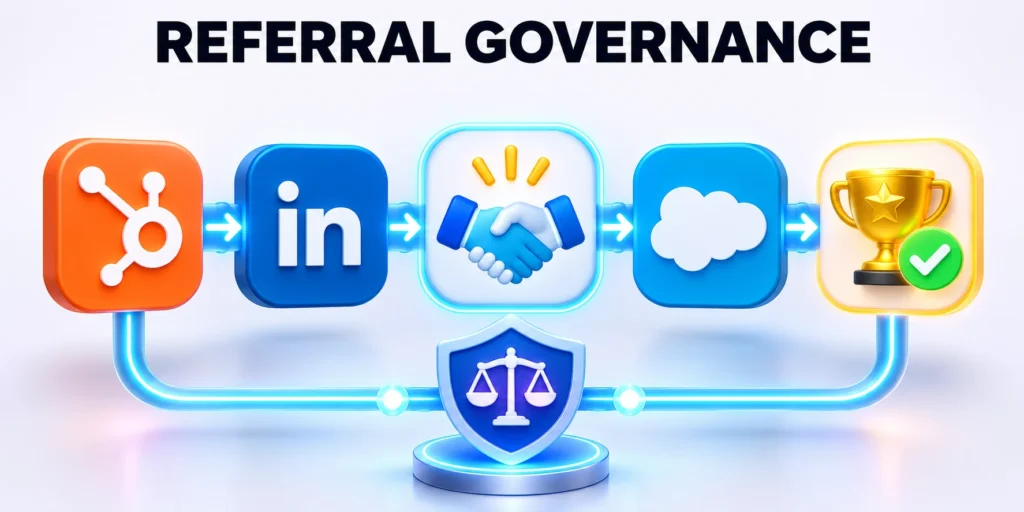
Incentives can recognize a helpful introduction, but they can also create avoidable pressure, disclosure concerns, and disputes when rules remain vague.
Define who is eligible, what outcome matters, which rewards are permitted, and how exceptions are reviewed before inviting advocates to participate.
Use terms that an advocate can explain
Explain the program in plain language: what the advocate may share, how prospect permission works, when a reward may be earned, and what cannot be promised.
The terms should protect the prospect and advocate equally. A reward never justifies sharing confidential information or making exaggerated performance claims.
Publish these rules before accepting program referrals:
- Eligible advocate groups
- Permitted reward types
- Qualified outcome definition
- Disclosure requirements
- Dispute and reversal process
- Record every approval with a named owner
- Review exceptions before expanding the program
- Keep the process understandable for every participant
Review incentives with operational evidence
Review reward decisions against CRM history, account ownership, contract status, cancellations, and published terms rather than relying on an informal email thread.
A consistent review path protects relationships and makes the program easier to audit when several teams contribute to an opportunity.
Keep governance proportional to risk
Simple referral programs still need a named owner, documented terms, secure records, and a route for questions. Complex programs may need legal or compliance review.
Use the lightest controls that preserve trust, clear disclosure, and reliable outcomes; bureaucracy should not obscure the advocate experience.
Operate referral programs as a revenue channel

A referral program becomes scalable when advocates, sales, operations, and leadership can see the same status, rules, handoffs, and commercial outcomes.
Treat the channel as an operating system with defined ownership, reliable CRM fields, response expectations, and periodic learning rather than a one-time campaign.
Make ownership visible at every handoff
Assign who invites advocates, verifies consent, accepts the referral, contacts the prospect, updates the advocate, and decides reward eligibility.
Visible ownership prevents a promising introduction from waiting in an unmonitored inbox or being passed among representatives without a clear next action.
Track these fields in the referral workflow:
- Advocate and relationship type
- Introduced account
- Consent and introduction date
- Sales owner and current stage
- Reward and exception status
- Record every approval with a named owner
- Review exceptions before expanding the program
- Keep the process understandable for every participant
Use reviews to improve the channel
Review accepted referrals, response time, opportunity quality, advocate feedback, revenue influence, and disputes together at a cadence that matches the sales cycle.
Investigate one material constraint at a time. Improving a routing delay, unclear qualification rule, or advocate message is more useful than increasing volume blindly.
Expand only after the pilot is dependable
Extend to another advocate group only after the initial model produces understandable results and the responsible teams can maintain the existing commitments.
Document what changed, why it changed, and what evidence would justify reversing the decision. That record preserves learning as the program grows.
FAQ
These answers clarify common B2B referral program decisions before teams choose an advocate group, incentive model, or operating process.
How do I start a B2B referral program?
Choose one advocate group, define a qualified referral, assign an owner, document the process, and test it with a small pilot before broad promotion.
Should B2B referrals include a financial reward?
Not always. Recognition, service credits, or no reward may fit better. Check organizational policies and disclose material incentives when relevant.
What counts as a qualified referral?
Define it for your sales process. A useful starting point is a permitted introduction to an organization matching your target profile, followed by an accepted conversation.
How should referrals be tracked in a CRM?
Record the advocate, referred account, introduction date, consent context, owner, status, source type, and reward eligibility. Use fields your team will maintain.
How long should a referral attribution window be?
Set a window that reflects your typical buying cycle and contract terms. Publish it before launch, then review whether it fairly handles delayed decisions.
Can employees participate in referral programs?
Only under approved employment, disclosure, conflict, privacy, compensation, and market rules that the organization can administer.
How are duplicate referrals resolved?
Use published precedence, timestamps, account history, consent, opportunity ownership, and a documented dispute process.
Should referred prospects be contacted immediately?
Contact them according to the permitted introduction, qualification, owner capacity, timing, and communication expectations.
When should rewards be reversed?
Follow published terms for duplicate, canceled, refunded, fraudulent, ineligible, or disputed outcomes with accountable review.
How should referral quality be measured?
Track accepted introductions, fit, progression, customer experience, cost, disputes, and outcomes without rewarding volume alone.
Conclusion

A B2B referral program works when the experience is clear, respectful, and easy for advocates and prospects to navigate.
Begin with one audience and a small pilot. Track qualified outcomes, respond reliably, and expand only when the process earns continued trust.
Choose the first learning cycle
Keep incentives transparent, protect consent, and make attribution rules understandable. These operational choices matter more than a complicated campaign name.
For the broader framework, read AI in B2B Marketing: Automating Workflows and Analytics.
Keep trust ahead of referral volume
The program should help advocates recommend work confidently, prospects choose whether to engage, and sales teams follow through without creating surprise or pressure.
That requires clear eligibility, permission-first introductions, timely acknowledgment, consistent qualification, and a fair method for explaining how credit and rewards are handled.
Use these habits to preserve durable referral trust:
- Ask before sharing contact details
- Acknowledge advocates promptly
- Protect confidential opportunity information
- Explain outcomes without exaggeration
- Resolve disputes through published terms
- Record every approval with a named owner
- Review exceptions before expanding the program
- Keep the process understandable for every participant
Use evidence to guide the next cycle
Compare accepted introductions, qualified opportunities, advocate feedback, commercial outcomes, and operating effort before deciding whether the program deserves more investment.
Improve the specific constraint that evidence identifies, then preserve a comparable record so later teams understand why the process changed and whether it worked.





Leave a Reply