

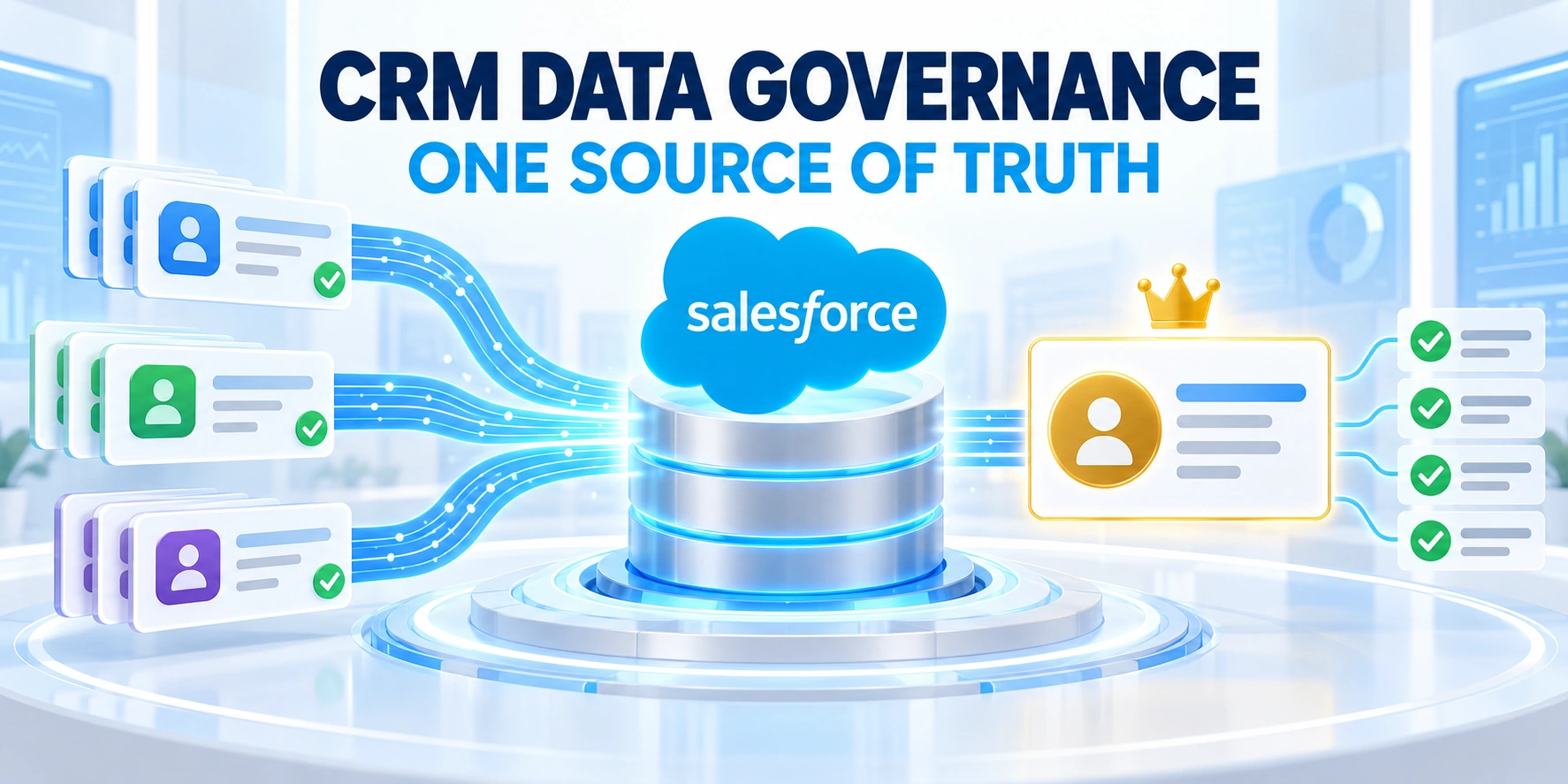
Define the CRM source of truth

A source of truth is a rule for resolving conflicting values.
Make ownership and precedence explicit for the records that drive business decisions.
Make the phrase operational
A CRM data governance model turns the source-of-truth slogan into rules that resolve conflicts between systems and owners.
That slogan is not enough to resolve a conflict.
Resolve source conflicts through these operating rules:
- When billing and CRM contract states conflict, define which value governs renewals.
- Document correction steps and the role that owns the decision.
- “customer status” was being typed into the CRM by sales.
- The governance team separates the underlying facts.
- Each team can now see both the value and its provenance.
Record the affected decision, authoritative source, accountable owner, and correction route so the rule remains usable when systems disagree.
Distinguish a system of record from a working view
A system of record is the approved authority for a particular data domain or field.
A working view is an interface assembled for a task.
Distinguish authoritative and working data through these controls:
- Use CRM as the working account view without making every field authoritative.
- Confusing these roles encourages users to overwrite synchronized values because they appear editable.
- Document whether a CRM field is authoritative, copied from another system, calculated, or manually curated.
- Make the distinction visible in labels, help text, integration documentation, or user training.
- Document every calculated field’s rule and owner.
- Block manual fixes that synchronization would later overwrite.
Expose synchronized and calculated values clearly so users do not overwrite governed facts merely because an interface permits editing.
Define the governance decision
Start with a decision that can be harmed by conflicting, stale, incomplete, or unauthorized CRM data rather than attempting to govern every field simultaneously.
Name the value used, its approved authority, accountable owner, correction path, and evidence that shows the decision operated as intended.
Start from decisions, not from a data warehouse diagram

List decisions that rely on CRM information before drawing the full architecture.
Common examples include routing an inbound request, assigning an account owner, approving a discount, forecasting renewal, suppressing an ineligible marketing message, and escalating a support issue.
Document each decision through these governance fields:
- Required facts and handling for missing or disputed information.
- Decision or workflow that uses the data.
- Required fields and the people or systems that provide them.
- Consequence of an incorrect, missing, late, or unauthorized value.
- Person accountable for the decision and person accountable for each field.
- Evidence that the process worked, such as an accepted handoff or corrected record.
For example, a territory-routing workflow may depend on country, account segment, named-account status, and account owner.
If country is blank, the safe outcome may be a monitored operations queue, not an arbitrary assignment.
Control missing routing evidence
Document routing exceptions so users recognize intentional gaps and understand which correction path protects the decision.
Assign every unresolved value to a monitored queue with a named owner, review target, and safe fallback.
Map critical data flows
Draw only the flows needed to answer important decisions.
Include the originating system, transformation, destination field, update direction, frequency, identity key, error path, and accountable owner.
Map critical data flows through these ownership details:
- A flow diagram with arrows alone hides the rules that cause conflicting values.
- Begin with a narrow scope, such as customer status and renewal dates for active contracts.
- Validate it through a real record and a real downstream decision.
- Expand to other domains only after the initial authority and correction paths are clear.
- This approach is faster than cataloging every object before anyone knows which definitions matter.
Avoid promising one perfect database
No CRM can make contradictory upstream processes coherent by itself.
If two teams use different meanings for “qualified account,” the data platform can store both values but cannot decide which business definition is right.
Resolve conflicting definitions through these governance actions:
- Governance provides a forum and an accountable owner to resolve the meaning.
- The purpose is not to remove all variation.
- Regional teams may have legitimate differences in sales process or retention requirements.
- The model should document where a shared definition applies.
Assign data owners and stewards

Governance works when accountability and daily maintenance are clearly assigned.
Define who sets meaning, who resolves exceptions, and how teams coordinate.
Separate decision rights from daily maintenance
A data owner is accountable for the business meaning, allowed use, and quality expectations of a domain or important field.
A data steward handles the recurring work that keeps those expectations usable: reviewing exceptions, clarifying definitions, coordinating corrections, and reporting patterns.
Separate governance responsibilities through these operating roles:
- System administrators configure the platform and access controls.
- One person may hold more than one role in a small company.
- Revenue operations owns the definition and lifecycle of “sales accepted.”
- Marketing operations owns campaign-source capture.
- Finance owns invoice state.
- The data steward coordinates exceptions when the CRM and billing system disagree.
Use a lightweight responsibility matrix
Write down who proposes, approves, implements, reviews, and is informed about a data change.
A simple responsibility matrix is enough for most teams.
Assign governance roles through these responsibility boundaries:
- Reserve formal approval for changes with meaningful customer, legal, security, or reporting consequences.
- Define fields: owners accountable; stewards and administrators consulted; privacy reviews sensitivity.
- Correct records: owners decide; stewards coordinate; administrators support; privacy joins exposures.
- Change mappings: owners approve meaning, stewards assess, administrators implement, security reviews access.
- Retire fields: owners approve, stewards inventory, administrators remove, and privacy reviews retention.
The roles in this example are illustrative, not a prescribed legal structure.
Adapt them to the company’s size, authority model, regulatory obligations, and vendor contracts.
Escalate regulated ownership decisions
Escalate regulated decisions to the designated owner before changing definitions, permissions, retention, or downstream processing.
Where a data-protection officer, legal counsel, or security owner is required, involve that role.
Give owners real authority
An owner needs authority to approve definitions, resolve conflicts, set acceptable risk, and require corrections across teams that use the governed data.
Document a delegate and escalation route so governance does not stop when the primary owner is unavailable or a decision crosses functional boundaries.
Make stewardship part of normal work

Stewardship fails when it is framed as an occasional cleanup day.
Give stewards an exception queue with clear severity, context, owner, due date, and resolution options.
Operate stewardship through these recurring practices:
- Reserve time to review it.
- A queue that no one monitors is not a control.
- For example, a sales representative notices that an account’s legal name differs from the CRM.
- The representative submits the evidence and flags the source.
- Route source-authority corrections through the steward before synchronizing the CRM.
- This prevents the same correction from being overwritten the next night.
Define decision and escalation boundaries
Owners need authority that matches their accountability.
If a field can affect consent, retention, a financial commitment, or customer eligibility, a sales operations owner may not have the authority to approve its use alone.
Escalate sensitive decisions through these authority boundaries:
- Write down when a question must go to legal, privacy, security, finance, or product leadership.
- Set a response expectation based on impact and operational capacity.
- Do not invent a universal service-level target.
- An error that blocks a customer request may need same-day handling.
- Document the chosen target and measure whether the team can meet it.
Keep governance usable for a small organization
A small company may not need a standing committee.
It still needs named accountability.
Keep small-team governance practical through these routines:
- Start with a monthly 30-minute review among revenue operations.
- Bring a short list of unresolved decisions.
- Add domain owners or a formal council only when decision volume requires them.
- The structure should reduce rework and clarify decisions.
- Its size is not a measure of maturity.
Combine responsibilities when necessary, but retain named owners, escalation paths, review dates, and evidence for every high-impact decision.
Fund recurring stewardship work
Allocate capacity for exception review, definition questions, correction coordination, and recurring analysis instead of treating stewardship as unplanned administrative work.
Track backlog age, repeated causes, affected decisions, and blocked corrections so leaders can remove systemic constraints rather than demanding faster manual cleanup.
Define records, fields, and business terms

Shared definitions help teams interpret CRM records consistently.
Specify what each field means and when people should use it.
Write definitions people can apply
A label alone rarely answers these questions.
“Customer tier,” for instance, can mean annual revenue, support entitlement, strategic priority, or a package purchased.
Define business fields through these application rules:
- Define each field’s meaning, eligible records, owner, and source.
- Record allowed values and the approved correction path.
- Create a reusable dictionary entry for every governed field.
Document governed fields through these required attributes:
- Display name and stable internal name.
- Business definition and decision it supports.
- Object or entity, data type, format, allowed values, and null behavior.
- Authoritative source, synchronization direction, and expected update timing.
- Owner, steward, user groups, sensitivity, and retention notes.
- Validation rule, correction path, and one realistic example.
The actual internal field name and values must match the company’s systems, not this illustration.
Apply stable field names through these examples:
- Use
contract_statusto mirror the billing platform’s approved commercial states. - Disallow manual CRM edits.
- Route synchronization errors to a billing-data queue.
Distinguish entities before creating fields
A CRM often represents people, companies, opportunities, subscriptions, cases, and interactions as separate records.
Decide which real-world entity a value describes.
Model CRM entities through these ownership distinctions:
- Company employee count belongs to an organization or business unit, not an individual contact.
- An individual communication preference belongs to a person, even when the company account is shared.
- Assign parent- and subsidiary-level contract status and account ownership explicitly.
- Keep incompatible entity values separated so users cannot compare them as equivalents.
Model relationships explicitly because a person, company, subscription, opportunity, and case may require different authority, retention, and correction rules.
Separate definitions from labels
A visible CRM label can change without changing the underlying business meaning, while an unchanged label can hide a material definition change.
Store business definitions, internal identifiers, permitted values, ownership, and version history together so reports and integrations reference the same governed concept.
Prefer stable fields over overloaded labels

Do not use one field for several questions.
A single “Status” field may be asked to represent lifecycle, customer contract state, lead qualification, and support escalation.
Separate overloaded status concepts through these design choices:
- As a result, workflow triggers collide and reports become difficult to interpret.
- Give distinct concepts distinct fields, even when they are related.
- Before adding a new field, check whether an existing field already represents the concept.
- Correct or differentiate fields; never create undefined
Industry,Industry Type, orVerticalduplicates. - Record the decision and migrate values only after impact review.
Create a business glossary for terms that cross teams
A glossary is useful when the same word appears in a CRM field, dashboard, automation, sales playbook, and marketing report.
Define terms such as “qualified lead,” “active opportunity,” “new logo,” “customer expansion,” and “renewal risk” once, then connect them to their fields and decision rules.
Maintain shared terminology through these glossary practices:
- Use a searchable governance glossary to standardize specialized terms.
- “Sales accepted” may mean the has reviewed the record.
- Merely assigning an owner does not satisfy that definition.
- Record acceptance as an owned, timestamped event or field.
Control definitions as the business changes
Definitions evolve when a product, market, legal obligation, or sales motion changes.
Keep a version date and change history for fields that drive high-impact processes.
Control definition changes through these dependency checks:
- A new definition should identify affected workflows.
- Publish data dictionaries within users’ workflows or CRM field help.
- A governance document that is inaccessible during record entry will not prevent ambiguity.
- Review the definitions when an exception pattern appears, not just on an arbitrary annual schedule.
Design fields around one meaning
Use separate fields when lifecycle stage, contract state, qualification, support escalation, and operational readiness drive different owners or automation.
A narrower field remains easier to validate, synchronize, explain, retire, and audit than one label carrying several unrelated business meanings.
Set field-level authority and precedence

A CRM may not own every fact about an account.
Set precedence by field so integrations and teams resolve conflicts predictably.
Choose authority one field at a time
Different systems can own different facts about the same account.
Choose authority at the field or tightly related field-group level.
Assign field authority through these domain examples:
- Billing may own subscription state and invoice balance; CRM may own territory and account owner.
- Consent services may own permission records; support systems may own case status.
- Maintain one compact authority-register entry for every important field.
Document field precedence through these authority records:
- Contract status: billing authoritative; CRM read-only; billing queue resolves conflicts.
- Account owner: CRM authoritative; sales operations edits; managers approve named-account exceptions.
- Support state: support platform authoritative; CRM summarizes; operations resolves conflicts.
- Marketing consent: consent record authoritative; CRM shows timestamp; privacy resolves ambiguity.
- Employee count: record verified sources and dates; stewards review stale values.
The table is a design example, not a claim that every company should use these same systems.
Confirm the actual ownership model, integrations, permissions, and legal roles before adopting it.
Define precedence for conflicts
When two systems disagree, a timestamp alone may not settle the conflict.
One system might be updated later with a less reliable source.
Resolve value conflicts through these precedence rules:
- Define precedence based on the business authority and the event that produced the value.
- Executed billing amendments may override newer CRM notes.
- Test conflict cases using representative records.
- Include a field changed by a user.
- Record the expected result, not just that the integration job completed.
Document authority beside the field
Keep authority and conflict rules close to field documentation so administrators and integration owners can apply them during configuration changes and incident response.
Use this compact matrix during design reviews and retain detailed evidence in the governance record.
| Authority | Evidence | Conflict route |
|---|---|---|
| Billing | Signed contract | Revenue operations |
| CRM | Approved owner | Sales operations |
| Support | Case resolution | Support operations |
| Product | Entitlement | Product operations |
Keep provenance and freshness visible
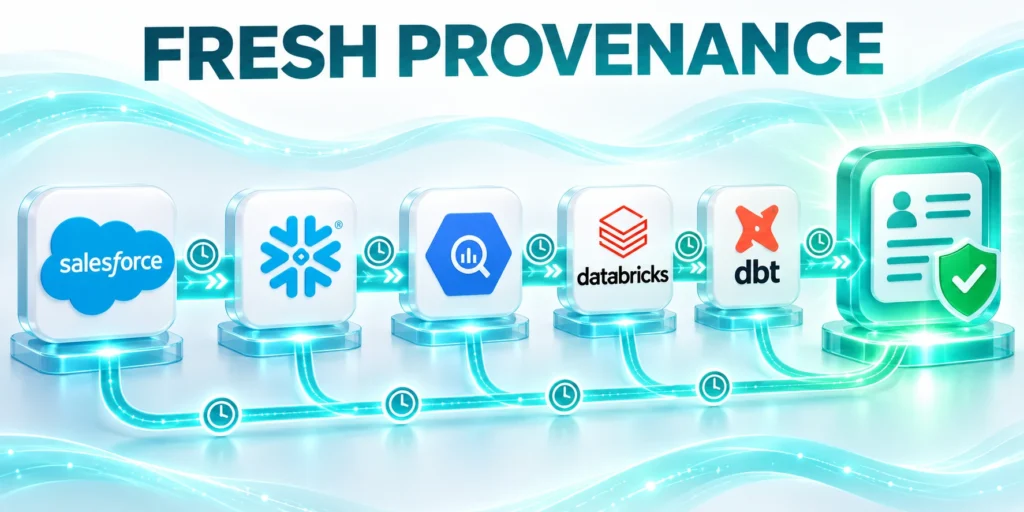
Provenance describes where a value came from and how it arrived.
For important values, retain source system, source record identifier, source timestamp, synchronization timestamp, and transformation where feasible.
Preserve data provenance through these traceability details:
- Distinguish conflicting facts from stale copies or mapping errors.
- Retain each provider and the last-verified date.
- Give users a correction mechanism.
- Decide whether stale values should be retained, corrected, or retired.
Handle manual overrides deliberately
Manual overrides are often necessary when a system cannot represent an exception.
They should not be hidden in an undocumented edit.
Govern manual overrides through these approval fields:
- Record the approving role, affected field, review date, and restoration condition.
- Where supported, use a separate override field rather than changing an integration-owned value.
- Monitor override volume and age.
- A rising number of overrides can signal a flawed source.
- Remove overrides only after verifying restoration conditions and downstream stability.
Require a reason, approver, scope, review date, and restoration condition so temporary exceptions do not become undocumented permanent behavior.
Make source changes safe
Before replacing a source system, inventory every field it owns, dependent automation, user reports, exports, and integrations.
Define the new source and mapping, test representative records, and compare values during a controlled transition.
Change source systems through these transition controls:
- Preserve identifiers and history where needed to explain changes.
- Keep a rollback approach for a source change that alters customer-facing behavior.
- It may involve pausing a workflow, restoring the previous mapping, or routing records to review.
- Test that the rollback does not reintroduce stale values or duplicate actions.
Expose stale or transformed values
Show when a critical value was sourced, synchronized, calculated, or manually overridden so users can distinguish current authority from an aging copy.
Route important stale values to review before they drive customer communication, ownership, eligibility, forecasting, or contractual action.
Build quality controls into daily work

Quality controls should prevent errors where data enters or changes.
Choose measurable rules that protect decisions without adding unnecessary friction.
Define quality in relation to the decision
“Clean data” is too vague to operate.
Define the quality dimensions that matter for each use: accuracy, completeness, consistency, timeliness, validity, uniqueness, and fitness for purpose.
Evaluate data quality through these decision tests:
- A field can be valid but still wrong.
- Create a quality rule with a clear measurement.
- “For new inbound demo requests in covered markets.
- This can be measured and acted upon.
- “Improve country data” cannot.
Validate at the point of capture
Prevent errors before they propagate when the check is understandable and low-friction.
Use required fields only when the value is necessary for the task, and explain why it is needed.
Validate captured data through these practical controls:
- Use format validation for email or identifiers.
- For an account form, ask only for the data that changes the next step.
- Use a supported range or defer the question when evidence is unavailable.
- Document acceptable values and downstream purpose; avoid collecting unnecessary sensitive details.
Normalize without erasing meaning
Normalization aligns equivalent values so they can be compared and used.
Examples include country codes, phone formatting, date/time conventions, product names, and lifecycle labels.
Normalize data through these mapping safeguards:
- Document the mapping and preserve the original where auditability.
- Test normalization against messy real examples.
- Decide whether an unknown value should be rejected.
- Silent coercion is risky because it hides the data defect.
Connect validation to recovery
Every blocking rule needs a legitimate exception path, responsible owner, and correction method because valid business situations will occasionally fall outside expected values.
Monitor abandoned submissions, repeated workarounds, and support requests to identify controls that protect data while unintentionally preventing necessary work.
Use exception queues as a correction mechanism
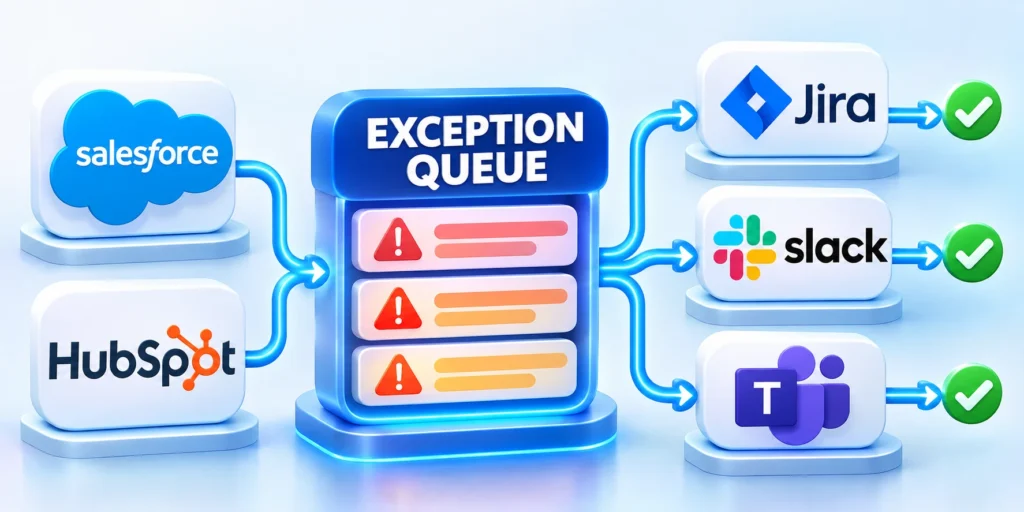
An exception queue should tell the steward what failed, why it matters, what evidence is available, and which next action is allowed.
Include a stable record link, source value, CRM value, timestamps, integration error, and the responsible business owner.
Operate exception queues through these protected details:
- Keep sensitive values out of email notifications when the queue can provide access-controlled context.
- Flag billing subscriptions that cannot match CRM accounts.
- The operations steward reviews the source customer ID.
- The workflow does not create a new account automatically.
Track defects to causes, not just counts
A data-quality dashboard should show the affected decision and the owner, not merely the number of incomplete fields.
Review examples behind the metric.
Diagnose data defects through these cause-based measures:
- Track defects, stale values, duplicate backlogs, correction time, failed synchronizations, and repeated exceptions.
- Measure records that satisfy each workflow’s readiness criteria.
- Investigate a sample when the dashboard shows missing-country data.
- Check form omissions, vendor mappings, account update paths, and definition changes.
- Fixing the cause prevents the same error from returning.
Connect each metric to examples, root causes, affected workflows, responsible owners, and the operational consequence of leaving the defect unresolved.
Balance prevention with usability
Every validation rule has a cost.
A hard block can protect a process but can also prevent legitimate work when the rule is wrong or a source is unavailable.
Balance validation and usability through these safeguards:
- Use blocking validation only when the value is essential and the exception path is available.
- For other cases, warn users, route the record for follow-up, or make the field optional.
- After launch, monitor blocked submissions, overrides, and support requests.
- A large override volume can mean that users are bypassing a poorly designed control.
- Ensure governance protects quality instead of hiding errors elsewhere.
Close the exception loop
An exception is complete only after the governed value, affected workflow, downstream copies, and responsible owners reflect the approved correction.
Review recurring exceptions by source and cause so the team can improve capture, mapping, training, or integration behavior instead of repeating manual fixes.
Resolve identity and duplicates safely

Duplicate handling starts with a defensible definition of identity.
Use stable identifiers and review ambiguous matches before merging records.
Decide what counts as the same entity
Deduplication is an identity decision, not merely string matching.
Define the entity and relationship before choosing match rules.
Define entity identity through these matching considerations:
- Matching names can represent different people; one person may use several emails.
- Model shared inboxes, parent companies, subsidiaries, brands, and regions explicitly.
- Write a matching policy for each object.
- State which combinations produce an automatic match, a review candidate, or no match.
- Include a confidence or reason that users can understand.
- Never merge records by domain alone when parents or providers share it.
Use stable identifiers and contextual evidence where possible, and reserve ambiguous relationships for authorized review rather than irreversible automatic merging.
Separate match detection from merge approval
Duplicate detection identifies possible duplicates.
Merge approval decides whether two records represent the same entity and which data survives.
Separate matching from merging through these approval controls:
- Keep those decisions separate when a false merge could delete history.
- Salesforce documents duplicate handling through matching and duplicate rules.
- Verify Salesforce edition, permissions, objects, and configuration before relying on controls.
Define survivorship for conflicting values
Survivorship is the rule for choosing which value remains when records are combined.
“Most recently edited” is not always best.
Apply survivorship through these authority principles:
- A manually typed value may be newer but less reliable than an authorized source.
- A surviving record should retain the correct account relationship.
- Test merge behavior in a safe environment.
- Review what happens to related opportunities, tickets, activities, integrations, subscriptions, opt-outs, and audit history.
- Avoid merging when relationships or audit history cannot be preserved safely.
Select values by authority, provenance, freshness, completeness, and permitted purpose instead of assuming the most recently edited record is correct.
Prevent duplicate creation at source
Configure duplicate warnings or blocks in the channels where records enter, such as forms, imports, integrations, and manual CRM creation.
Detection should use the identity policy and present enough context for an authorized user to make a decision.
Prevent duplicate creation through these source controls:
- Do not simply block every possible match.
- Monitor both duplicate candidates and false-match reports.
- Inspect whether matching logic is too broad or the interface lacks context.
- If duplicates keep appearing through an integration, fix the identity mapping there.
Make correction reversible where possible
Before a large merge or cleanup, capture a recoverable export or platform backup according to the organization’s approved process.
Record the selection criteria, scope, sample review, approver, and expected effects.
Keep bulk corrections recoverable through these safeguards:
- Backups require documented restoration or relationship reconstruction.
- Analyze the source of duplicates before applying broad correction.
- Update the relevant control and train affected users.
- A one-time merge without prevention usually recreates the backlog.
Govern integrations, access, privacy, and retention

Integrations and permissions can change CRM data at scale.
Govern access, privacy, retention, and every system that writes important fields.
Treat integrations as governed writers
Every integration that writes CRM fields is a data producer with a defined purpose, owner, identity method, permission scope, transformation, schedule, error behavior, and change contact.
Document these attributes before enabling a new connection.
Govern integrations through these writer-accountability fields:
- Company decisions, not vendor defaults, define mapping meaning and authority.
- Build a dependency map for important fields and integrations.
- Show which forms, workflows, reports, segments, dashboards, APIs, and teams consume a field.
- Before changing or retiring it, inspect those dependencies, notify owners, and test the affected process.
- Hidden CRM fields may still drive exports or support escalations.
Limit every integration to necessary objects and fields, then monitor failures, retries, mapping changes, credentials, and accountable operational ownership.
Design for failure, delay, and replay
An integration should make failures visible and recoverable.
Define what happens when a source is unavailable, a record cannot be matched, a value is invalid, or an event arrives twice.
Handle integration failures through these replay safeguards:
- Use idempotent processing to prevent duplicate messages, tasks, or commercial changes.
- Test normal and failure paths with records.
- Confirm both the system state and the user-facing outcome.
- A green integration job does not prove each customer record was matched correctly.
Limit use to an approved purpose
Governance should record why a data element is collected, which process uses it, who may access it, and whether it is shared with a vendor or another team.
Collecting a field because it might be useful later increases storage and access risk without proving business value.
Limit data use through these approved-purpose controls:
- Make consent, subscription, suppression, and lawful-basis information explicit where the business relies on it.
- Never infer communication consent from submissions, lifecycle stages, or engagement scores.
- Make workflows honor approved permissions and escalate missing or conflicting states.
Apply role-based access and auditability

Access should follow job need.
Separate ordinary record editing from access to sensitive fields, bulk export, integration configuration, and audit history where the CRM supports those controls.
Protect sensitive access through these role controls:
- Review role changes and departures promptly.
- Shared accounts make it difficult to identify who viewed or changed information.
- Use a change request for high-impact permission changes.
- It should state the business need.
- Remove temporary access when the task ends.
- Document compensating controls and restrict exports or reports when appropriate.
Set retention and deletion rules
Retention should reflect purpose, business needs, legal obligations, contracts, and system capability.
A record should not be kept indefinitely merely because storage is inexpensive.
Apply retention through these lifecycle decisions:
- Identify what must be retained.
- Test deletion and correction requests with a non-production record where possible.
- Confirm whether deletion propagates to CRM.
- Obtain legal or privacy approval across relevant jurisdictions and data types.
Review vendor and enrichment data
For an enrichment provider, document what data it supplies, how matches are made, permitted use, refresh cadence, retention, correction process, and contractual responsibilities.
Label enriched values with provider and freshness where useful.
Govern enrichment data through these provider checks:
- A provider’s confidence score does not make a value authoritative for every decision.
- Review vendor access and data flows when a contract changes.
- Disable unused credentials and connectors.
- Keep a record of the decision.
Treat purchased or inferred attributes as governed inputs with documented confidence, permitted purpose, correction options, and expiration behavior.
Review access as responsibilities change
Reconcile CRM roles with current job responsibilities, integration identities, contractor status, privileged exports, and administrative duties on a defined cadence.
Investigate unexplained bulk edits, exports, ownership changes, or permission escalation while preserving evidence and involving appropriate security or privacy owners.
Roll out and improve the governance model

A staged rollout makes governance easier to adopt and measure.
Start with a high-impact workflow, then expand based on observed results.
Start with a bounded, high-value domain
Pick a process where disagreement causes measurable rework or customer impact.
For the fictional software company, inbound account routing and contract status are good starting candidates because each has a visible owner and an operational consequence.
Start governance through these bounded-domain choices:
- Do not attempt to govern every object, field, and historical record at once.
- Agree on the outcome before configuring controls.
- Reduce account-status conflicts and route each conflict to a named owner.
- Define the population, measurement window, owner, and a review date.
- Choose a target the company can support with evidence.
Run a practical implementation sequence
Implement governance through this ordered operational sequence:
- Name the process and decision it supports; identify affected people and systems.
- Select the data domain and fields in scope; exclude unrelated cleanup work.
- Agree on business definitions, field authority, allowed values, and exception rules.
- Assign an accountable owner, steward, system administrator, and escalation contacts.
- Map writers, readers, integrations, reports, forms, and workflow dependencies.
- Prepare a representative test set, including incomplete, conflicting, and duplicate cases.
- Configure permissions, validation, monitoring, and the correction queue in a safe environment.
- Have independent users run scenarios and explain expected results.
- Pilot with a bounded group; monitor errors, workarounds, customer effects, and queue volume.
- Approve broader rollout only after owners can resolve exceptions and support the process.
This is an example sequence, not a universal project plan.
A company may combine steps or add legal/security review based on risk.
Preserve implementation evidence
Preserve the approved test cases, results, reviewer decisions, and exception handling used to authorize implementation.
Keep the test evidence tied to the configuration and version.
Use acceptance cases that reflect real work
An acceptance case should state its preconditions, sample record, action, expected result, evidence, and reviewer.
For a new inbound request from a supported market, the expected result may be a matched account, valid owner, response task, and preserved consent state.
Test governance through these acceptance scenarios:
- Route incomplete requests to an assigned review queue without customer-facing promises.
- Have a reviewer who did not build the configuration run the cases.
- Record why each decision branch was selected.
- A workflow that only its author understands is difficult to govern.
Measure outcomes without creating bad incentives
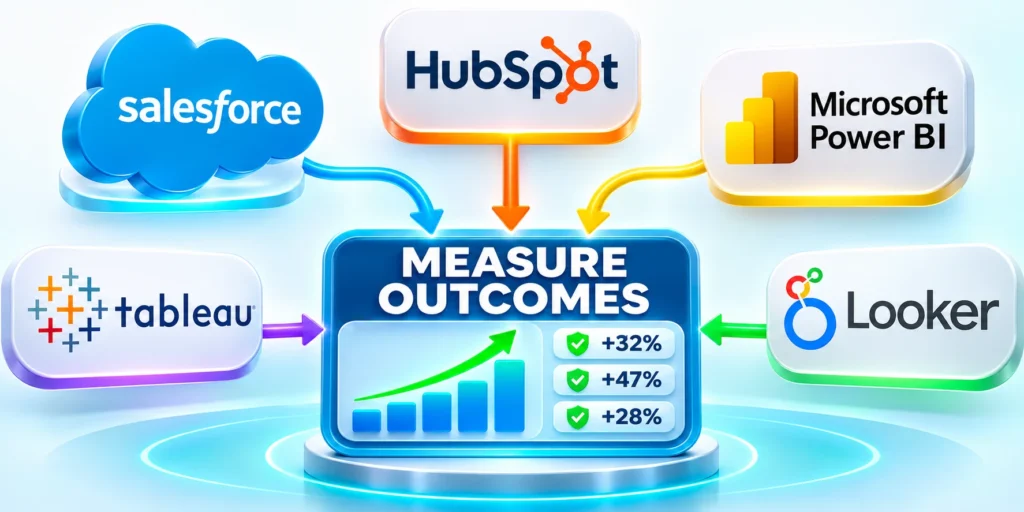
Track whether the governance change improves the decision, not merely whether a field is filled.
Measures might include duplicate creation rate, assignment accuracy, unresolved exception age, source-sync reliability, correction time, or the proportion of records with current authority and provenance.
Measure governance through these balanced outcomes:
- Pair leading indicators with customer or operational outcomes where the data supports it.
- Review a small sample with the people who use the records.
- Ask whether the field definition is understandable.
- Controls need clear recovery paths to avoid operational harm.
Manage changes and retire obsolete data
Use a change log for definitions, sources, mappings, permissions, and validation rules that affect critical decisions.
Record the old behavior, new behavior, owner, reason, effective date, affected dependencies, test evidence, and rollback path.
Manage schema changes through these retirement controls:
- Communicate the change to the people whose workflows or reports will be affected.
- Retire old fields only after validated replacement and owner approval.
- Monitor for failed jobs and reports after retirement.
- Preserve change records explaining retired fields and replacements.
Set a sustainable review cadence
Review the operating model when a trigger changes: a new CRM, acquisition, new market, new data processor, material workflow, privacy requirement, or recurring quality issue.
For stable, low-risk fields, a lightweight periodic check may be sufficient.
Match cadence to operational risk
Set review frequency from business impact, change rate, failure likelihood, detection difficulty, and recovery cost.
Monitor high-impact fields and integrations according to failure risk and consequences.
Related revenue operations guidance
See the RevOps playbook for a related guide on aligning sales, marketing, and customer success.
This article focuses on CRM ownership and quality. The playbook covers how customer-facing teams coordinate shared workflows.
Related CRM implementation planning
For a broader view of CRM implementation planning, see the enterprise CRM implementation guide.
It covers program strategy, migration, and adoption; this guide focuses on the continuing data operating model.
Define the Governance Operating Model
Name the executive sponsor, data owners, stewards, system owners, security, privacy, analytics, integration, and frontline roles for each important customer-data domain.
Document decision rights and escalation because shared responsibility without authority leaves conflicts unresolved and allows local workarounds to become permanent standards.
Create a Customer Identity Policy
Specify how people, accounts, households, subsidiaries, partners, prospects, and customers are identified, matched, merged, split, related, and retired across systems.
Use confidence and review paths for ambiguous matches; forcing certainty can combine unrelated records and expose data to the wrong user or process.
Establish Authoritative Sources by Attribute
Assign authority for legal name, billing status, consent, owner, contract, product, support state, address, hierarchy, and other facts at attribute level.
One application rarely owns every fact, so document synchronization direction, refresh expectations, override rules, conflict resolution, and historical retention.
Govern Metadata and Definitions

Maintain business definitions, field purpose, allowed values, format, owner, source, sensitivity, retention, dependencies, and examples in an accessible catalog.
Review definitions with the teams that produce and use the data; a technically consistent field can still carry conflicting business meanings.
Control Schema and Field Changes
Require a documented purpose, owner, alternatives review, security classification, migration plan, downstream impact analysis, tests, communication, and retirement criteria before changing shared data.
Inspect forms, automation, reports, APIs, exports, permissions, and historical analysis because one field change can alter many dependent decisions silently.
Design Data Quality Rules Around Use
Set completeness, validity, uniqueness, consistency, freshness, and reconciliation expectations according to the decisions and customer obligations each dataset supports.
Avoid a universal quality score that treats cosmetic gaps like billing, consent, ownership, or identity defects with material operational consequences.
Build Exception Queues With Ownership
Route suspected duplicates, conflicts, invalid values, unmatched records, stale ownership, and integration failures to named teams with priority, context, and resolution targets.
Measure backlog age and recurrence so governance addresses the source of repeated defects instead of correcting individual records indefinitely.
Protect Consent and Communication Preferences
Store source, purpose, scope, jurisdiction, status, timestamp, evidence, expiry, and withdrawal consistently, while separating legal requirements from marketing convenience.
Test how preferences propagate to campaigns, sales outreach, service notices, integrations, exports, merges, and account relationships before relying on automated suppression.
Apply Least Privilege to Customer Data
Map access by role, purpose, record scope, field sensitivity, geography, employment status, privileged administration, service accounts, and emergency needs.
Review effective access using representative records because inherited roles, teams, integrations, exports, and sharing rules may reveal more than the interface suggests.
Govern Enrichment and Third-Party Data
Document provider, collection basis, matching method, confidence, allowed use, refresh, correction, retention, contract, and downstream distribution for every enriched attribute.
Keep provider data distinguishable from verified customer facts and allow teams to challenge values that conflict with direct evidence or create unfair decisions.
Reconcile Integrations and Event Flows
Monitor delivery, retries, ordering, duplication, delay, schema changes, partial failures, authentication, and record-level reconciliation across systems that exchange customer information.
A green connector status does not prove business correctness; sample end-to-end journeys and compare authoritative values at meaningful checkpoints.
Operate the metadata register
Keep definitions, internal names, owners, authority, permitted values, dependencies, sensitivity, effective dates, and retirement state in one controlled register.
Review proposed changes against workflows, integrations, reports, exports, and historical interpretation before administrators modify production configuration.
Maintain metadata through these governed records:
- Business definition, internal identifier, and owner.
- Authority, permitted values, and sensitivity classification.
- Dependencies, effective dates, and retirement evidence.
Preserve Lineage for Important Decisions
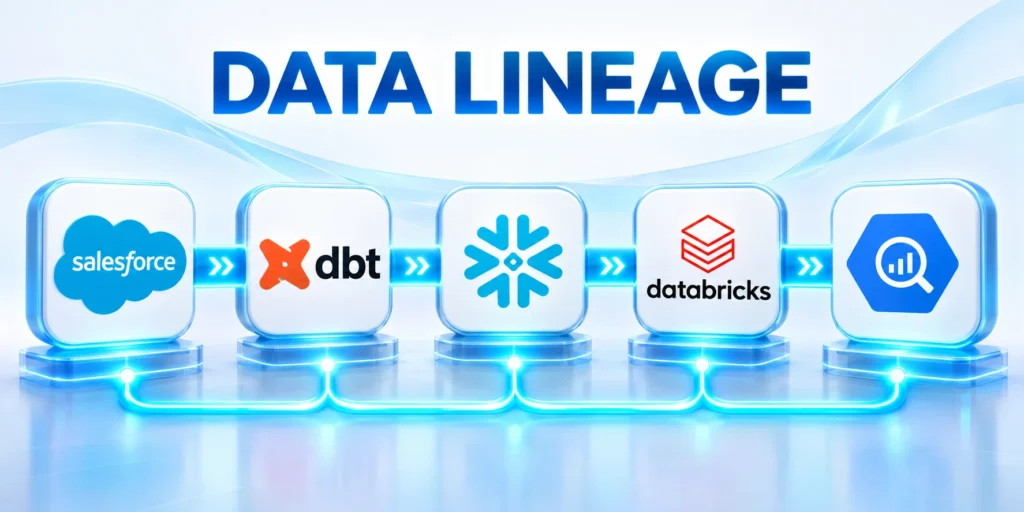
Record where critical attributes originated, how they changed, which transformations applied, and which workflow, user, or integration used them.
Lineage supports correction, audit, customer inquiry, model review, and incident response without requiring teams to reconstruct history from disconnected logs.
Measure Governance Outcomes
Track prevented errors, duplicate recurrence, unresolved conflicts, access exceptions, integration failures, correction time, customer impact, reporting trust, and manual effort by domain.
Use metrics to prioritize systemic improvement rather than rewarding teams for closing large numbers of low-impact tickets or hiding difficult exceptions.
Plan Retention and Deletion Across Systems
Define retention, legal hold, archive, anonymization, deletion, backup, export, and restoration behavior for each record class and connected platform.
Test the complete request path because deleting a visible CRM record may leave copies in warehouses, marketing tools, files, logs, or recovery media.
Operate Governance as Continuous Product Work
Fund recurring stewardship, monitoring, training, catalog maintenance, incident review, policy updates, and process improvement instead of treating governance as a migration project.
Reassess controls whenever business models, jurisdictions, platforms, integrations, analytics, automation, or customer expectations change materially.
Design Correction and Dispute Workflows
Give authorized teams a traceable path to challenge, correct, approve, reject, and communicate disputed customer data without overwriting the original evidence.
Set priority and response expectations according to customer impact, regulatory obligation, operational dependency, and the risk of propagating an incorrect value.
Manage Data During Organizational Change
Plan ownership, access, hierarchy, territories, contracts, reporting, integrations, retention, and customer communication during mergers, divestitures, reorganizations, or provider changes.
Preserve lineage and effective dates so historical analysis does not silently apply today’s organization structure to prior customer relationships.
Govern Analytical and AI Consumption
Document which governed datasets, features, labels, transformations, exclusions, and purposes feed reports, predictions, segmentation, personalization, or automated decisions.
Review representativeness, drift, access, correction, explainability, and downstream impact rather than assuming governed source fields guarantee responsible analytical use.
Prepare for Data Incidents
Define detection, containment, evidence preservation, authority, notification, correction, reconciliation, recovery, and post-incident review for material customer-data failures.
Rehearse scenarios involving wrong merges, broad access, failed suppression, stale ownership, integration replay, or corrupted authoritative values before an actual incident.
Maintain an Improvement Backlog
Prioritize recurring defects, unclear definitions, manual reconciliation, access exceptions, integration fragility, correction delays, and reporting disputes by impact and effort.
Connect backlog items to accountable owners and measurable outcomes so governance work produces durable process improvement instead of recurring cleanup campaigns.
Trace a decision to its evidence
For high-impact actions, retain enough lineage to explain the originating record, transformation, synchronization, manual intervention, and rule version used.
Test the trace with representative records so lineage remains useful during disputes, incidents, audits, corrections, and changes to source systems.
Preserve lineage through these practical checkpoints:
- Record source identifiers and relevant timestamps.
- Document transformations, overrides, and rule versions.
- Link corrections to affected decisions and owners.
FAQ
These answers clarify common CRM data-governance framework and operating-model decisions.
What does CRM data governance mean?
CRM data governance defines ownership, authority, quality, access, permitted use, correction, retention, and evidence for customer-related information used in business decisions.
It combines accountable people, operating practices, and supported system controls rather than relying on a cleanup tool or database alone.
Does a single source of truth require one database?
No. Different systems can remain authoritative for contract state, account ownership, product entitlement, support outcomes, consent, or other governed facts.
The operating model should define field-level authority, synchronization, precedence, correction, and the working view users rely on for each decision.
Who should own CRM data quality?
Business owners approve meaning and risk, stewards coordinate recurring exceptions, administrators configure controls, and integration owners maintain governed data flows.
Security, privacy, legal, finance, product, or support owners participate when decisions cross their authority or obligations.
How do we choose an authoritative system?
Choose the system that creates, validates, or contractually controls the fact for the relevant business purpose instead of defaulting automatically to the CRM.
Document conflict precedence and a temporary decision owner when no reliable authority currently exists.
Should duplicate CRM records merge automatically?
Automatic merging is appropriate only for high-confidence cases with tested survivorship rules and recoverable relationships, history, permissions, and consent evidence.
Route ambiguous matches to authorized review because a false merge can erase context or combine different people and organizations.
Which CRM data-quality metrics are useful?
Measure defects in critical fields, duplicate candidates, failed synchronization, exception age, correction time, stale authority, routing accuracy, and repeated root causes.
Pair counts with affected decisions and representative samples so teams do not optimize completeness while entering guessed or misleading values.
How should integrations resolve conflicting values?
Define field authority and precedence before configuring writes, then preserve relevant source identifiers, timestamps, transformations, and retry behavior.
Route ambiguous high-impact conflicts to an accountable owner instead of using blind last-write-wins logic.
How does governance support privacy?
Governance documents purpose, collection, access, sharing, retention, correction, deletion, consent, and suppression behavior for information used by CRM workflows.
Qualified privacy or legal owners should map applicable obligations rather than expecting the CRM configuration to determine them.
How often should CRM governance be reviewed?
Review cadence should reflect data sensitivity, decision impact, change frequency, integration reliability, exception volume, and the cost of incorrect or stale values.
Trigger additional review after system migrations, new products, acquisitions, ownership changes, regulatory changes, or repeated incidents.
Where should a CRM governance program begin?
Start with one bounded decision where incorrect data causes visible customer, revenue, operational, privacy, or support consequences and where accountable owners are available.
Document authority, quality, access, correction, metrics, and acceptance cases before expanding to another domain.
Conclusion

CRM data governance succeeds when teams can explain what critical values mean, where they originate, who may change them, and how conflicts or uncertainty are resolved.
A credible single source of truth is therefore an operating agreement supported by systems, not a promise that one database always contains a perfect answer.
Operate governance through real decisions
Begin with decisions that affect customers, revenue, service, privacy, or operational ownership, then assign authority and correction routes at the field or tightly related domain level.
Use representative acceptance cases to verify normal behavior, missing data, stale values, conflicting sources, duplicate identities, delayed integrations, manual overrides, and authorized exceptions.
Keep the operating model accountable through these controls:
- Name owners, stewards, administrators, and escalation roles.
- Document authority, provenance, freshness, and conflict precedence.
- Monitor exceptions, causes, correction time, and decision outcomes.
- Review access, retention, integrations, and schema changes.
- Preserve rollback evidence and recoverable correction records.
Expand only after the model works
A bounded domain provides evidence about ownership capacity, control usability, data-flow reliability, exception volume, and the effort required to sustain definitions after launch.
Expand when owners use the process, exceptions close reliably, affected decisions improve, and new scope can be supported without weakening existing governance.
Keep improvement evidence visible
Record material definition, source, access, mapping, retention, and workflow changes with their reason, approver, effective date, test evidence, dependencies, and rollback path.
Review metrics with examples and root causes so a lower defect count does not hide blocked work, guessed values, suppressed exceptions, or changed measurement populations.
Continue with controlled cleanup
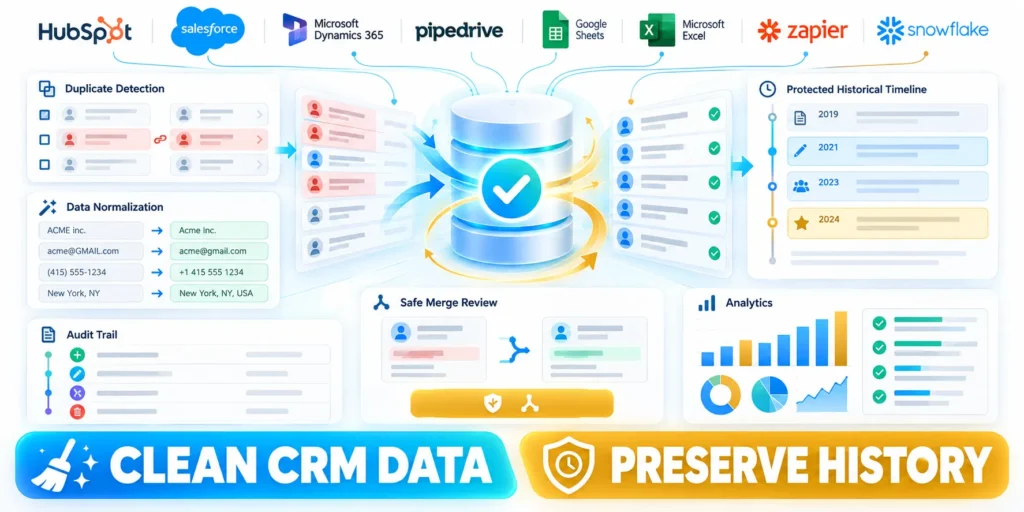
For a focused companion topic, read How to Clean CRM Data Without Losing Historical Context.
Apply cleanup through the approved authority and survivorship rules, preserving history and validating affected reports, relationships, workflows, and downstream systems before closing the change.







Leave a Reply