

Choose the Channel by Buyer Intent

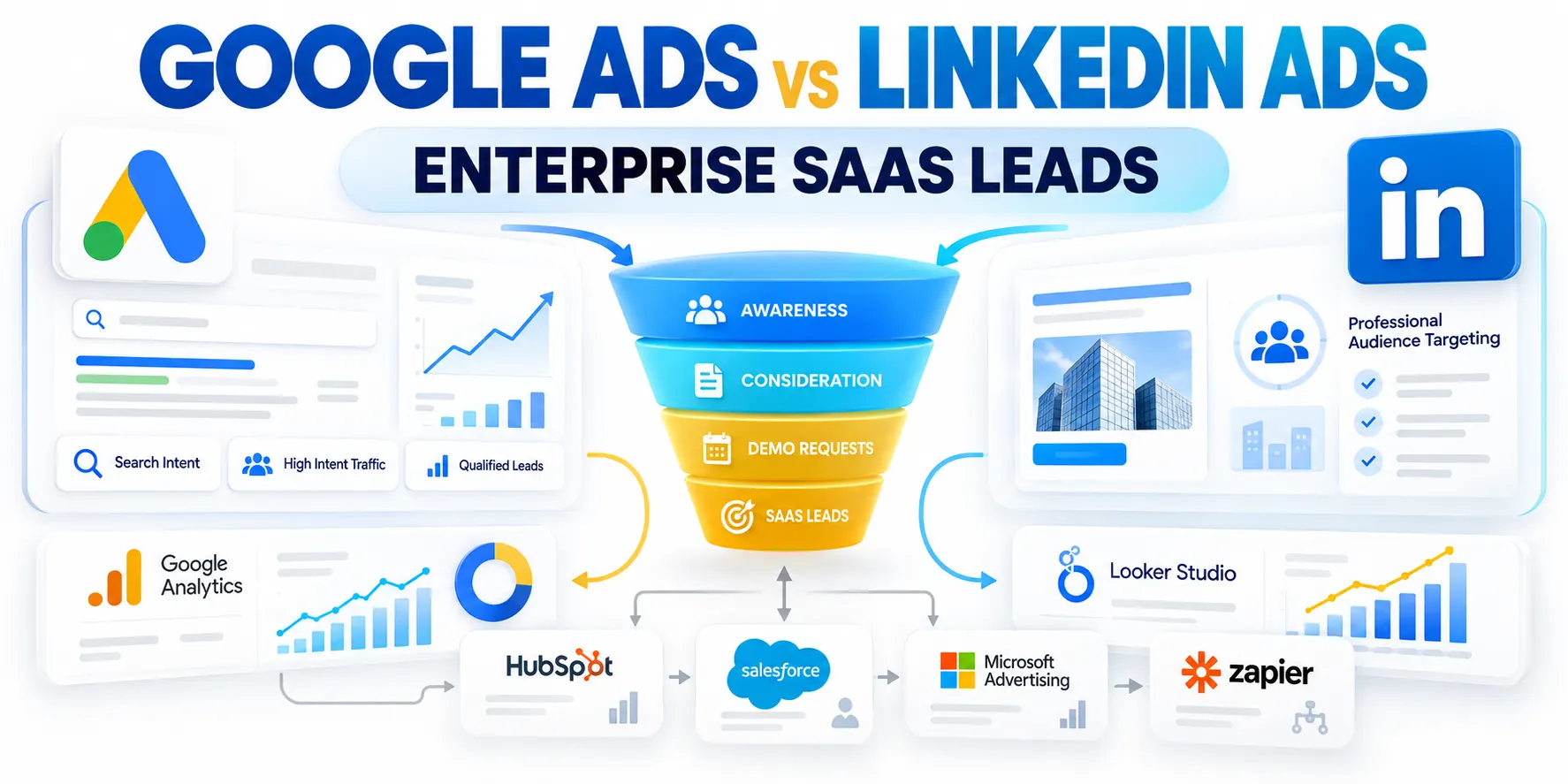
Google Ads vs LinkedIn Ads for enterprise SaaS is a choice about intent, audience, offer, and sales follow-up. These channels reach buyers at different decision moments.
For example, Google Search can capture people expressing a problem through a query. LinkedIn can target professional and company attributes before a buyer searches for a solution.
Start with the buying signal
For each campaign, state what signal should make an account worth contacting: a high-intent search, a role in a target buying group, a named account, or a return visit.
A form submission alone does not make a lead qualified. Define the required company fit, use case, buying role, timing, and sales acceptance before launching.
Set the evidence threshold before choosing
Choose the minimum evidence required to fund a channel: qualified account fit, accepted sales action, credible opportunity progression, and reliable source attribution.
Record the threshold before launch. This prevents clicks, platform leads, or one unusually large opportunity from redefining success after results appear.
Use a channel decision rule
Apply these criteria to a channel decision rule:
- Choose Google Search first when buyers search for a category, product, migration, or use case.
- Test LinkedIn first when targeting a narrow professional group or named business accounts.
- Use both when search demand exists and a buying group needs distinct professional messaging.
Google’s Search campaign guide covers active queries; LinkedIn’s targeting options include professional and company attributes.
Apply the rule to one defined buying situation. Document why the channel matches that signal, which limitation remains, and what evidence would reverse the choice.
Compare Search Demand and Professional Targeting

These channels play different roles. Google Search captures a query; LinkedIn lets marketers select professional contexts and reach people who may not be searching yet.
That distinction affects campaign planning, measurement, and the expected sales conversation. A lower lead cost on one platform does not automatically mean better economics.
Compare the channels through these decision signals:
- Search queries reveal active problem awareness and solution intent.
- Professional attributes identify roles, accounts, industries, and seniority.
- Cost benchmarks require identical qualification and cohort windows.
- Sales feedback explains whether captured demand fits the offer.
Read the intent behind a search
First, separate commercial terms from research terms. “Enterprise CRM pricing” signals a different next step from “what is customer relationship management,” even if both contain the same category.
Then build keyword groups around a use case, product category, competitor alternative, and implementation question. Review actual search terms and add negatives when queries reveal poor fit.
Use professional targeting with a specific account thesis
LinkedIn can combine company and member attributes, such as industry, company information, job experience, skills, and seniority. These filters help test a buying-group hypothesis.
However, targeting by job title alone can become too restrictive or miss equivalent roles. Start with the buying function and seniority, then compare broader or narrower combinations.
Compare the roles each platform plays
| Decision | Google Search | |
|---|---|---|
| Primary signal | Query and search context | Professional or company attributes |
| Best initial use | Capture existing category demand | Reach a defined buying group or account set |
| Common risk | Irrelevant queries or broad match waste | Small audiences or restrictive filters |
| Useful first measure | Qualified conversion by query theme | Target-account engagement and sales acceptance |
Use this as a planning guide, not a performance guarantee. Actual results depend on competition, offer fit, audience quality, tracking, sales response, and budget.
Revisit the comparison when search demand, account coverage, pricing, or sales capacity changes. A channel’s appropriate role can change without making its earlier test invalid.
Build Audience Tests That Qualify SaaS Buyers

Enterprise SaaS sales often involve several people and a long buying cycle. Configure tests to reveal which audience and message produce credible opportunities, not merely inexpensive contacts.
Start with a segment small enough to explain, but large enough to gather useful observations. Record the assumptions before changing campaign settings.
Build each audience test from these inputs:
- Company fit by size, industry, geography, and operating model.
- Buying roles connected to the selected use case.
- Query themes indicating commercial or implementation intent.
- Exclusions removing students, vendors, and irrelevant segments.
Build a buyer and account hypothesis
Write down the company traits tied to product fit: employee range, geography, industry, operating model, technology environment, or a business trigger.
Identify the people involved in the decision. A champion may care about workflow, an executive about cost and risk, and IT about integration, identity, or security.
Avoid over-filtering professional audiences
Estimate reachable audience size after each filter. If a segment becomes too small, broaden one dimension at a time and document which change caused the reach to expand.
Test job functions or seniority alongside relevant skills when titles vary across companies. LinkedIn recommends adding related titles instead of selecting only a few exact titles.
Use search terms as qualification evidence
Map query themes to buyer needs: replacement, implementation, pricing, integration, compliance, or a specific workflow. Keep unrelated learning queries out of high-intent ad groups.
Review query reports with sales outcomes. A term can look commercial yet produce students, consultants, small businesses, or users seeking a feature your product does not provide.
Connect channel tests to broader strategy
For a broader framework to plan enterprise LinkedIn campaigns, see our LinkedIn Ads strategy for high-value enterprise contracts.
Use that framework to connect account selection, buying roles, message, offer, and sales follow-up. Keep the channel test narrow enough to explain why results changed.
Match Offers and Creative to the Channel

The channel influences how the offer should be framed, but it does not replace customer research. Align each ad with a specific problem, useful proof, and a relevant next step.
Likewise, keep the landing page consistent with the ad promise. If the click mentions a migration assessment, the page should explain its scope, required inputs, and what the prospect receives.
Align channel execution through these message elements:
- Search ads answer the expressed query directly.
- LinkedIn creative frames a role-specific business problem.
- Landing pages preserve the promise and next step.
- Sales routing uses audience and qualification evidence.
Design the search message around the query
Group ads by intent and write copy that answers the searcher’s problem. State who the product serves, the specific workflow addressed, and a credible proof point.
Use landing pages that resolve the query rather than sending every search to the homepage. Keep high-intent pricing, demo, comparison, and implementation paths distinct where the experience differs.
Give LinkedIn audiences a reason to engage
For professional audiences, lead with a role-relevant issue: forecasting confidence, implementation risk, manual handoffs, or a measurable operational constraint.
Use a useful offer such as a technical guide, calculator, diagnostic, or demo tailored to the segment. Make the value clear before asking for detailed contact information.
Connect the ad to the next sales action
Agree on a follow-up path before the campaign starts. Route leads by territory, account owner, product interest, and qualification evidence rather than sending every submission to one queue.
After launch, measure response time and acceptance reasons. Sales feedback can uncover poor audience fit, missing fields, weak offers, or unclear landing-page expectations.
Budget and Test Without Confusing the Results
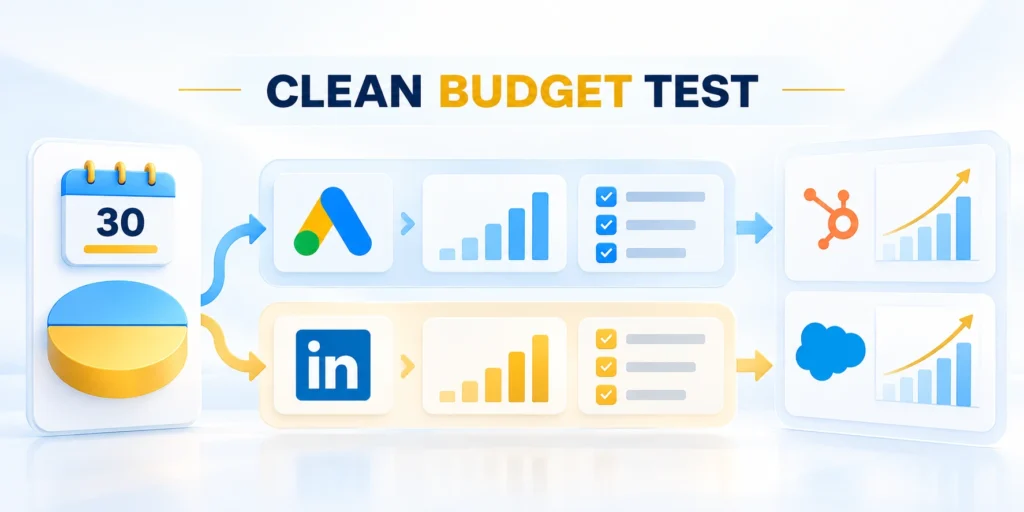
Do not compare platforms using a single cost-per-lead number. Audience, intent, conversion definition, attribution window, and sales follow-up can differ substantially.
Allocate enough budget to learn while protecting the business from unbounded spend. Define a stop, continue, or revise rule before launch.
Estimate economics from qualified outcomes
Work backward from acceptable acquisition economics. Estimate the share of leads accepted by sales, the opportunity rate, expected close rate, deal value, and gross margin.
Treat assumptions as planning ranges, not facts. Replace them with observed CRM results as cohorts progress through qualification, opportunity creation, and closed revenue.
Translate economics into a test ceiling
Before activating both platforms, set an approved investment ceiling. Keep separate daily and total limits for each channel, and document who may change them.
Use a stop rule tied to evidence, not an arbitrary date. Pause if tracking breaks, the audience is clearly unqualified, or spending exceeds the agreed limit.
Use these outcomes to govern the test:
- Continue: target accounts engage and sales accepts leads at a credible rate.
- Revise: the audience fits, but the offer or landing page misses the buying need.
- Pause: tracking fails or spend buys activity without qualified downstream progress.
Test one meaningful variable at a time
Control each experiment through these practices:
- Hold the offer and landing page steady while comparing audience segments.
- Keep the audience constant while testing distinct creative or value propositions.
- Change bidding, targeting, and conversion goals separately where practical.
- Record start dates, budgets, exclusions, and any concurrent sales or website changes.
Google’s campaign guidance recommends conversion tracking and negative keyword lists to reduce irrelevant traffic. Confirm the current account options before applying them.
Interpret each test against the documented hypothesis and change log. A result becomes actionable when the team can explain which variable produced the observed difference.
Treat bidding automation as a measurement dependency
Automated bidding responds to the conversion signals, values, attribution settings, and observation windows supplied by the account. It cannot repair an ambiguous business outcome.
Confirm that primary conversions represent meaningful progress before using them for optimization. Keep diagnostic events secondary so they do not redirect spend toward easier activity.
Protect bidding from weak conversion signals
A weak lead event can still train bidding toward weak submissions.
Validate conversion definitions, duplicate events, consent behavior, and CRM imports. Do not change targets so frequently that a campaign has no stable period for learning and comparison.
Measure Pipeline, Not Platform Activity
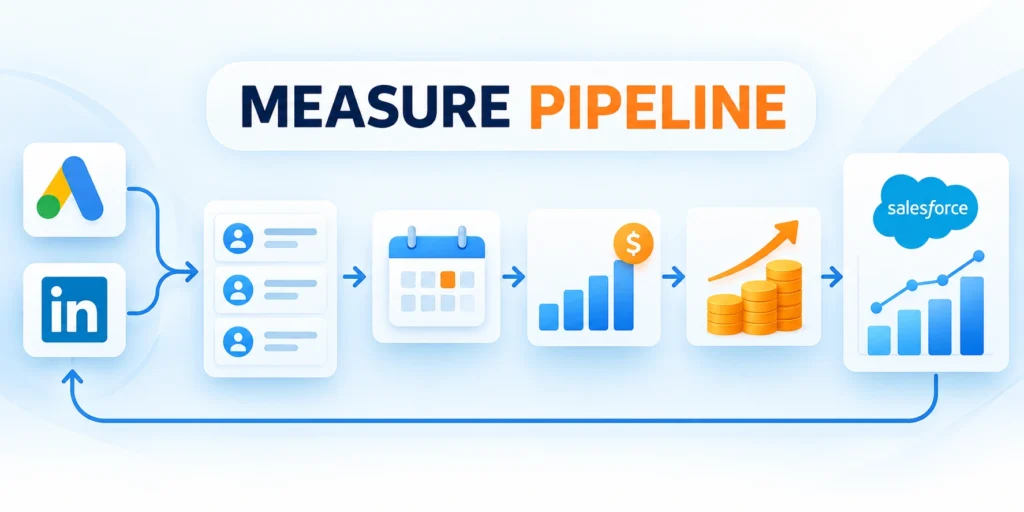
Clicks, impressions, and platform-attributed leads are diagnostic signals. Enterprise SaaS decisions should connect paid media to qualified accounts, accepted opportunities, pipeline, and revenue.
That connection requires consistent campaign names, source values, timestamps, and CRM definitions. Plan the tracking design before launching the first test.
Create a shared measurement contract
Marketing, sales, and operations should agree on a qualified lead, accepted lead, opportunity, sourced pipeline, influenced pipeline, and closed-won definition.
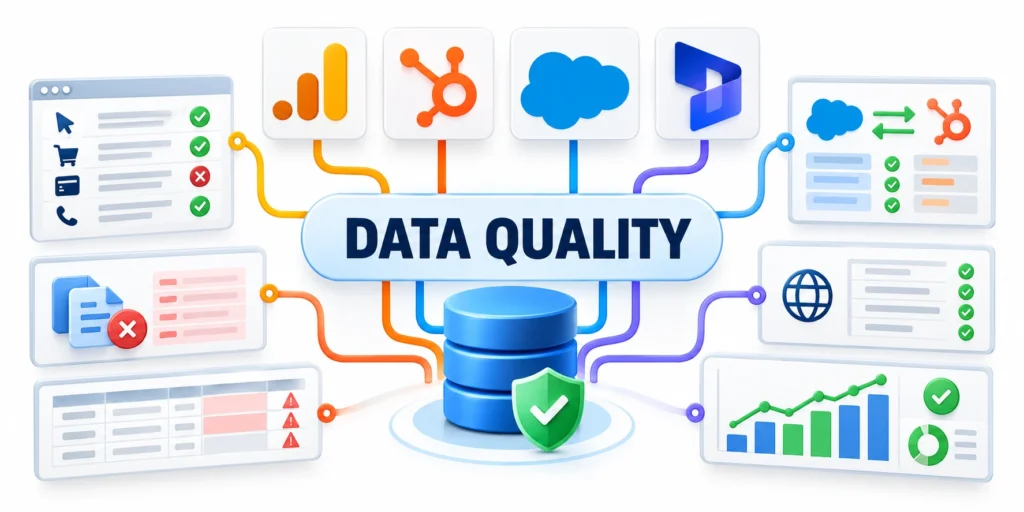
Specify which system owns each field, how account matching works, and how duplicate contacts are handled. Preserve the original campaign context when a contact returns through another channel.
Read metrics at several levels
Review performance across these evidence layers:
- Delivery: spend, impressions, reach, frequency, clicks, and query quality.
- Conversion: form completion, demo booking, qualified lead, and accepted lead.
- Business result: target accounts engaged, opportunities, pipeline value, win rate, and sales cycle.
Compare cohorts over an appropriate sales-cycle window. Label immature cohorts instead of treating missing revenue as a final result.
Keep definitions, currency, and reporting dates consistent across channels. Reconcile discrepancies with CRM records before using a platform total to change meaningful budget.
Use attribution carefully
Platform attribution is useful for optimization but does not prove that one channel caused every reported conversion. Multiple touchpoints, view-through rules, and tracking gaps can change credit.
Pair platform reports with CRM cohort analysis and, when volume allows, controlled experiments. Keep the attribution model and observation window consistent during a comparison.
Connect paid media to demand generation
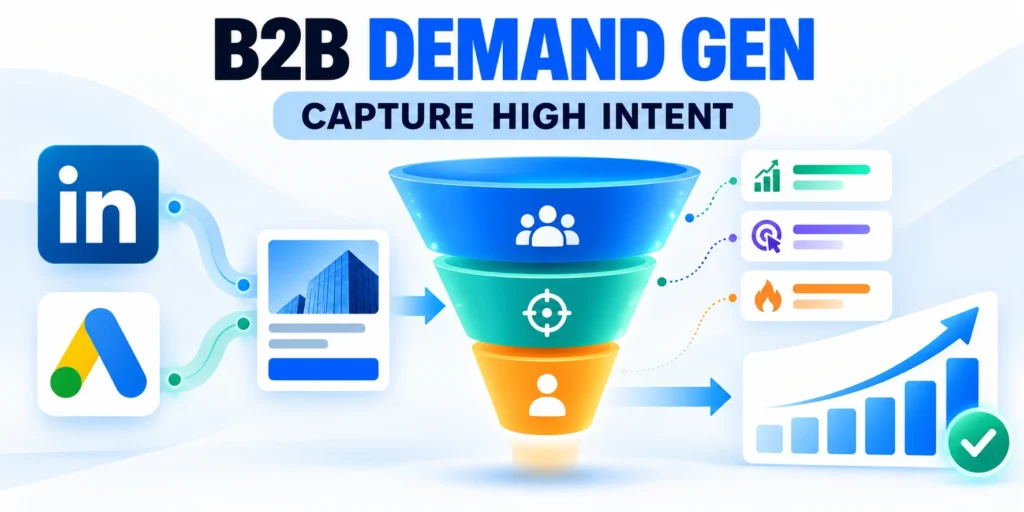
For the broader demand-generation system, see our B2B demand generation framework.
Connect paid campaigns to that system through shared account priorities, content signals, qualification definitions, and sales feedback. Preserve each channel’s distinct role in the buying journey.
Run a Practical 30-Day Test

A short test can establish operational readiness and early audience signals, but it may not produce enough closed revenue to prove a channel’s long-term value.
Use a 30-day plan to validate targeting, tracking, offer fit, and sales handoff. Continue measuring pipeline after the media test ends.
Days 1–5: establish the baseline
Establish the baseline through these steps:
- Choose one audience or query theme tied to a clear use case.
- Confirm the landing page, privacy notice, form fields, and conversion events.
- Verify CRM source fields, routing rules, account matching, and sales ownership.
- Record the starting assumptions, budget ceiling, and stop criteria.
Test the journey end to end. Confirm that one conversion includes campaign context and reaches the intended sales queue.
Record screenshots or system evidence for the baseline without copying sensitive data into uncontrolled files. Assign an owner to correct every failed handoff.
Days 6–20: run controlled campaigns
Launch a focused Google Search test for a defined intent theme, a LinkedIn segment for a defined professional audience, or both with separate conversion reporting.
Review delivery and lead quality on a fixed cadence. Exclude irrelevant queries or audience segments, but log changes so results remain interpretable.
Days 21–30: decide what to change
Compare qualified outcomes, accepted leads, account engagement, and sales feedback against the predefined criteria. Identify whether the constraint is audience, offer, page, tracking, or follow-up.
Choose one next action: continue the strongest segment, revise a weak offer, broaden a narrow audience, add negative terms, or pause until measurement is repaired.
Choose a channel mix from evidence
Favor Google Search when it reliably reaches buyers with relevant active queries. Choose LinkedIn when professional or account targeting produces meaningful engagement from the buying group.
Combine both channels when each has a distinct job and tracking separates them. Avoid duplicating audiences or counting the same result twice.
Design a Channel-Specific Enterprise SaaS Experiment
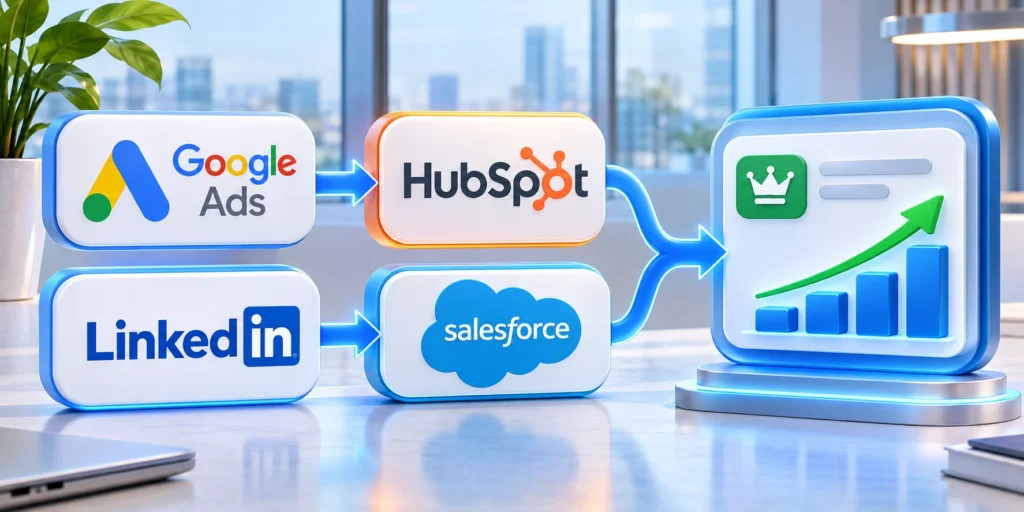
Give each platform a clear job. Search can capture expressed demand, while professional targeting can reach selected roles before they search. Measure both against the same qualified pipeline outcome consistently.
Use the same business outcome and qualification definition, but do not force identical audiences, creative, bids, or landing experiences across different channel mechanics.
Define Comparable Qualification
Agree on account fit, role relevance, problem, timing, and accepted sales action before launch. Capture rejection reasons consistently in the CRM.
Separate inquiries, marketing-qualified leads, sales-accepted leads, opportunities, and revenue. A cheaper form submission may create more operational waste.
Use these actions to define comparable qualification:
- Use one qualification definition across channels.
- Keep source and campaign fields reliable.
- Record duplicate and rejected leads.
- Measure follow-up speed and outcome.
Protect the Test From Mixed Changes
Change one major variable at a time when possible. Record audience, query, creative, offer, landing page, bid strategy, budget, and conversion settings.
Allow platform learning and enterprise buying cycles enough time, but stop when consent, brand safety, data quality, or budget safeguards fail.
Allocate Budget From Pipeline Evidence
Review qualified pipeline, progression, sales feedback, account coverage, and cost together. Avoid scaling a channel solely because it reports more conversions.
Use a blended plan when channels perform different jobs. Document the evidence and the conditions that would change the allocation later.
Reconcile Conversion Definitions Before Comparing Channels
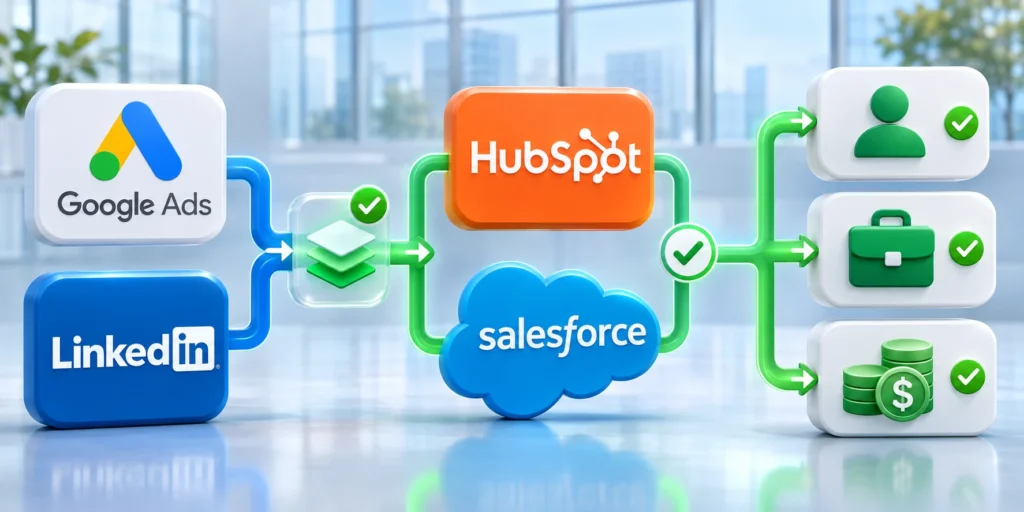
Inventory every optimization and reporting conversion in both platforms. Identify whether it represents a page view, form, qualified lead, meeting, opportunity, or revenue.
Remove duplicate primary actions and separate diagnostic events. Platforms can optimize toward an easy event that does not reflect enterprise pipeline quality.
Check Attribution Windows and Imports
Record click and view windows, time zones, model settings, offline import timing, currency, and identity limitations. Explain differences before comparing totals.
Test representative leads from click through CRM outcome. Verify source fields, duplicate handling, qualification status, and imported values.
Use these actions to check attribution windows and imports:
- Name every primary conversion action.
- Document its source and owner.
- Test imports with known records.
- Reconcile totals on a schedule.
Use One Business View
Keep platform data for delivery and optimization, but use governed CRM outcomes for cross-channel business decisions. Preserve channel context and uncertainty.
When definitions change, annotate the date and avoid comparing incompatible periods. Rebuild the baseline before reallocating meaningful budget.
Resolve discrepancies before reallocating budget
Investigate mismatched counts through timestamps, identifiers, attribution windows, consent states, duplicates, import errors, and CRM stage history before selecting the preferred channel and committing the next budget.
Document the resolved cause, affected period, corrected baseline, and decision owner. Reprocess comparable cohorts when the discrepancy could materially change pipeline economics or sales capacity decisions responsibly.
FAQ
These answers clarify common enterprise SaaS channel decisions.
Is Google Ads or LinkedIn Ads better for enterprise SaaS?
Neither is universally better. Google Search captures active query intent; LinkedIn can reach professional and company segments. Compare qualified outcomes for your market and offer.
Should a SaaS company use both platforms?
Use both when they serve different roles and you can measure them separately. Start with a focused test rather than splitting a small budget across too many campaigns.
Which platform usually has cheaper leads?
There is no dependable universal answer. Costs vary by market, competition, audience, creative, conversion definition, and sales follow-up; compare cost per accepted opportunity.
How should I compare campaign performance?
Use the same qualification rules and cohort window. Track accepted leads, target accounts, opportunities, pipeline, and revenue alongside delivery and conversion metrics.
Is LinkedIn job-title targeting enough?
Usually not by itself. Combine relevant account, function, seniority, or skill attributes where appropriate, and avoid shrinking the audience until it cannot deliver useful results.
How should branded search be treated?
Separate branded and nonbranded demand in reporting. Branded search may capture existing awareness rather than create new enterprise interest.
Should LinkedIn audiences use company lists?
Use approved lists when account focus is justified, then combine them with relevant roles and exclusions. Validate coverage and data-use requirements.
Which channel is better for category creation?
Professional targeting can reach defined roles, while search captures existing demand. Test the message and business outcome rather than assuming one channel.
How should sales feedback affect budget?
Use structured acceptance and rejection reasons. Reduce spend when reported volume does not produce relevant accounts, roles, problems, or timely follow-up.
When should a channel test stop?
Stop when safeguards fail or sufficient evidence rejects the hypothesis. Correct tracking and operational failures before blaming the audience.
Conclusion

Give each platform a clear buying-journey role: search captures active demand, while professional targeting reaches defined roles and accounts.
Choose a focused test, measure qualified pipeline in the CRM, and use sales feedback to refine the next investment. Do not scale from clicks alone.
Decide with one business scorecard
Compare channels through the same qualification stages, cohort dates, and governed CRM outcomes. Keep platform metrics for diagnosis, not as the final budget decision.
Document the hypothesis, audience, offer, conversion definition, attribution settings, sales response, and observed pipeline. This record makes later comparisons explainable.
Use these signals for the final decision:
- Qualified account fit and buying-role relevance.
- Sales acceptance and opportunity progression.
- Reliable attribution and conversion imports.
- Pipeline economics within approved guardrails.
Keep learning after the test
Continue observing opportunities after the media window closes. Enterprise buying cycles can reveal channel value later than platform lead reports suggest.
Record rejection reasons and delayed progress. Use those findings to revise audiences, offers, landing pages, routing, and sales follow-up without changing every variable together.
Govern the next budget decision
Scale only when tracking remains reliable and qualified outcomes repeat across enough observations. Preserve a spending ceiling and named owner for every material change.
Pause when safeguards fail or the evidence rejects the hypothesis. Repair measurement and operational handoffs before treating channel mechanics as the primary cause.





Leave a Reply