

Determine When GDPR and California Privacy Rules Apply
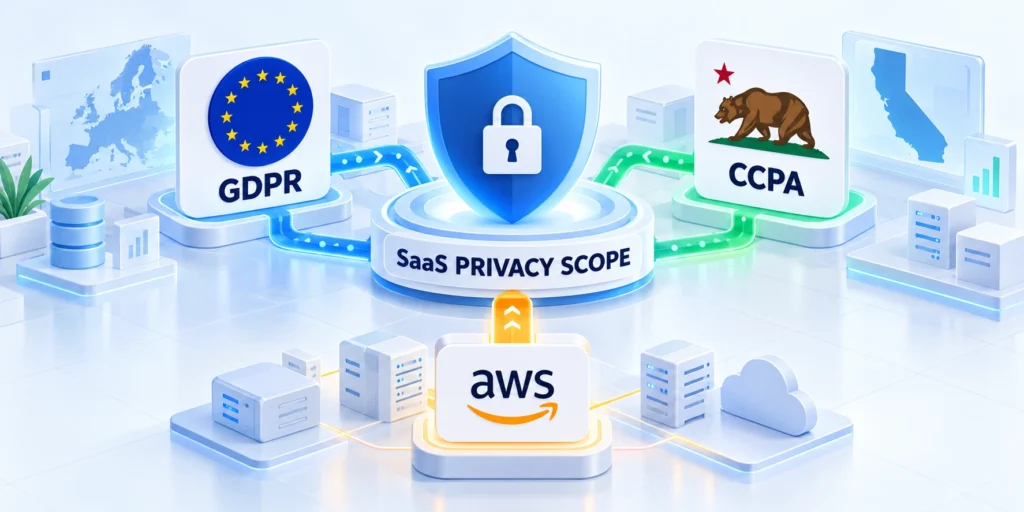
Start with people, locations, services, and data; a company’s address alone does not settle GDPR and CCPA compliance for a SaaS product.
Record the facts for each product and customer group before choosing a legal basis, promising a right, or assigning a compliance owner.
Test GDPR scope
GDPR scope may follow an EU establishment or specified activities directed toward people in the EU, including relevant offering or monitoring behavior.
Review these facts for each product:
- Service operator and involved EU establishment.
- User countries and actively served markets.
- Features that monitor relevant behavior.
- Data, purpose, and affected people.
- Decision owner and legal review date.
Use GDPR Articles 3 and 4 with product facts rather than treating interface settings or billing addresses as legal conclusions.
Test California scope
The CCPA applies to qualifying for-profit businesses doing business in California that determine why and how personal information is processed and meet a statutory coverage test.
Check the current California Privacy Protection Agency FAQ and regulations before documenting a conclusion:
Use these actions to test california scope:
- Verify the current thresholds and exceptions for the entity and processing.
- SaaS vendors may serve customers as service providers while acting independently for billing.
- Document each role separately for every processing purpose.
Keep an applicability record
Create a dated record with the entity, user locations, data categories, purposes, roles, legal questions, decision owner, and next review date.
Reopen the assessment when the product enters a market, adds a feature, changes data use, or introduces a new vendor or hosting region.
Classify Roles for Each Processing Activity

Separate customer-directed processing from the provider’s independent operations; one company can hold different roles across different data flows.
Classify each activity from actual decisions and behavior. A contract label helps document a role but cannot change who determines the purpose and essential means.
Build an activity matrix
Separate processing by purpose because the same provider may follow customer instructions for one activity and determine another activity independently.
Record the decision, responsible organization, implementation evidence, contract term, and next review date for every material activity.
| Activity | Role question | Evidence |
|---|---|---|
| Workspace data | Who sets purpose and permitted uses? | Instructions, settings, and DPA terms |
| Account security | Who determines security record use? | Access policy and incident runbook |
| Product analytics | Whose purpose does analytics serve? | Event schema, notice, and limits |
| Billing records | Who requires records and why? | Workflow and retention rule |
| Support access | Who directs customer-data access? | Approvals, procedure, and access log |
The EDPB controller and processor guide provides practical role descriptions for reviewing documented behavior.
Translate the role into system behavior
For processor work under GDPR Article 28, connect contract terms to documented instructions, confidentiality, security, subprocessors, assistance, audits, and deletion or return.
Keep a role decision beside the feature owner, data inventory entry, contract clause, and system configuration that implements it.
Reassess role decisions when use changes
A documented role can change when a feature, purpose, recipient, instruction, or decision authority changes, even if the contract label remains unchanged.
Reopen the role assessment after these changes:
- Analytics serves a provider purpose.
- Support adopts a new data use.
- An integration expands its access.
- A customer instruction becomes optional.
- A vendor gains independent decision authority.
Update the role matrix, contract, notice, system configuration, and accountable owner together so recorded obligations match production behavior.
Map SaaS Personal Data and Retention

Map personal data from collection through deletion, including copies created by logs, exports, support tools, analytics, and backups.
Use the inventory to connect privacy commitments to real services, storage locations, owners, vendors, and retention behavior.
Make a data inventory usable by engineers
Create one row per data flow, not merely one row per database. Capture the feature, purpose, people affected, fields, source, recipient, region, and system owner.
Add the retention trigger, deletion behavior, downstream copies, and the person responsible for testing each lifecycle rule.
| Inventory field | Example | Implementation check |
|---|---|---|
| Purpose | Deliver a customer-requested support session | Limit access to that support workflow |
| Data | Email, workspace ID, diagnostic attachment | Minimize fields and redact secrets |
| Systems | Ticket service, object storage, malware scanner | Record regions and access groups |
| Retention trigger | Ticket resolution plus an approved period | Configure expiry and exceptions |
| Copies | Export, audit log, backup | Define deletion or expiry for each copy |
For example, trace a support attachment from browser upload through object storage, ticketing, scanning, and export. Assign an owner to every copy.
Define retention and deletion behavior
Translate “keep only as long as necessary” into observable triggers such as account closure, ticket resolution, contract end, or an approved legal hold.
For each trigger, document the period, responsible service, exception rule, and test that proves the record expires.
Backups and lifecycle testing
Use a separate backup rotation schedule, restrict restoration access, and reapply valid deletion or suppression records before restored data serves production traffic.
Run these lifecycle checks on schedule:
- Trigger an approved test record’s expiry.
- Verify removal across expected systems.
- Confirm processor and backup treatment.
- Restore safely and reapply restrictions.
- Record exceptions and corrective actions.
Keep evidence of the trigger, systems checked, backup window, restoration controls, failures, owner, and completed remediation.
Put Customer Contracts and Subprocessors in Shape

Turn every privacy promise into a contract term, an operational owner, and evidence the team can produce later.
Compare the agreement with the service configuration. Generic language cannot fix a product that stores, shares, or retains data differently.
Review data-processing terms
For GDPR processor work, map Article 28 terms to the actual service and its documented customer instructions.
Use these actions to review data-processing terms:
- Describe the processing subject, duration, nature, purpose, data types, and affected people.
- Set confidentiality and appropriate security duties for authorized personnel.
- Define subprocessor approval, notice, contractual flow-down, and change records.
- Explain how the processor assists with rights requests, security duties, and impact assessments.
- Define return or deletion at service end, including documented exceptions and backup rotation.
- State how the customer receives information needed to demonstrate compliance or conduct an audit.
For California service-provider or contractor work, verify the current definitions and contractual restrictions. Define permitted business purposes and restrictions on using or sharing data.
Use current CPPA regulations for scope and contract language. Do not reuse an old clause library without checking whether the service and legal requirements changed.
Maintain a subprocessor register
Track each vendor’s service, data categories, processing locations, access path, security contact, contract status, and customer-notice status.
Approve vendors before production access. For each vendor change, record affected customers, notices, objection periods, and the activation date.
Plan vendor exits
Define how data, credentials, integrations, logs, and customer dependencies will be handled before a vendor receives production access.
Use these controls during vendor exit:
- Export records customers must retain.
- Disable integrations and revoke credentials.
- Obtain appropriate deletion confirmation.
- Preserve required contract and security evidence.
- Verify downstream copies and backup expiry.
Assign an exit owner and completion evidence. Do not close the vendor record while production access or unresolved data copies remain.
Tie product releases to contract updates
Before enabling a feature that adds a data flow, update the inventory, role matrix, DPA annex, privacy notice where needed, and vendor register.
Ask legal counsel to resolve uncertain role or transfer questions. Engineering should provide precise facts about access, storage, logs, support, and subprocessors.
Build Privacy-Rights Request Workflows

Use one intake route to log the request, verify the requester, find data across systems, assign actions, and preserve a completion record.
Separate customer-admin requests from requests sent directly to the SaaS provider; the responsible party depends on the role and request.
Implement the request path
Follow this sequence to implement the request path:
- Receive and log: record channel, time, action, account identifiers, and responsible organization.
- Verify proportionately: use lawful, request-appropriate verification; avoid collecting unjustified sensitive data.
- Locate records: search production, support, analytics, exports, and relevant vendor tools; record each system checked.
- Apply the action: access, correct, delete, or restrict data; document retention exceptions and legal holds.
- Propagate instructions: ask processors or service providers to act and track responses.
- Close with evidence: save timestamps, checked systems, decisions, exceptions, and delivery in restricted case records.
For a deletion test, create an approved test account with a profile, support ticket, analytics event, and export. Verify the documented rule for each copy.
Keep backups under their separate expiry process. Do not promise immediate item-level removal if the backup system cannot perform it.
Configure deadlines and exceptions
Do not hard-code one response deadline for every jurisdiction and request type. Maintain a reviewed rule table with time zones and internal alerts.
If a request cannot be completed, record the data, reason, applicable exception, reviewer, and explanation sent to the requester or customer.
Escalate unresolved requests
Escalate when identity, authority, scope, exception, timing, or conflicting instructions cannot be resolved through the documented request workflow.
Route these cases to the designated reviewer:
- Disputed identity or request authority.
- Uncertain exemption or legal hold.
- Conflicting customer and requester instructions.
- Missing records across a processor.
- Deadline risk requiring immediate action.
Preserve the question, facts, reviewer, decision, communication, and completion date without retaining unnecessary identity evidence.
Protect Data and Prepare for Incidents
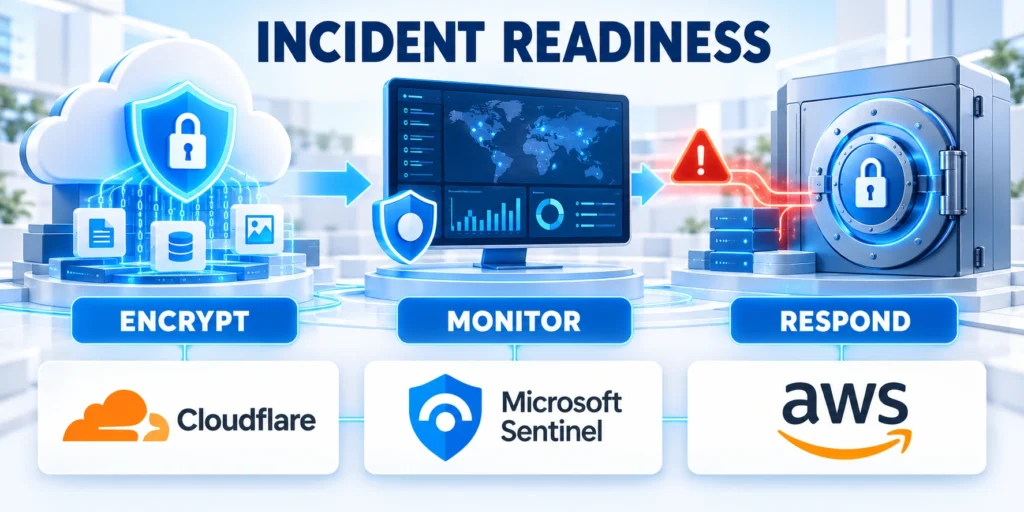
Choose safeguards based on the data, architecture, and credible threats; document the risk each control reduces and how it is tested.
GDPR Article 32 calls for security appropriate to risk, not a universal checklist or a promise that incidents cannot occur.
Apply concrete controls
Translate the risk assessment into controls with named owners, test methods, review dates, expected evidence, and documented remediation when a control fails.
Apply these safeguards according to risk:
- Multifactor authentication for privileged access.
- Least-privilege roles and managed secrets.
- Appropriate encryption in transit and storage.
- Automated cross-tenant authorization tests.
- Synthetic data for routine nonproduction work.
- Restricted restoration and recovery permissions.
GDPR Article 32 lists examples including encryption or pseudonymization, resilience, restoration, and regular testing. Connect each selected control to its documented risk.
Prepare a breach decision workflow
Maintain an incident runbook with the incident lead, security and privacy contacts, evidence custodian, counsel escalation, and customer communications owner.
Separate these responsibilities during incident triage:
- Containment and access revocation.
- Evidence preservation and scope analysis.
- Risk and notification assessment.
- Controller or customer communication.
- Remediation and follow-up ownership.
GDPR Article 33 generally sets a 72-hour regulator-notification window unless risk is unlikely; processor and contract duties may require faster escalation.
Exercise these actions using a support-export scenario:
- Revoke access and preserve relevant logs.
- Identify records and affected customers.
- Document notification decisions and rationale.
- Track remediation and responsible owners.
Record the timeline, facts, decisions, communications, and corrective work. Restrict the incident record to people who need operational or legal access.
Roll Out a Practical SaaS Privacy Program
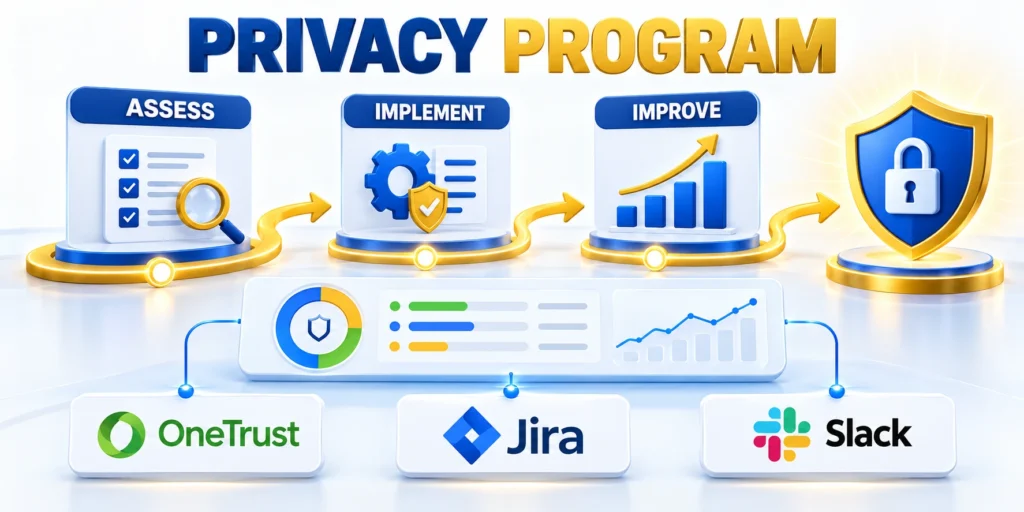
Start with one product area and produce evidence as the team works; a tested workflow is more useful than an unread policy.
Assign owners across product, engineering, security, support, and legal, then extend the same working process to other data flows.
Use a four-week starting plan
Start with a bounded product area and produce operational evidence each week rather than attempting to document every system before testing one complete workflow.
Use the sequence as a starting point, then adjust owners and timing to the product’s risk, legal advice, architecture, and available evidence.
| Week | Work | Evidence |
|---|---|---|
| 1 | Confirm scope, owners, roles, and priority flows | Applicability note and role matrix |
| 2 | Map systems, vendors, retention, and transfers | Inventory and vendor register |
| 3 | Implement and test one request workflow | Cases, exceptions, and results |
| 4 | Exercise security and incident processes | Review, recovery, and action log |
Add privacy checks to release work
For each feature, ask whether it adds personal data, a purpose, recipient, region, or retention path. If yes, assign an owner to update affected records.
Keep current role decisions, data maps, vendor lists, request tests, access reviews, incident exercises, and open risks in a controlled evidence folder.
Recheck product and legal changes
Reopen the review when the product adds a subprocessor, analytics event, hosting region, AI use of customer content, or support workflow.
For California, 2025 regulations took effect January 1, 2026; some risk-assessment, cybersecurity-audit, and ADMT duties apply only to covered entities and activities.
Key considerations for recheck product and legal changes include:
- Check the CPPA regulations page for current scope and timing before making a compliance decision.
- Assign owners for requests, incidents, vendors, and policy updates.
- Test response procedures with representative records before launch.
Apply Privacy Controls Across Web and Mobile Clients

A SaaS account may create personal data through browsers, mobile apps, support channels, integrations, SDKs, and administrative consoles.
Connect every client event to shared backend records while documenting device-specific storage, permissions, identifiers, diagnostics, and vendor access separately.
Map client-specific data behavior
Document notification tokens, crash reports, analytics events, local storage, cached records, clipboard use, and diagnostic payloads for each supported client.
Review these controls for every client:
- Event destination and accountable backend owner.
- SDK vendor and approved configuration.
- Necessary diagnostic fields and retention.
- Logout and local-data clearing behavior.
- Permission changes across supported platforms.
- Offline records and synchronization behavior.
- Crash report redaction, retention, access, and review controls.
- Device identifier rotation and expiry.
Keep preference states synchronized where the product promises a shared account setting. Explain when a device permission controls only one application instance.
Reconcile disclosures with production configuration
Compare app-store disclosures, product notices, consent choices, SDK settings, network destinations, and actual event payloads before every material release.
Preserve these records for every release review:
- Affected people and data categories.
- Purpose and operational necessity.
- Recipients and transfer locations.
- Retention and deletion triggers.
- Approval owner and review date.
- Consent and preference synchronization.
- Store disclosure and product consistency.
- Test evidence from supported clients.
A public label cannot compensate for an undisclosed or unnecessary data flow. Correct production behavior and the corresponding disclosure together.
Test Rights Requests Across Distributed Systems
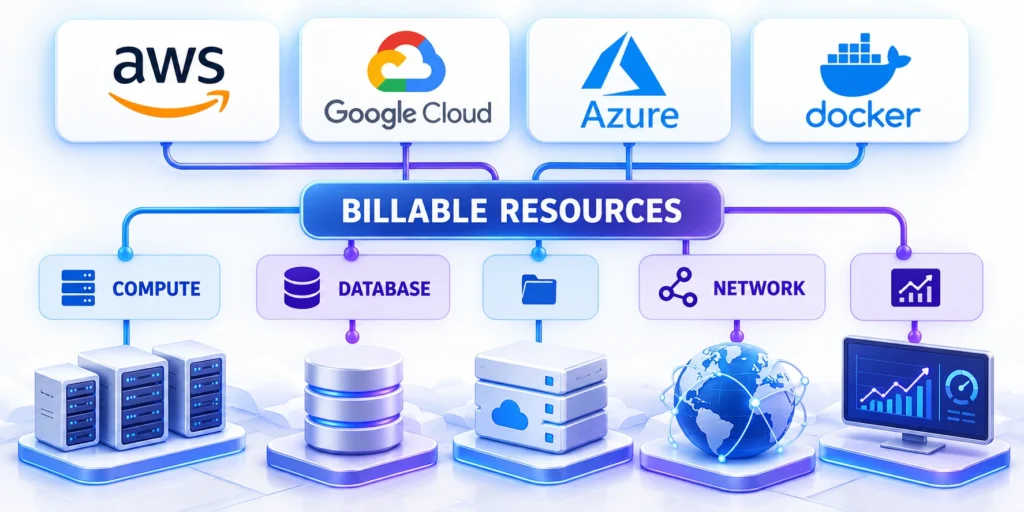
A request workflow must locate records through reliable identifiers without exposing another person’s information or overlooking copies held by integrated systems.
Test ambiguous names, shared domains, merged accounts, former workspaces, vendor records, exports, logs, and restored data before relying on the documented process.
Build system-by-system request coverage
Maintain a coverage matrix for access, correction, deletion, restriction, portability, and opt-out actions across production services and responsible vendors.
Verify these steps for representative requests:
- Confirm identity with proportionate evidence.
- Search production, support, analytics, and billing.
- Send scoped tasks to responsible vendors.
- Track deadlines, exceptions, and completed actions.
- Retest after identifiers or integrations change.
Mark where legal review, retention duties, or technical limits require an exception. Preserve the decision and communication without collecting unnecessary identity documentation.
Validate backup and recovery treatment
Prevent routine restoration of expired data, restrict backup access, and reapply valid deletion or suppression records before restored systems resume service.
Retain these artifacts for each completed test:
- Systems, vendors, and copies searched.
- Identifiers and matching rules used.
- Exceptions and reviewer decisions.
- Vendor responses and completion timestamps.
- Failures, remediation, and retest result.
Use findings to update the inventory, request workflow, vendor responsibilities, and recovery runbooks rather than treating the test as a one-time exercise.
Reconcile notices with product behavior
Review notices when a feature changes its purpose, recipient, retention period, regional transfer, or automated decision role. Product and legal owners should approve material differences before release.
Use release tickets to link the change, data map, notice decision, vendor review, and test evidence. This makes later audits and incident investigation more reliable.
Key considerations for reconcile notices with product behavior include:
- Name the affected people and data categories.
- State the purpose and operational necessity.
- Identify recipients and transfer locations.
- Set retention and deletion triggers.
- Record the approval and review date.
FAQ
These answers clarify common SaaS privacy scope, roles, contracts, retention, security, requests, vendors, and legal-review decisions.
Does every SaaS company need to comply with GDPR?
Not automatically. Applicability depends on establishment, people, behavior, and processing context. Map those facts and escalate uncertain or high-impact cases.
Is a SaaS provider always a processor?
No. It may process workspace data on customer instructions and independently control billing, account administration, or another distinct use.
Does a data processing agreement make a product compliant?
No. The product still needs controls that match its promises, including access limits, vendor governance, request assistance, retention, and incident handling.
Should deletion remove every backup immediately?
Not always. Document rotation and access controls, prevent routine use of expired records, and reapply deletion restrictions after a restoration.
Do the 2026 California rules apply to every business?
No. Some requirements cover only specified businesses or processing. Verify current scope and timing on the CPPA’s official regulations pages.
Should privacy requirements be treated as security controls?
Security supports privacy but does not replace purpose, notice, rights, retention, vendor, and role decisions. Coordinate the programs while keeping their obligations distinct.
How should SaaS teams review subprocessors?
Confirm purpose, data categories, regions, safeguards, retention, incident duties, deletion support, and contract terms. Reassess when the vendor or processing scope changes.
What belongs in a retention schedule?
Define the record, purpose, owner, trigger, duration, disposal method, legal hold, backup treatment, and evidence. Apply the schedule to systems and vendors, not documents alone.
How often should a data inventory be reviewed?
Review it on a defined cadence and whenever features, vendors, integrations, regions, or purposes change. Assign owners who can verify actual production behavior.
When should a SaaS team seek legal advice?
Seek qualified counsel for uncertain applicability, high-impact processing, cross-border questions, incidents, disputed requests, or interpretations that depend on jurisdiction-specific facts.
Conclusion

Treat privacy compliance as product operations: understand actual data flows, assign roles, implement contract commitments, and test request, retention, security, and incident workflows.
Qualified counsel should resolve judgments depending on jurisdiction-specific facts, while engineering supplies accurate evidence about systems, access, vendors, locations, and behavior.
Maintain evidence as the product changes
Reopen assessments when features, purposes, vendors, integrations, regions, identifiers, AI uses, support practices, contracts, or applicable requirements change.
Keep these operational records aligned:
- Applicability and role decisions.
- Data inventory and retention schedule.
- Contracts and subprocessor register.
- Rights-request and incident evidence.
- Security reviews and remediation owners.
- Notice decisions and production configuration.
- Vendor exits and deletion confirmations.
Link each record to the accountable owner, implementation, test result, exception, and next review date so documentation remains actionable.
Use tested workflows instead of promises
A policy or contract does not prove that a distributed SaaS product can locate, restrict, delete, recover, or protect the relevant records.
Verify these workflows with representative data:
- Identity and tenant authorization.
- Retention, deletion, and restoration.
- Vendor instruction and confirmation.
- Incident triage and notification decisions.
- Request completion across every system.
- Cross-client preference synchronization.
- Recovery after suppressed data restoration.
Use failures to improve product behavior, evidence, ownership, and customer communication. Avoid broader claims than the tested process and current legal assessment support.
For related architecture decisions, read Enterprise Mobile App Development: Cross-Platform Strategy.








Leave a Reply