


Build an exclusion policy before adding terms
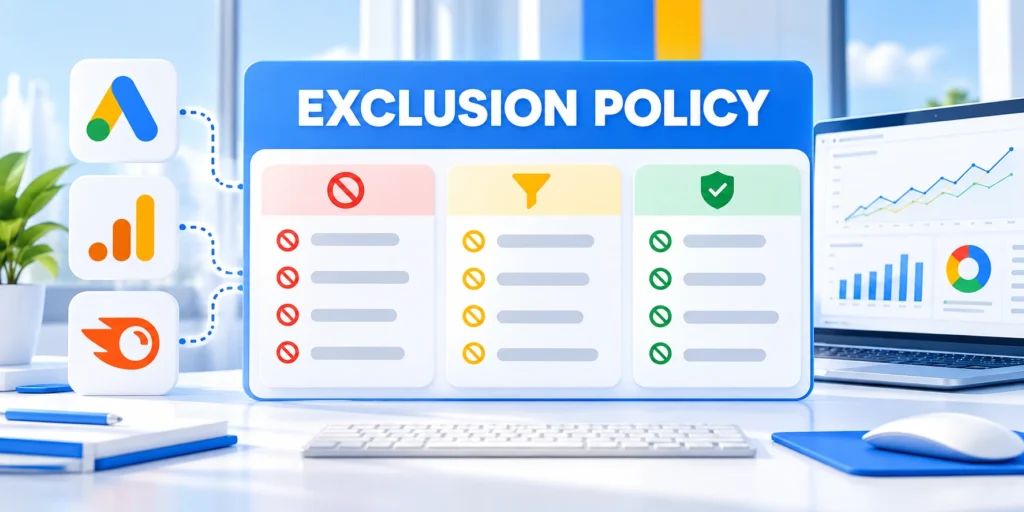
Start with a written decision rule. A negative keyword is not automatically good because a query looks unfamiliar or produces no immediate conversion.
Classify each candidate as irrelevant intent, direct competitor navigation, unsuitable audience, internal traffic, or suspected low-quality traffic. Each class needs a different owner and review cycle.
Distinguish lack of fit from early research
For example, an enterprise software provider may exclude job-seeker searches from acquisition campaigns. It should not exclude every educational query if education regularly precedes qualified pipeline.
For broader campaign planning, use the B2B Google Ads pipeline guide to connect search decisions with qualification and sales handoff.
Use this operational checklist for the decision:
- Business rule: explain why a query class cannot produce the desired outcome.
- Scope: state whether the rule applies to one campaign, a shared list, or the account.
- Owner: assign paid media, sales operations, or compliance responsibility.
- Review date: schedule validation after material changes in offer, geography, or audience.
Define the commercial outcome before changing delivery
Write the outcome in operational language. For example, reduce unqualified form submissions while preserving qualified meetings from the affected search theme.
That statement gives paid media and sales a shared test. It also prevents a rule from being judged solely by lower click volume.
Use this operational checklist for the decision:
- Choose one downstream quality signal.
- Set a review period that reflects the sales cycle.
- Document what evidence would justify reversal.
A compact policy prevents a common failure: adding exclusions after a frustrating report review, then forgetting the reason when the market changes.
Keep the policy beside campaign documentation. It becomes the reference when a stakeholder asks why a search was excluded or when a test needs reversal.
Use the search terms report to create negative keywords
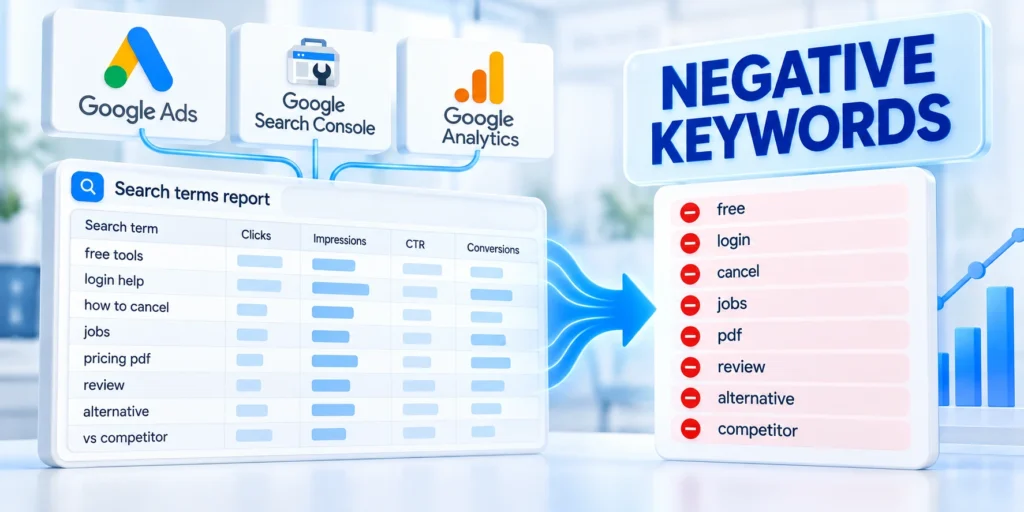
Use the search terms report as evidence, not as a list of automatic exclusions. It shows which searches triggered ads and how those searches performed.
Review terms against the campaign promise, landing page, conversion definition, downstream lead quality, and geographic availability. A click without a form completion is not enough evidence alone.
Confirm the pattern before blocking
Group queries by buyer problem, offer, geography, and stage before adding a negative. A repeated word does not always indicate the same commercial intent.
Review a meaningful sample with the sales context where possible. This prevents a cost-saving change from removing early research that later becomes qualified demand.
Classify patterns before excluding them
Group similar terms before taking action. One query can be an exception, while repeated patterns reveal a mismatch between targeting and the commercial offer.
Use this operational checklist for the decision:
- Export a period that includes enough clicks to show a pattern.
- Label each term as relevant, uncertain, irrelevant, competitor, or investigation required.
- Check CRM outcomes for terms that generated leads or booked meetings.
- Add only proven irrelevant patterns to a negative list.
- Record the date, scope, and business reason for every change.
Google documents that irrelevant search terms can be added as negative keywords to stop ads from appearing for products or services you do not offer.
Keep uncertain terms in a monitored segment. A short learning period is safer than permanently blocking a query category before its commercial role is known.
Exclude competitor terms with a deliberate policy
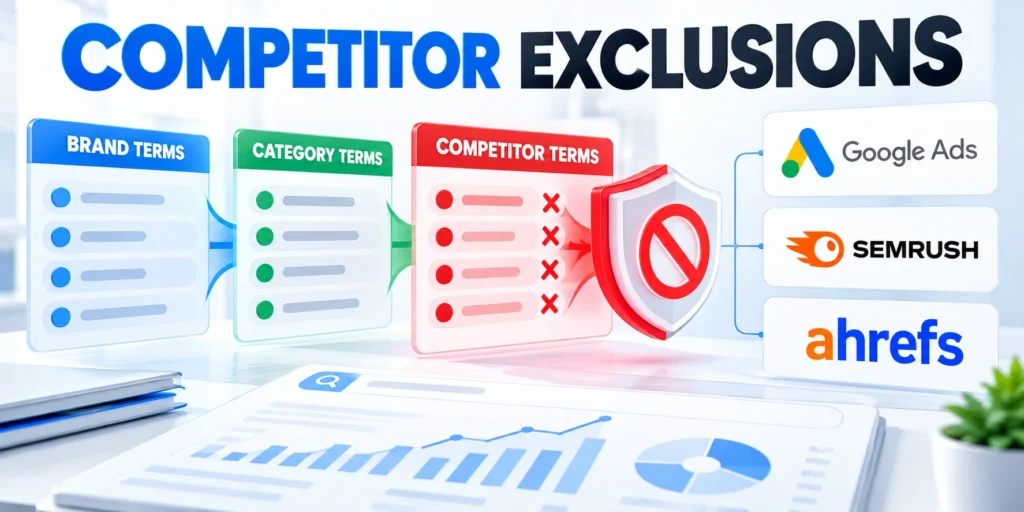
Competitor terms deserve their own decision. A person searching a competitor brand may be seeking support, login help, pricing, a migration path, or a genuine comparison.
Those intentions have different value and risk. Treating them as one exclusion category can either waste budget or eliminate a valuable evaluation audience.
Protect valid comparison research
Treat navigational queries differently from comparison, migration, and alternative searches. A competitor term can signal a valuable buyer evaluating fit rather than an irrelevant visitor.
Choose a measurable rule before excluding the term. The rule should state the expected quality improvement and the condition that would require reversal.
Separate navigation from comparison intent
Start by separating navigational searches from comparison searches. A query that clearly requests another company’s login or support usually does not match a new-customer campaign.
Use this operational checklist for the decision:
- Usually exclude: brand login, support phone number, help center, status page, careers, and employee searches.
- Evaluate separately: alternatives, migration, comparison, pricing comparison, integration, and replacement queries.
- Test deliberately: competitor campaigns need distinct messaging, landing pages, budgets, and reporting.
Do not use a generic competitor list across every product. A term can be irrelevant for one offer but meaningful for another offer with a compatible buyer problem.
Document the legal and brand constraints with the team responsible for messaging. The search strategy should match the organization’s competitive position and approved claims.
Separate junk traffic from normal research behavior

Junk traffic is not synonymous with repeated clicks. Buyers can revisit an ad, share a network, compare vendors, or return after discussing an offer internally.
Google Ads already filters invalid activity in real time. Manual exclusions should respond to specific evidence, rather than assumptions based on an isolated anomaly.
Connect suspicious traffic to evidence
Review search queries, geography, devices, timestamps, landing behavior, and conversion quality together. One unusual signal rarely proves that traffic is invalid or useless.
Escalate confirmed patterns through the appropriate platform or security workflow. Keep the supporting evidence and the expected outcome in the change record.
Investigate before you block
Investigate a pattern when clicks rise sharply without corresponding engagement, qualified leads, or explainable market activity. Combine campaign data with analytics and server-side records where available.
Use this operational checklist for the decision:
- Confirm that conversion tags and offline conversion imports are working.
- Check geographic targeting, schedules, devices, placements, and search terms.
- Compare click identifiers, user agents, and landing-page behavior when the data is available.
- Exclude a known internal network when staff testing can influence reporting.
IP exclusions can help with known networks, including internal company traffic. They are not a substitute for accurate conversion measurement or an invalid-traffic investigation.
When evidence indicates potential invalid activity, preserve dates, campaigns, terms, logs, and observed patterns. This creates a useful record for a formal investigation.
Choose the right exclusion scope

The scope of an exclusion matters as much as the term itself. Account-level exclusions simplify governance, while campaign-level rules preserve deliberate differences between offers.
Use the narrowest scope that solves the confirmed problem. This reduces the chance that a valid audience disappears from a campaign with different economics.
Preserve the original search opportunity
Test a narrow exclusion before adopting a shared rule. This allows the team to observe quality changes without applying one assumption across unrelated campaigns.
Document the campaign purpose and buyer stage beside the exclusion. Context helps reviewers decide whether the same rule belongs elsewhere.
Apply a rule at the narrowest useful level
Account-level IP exclusions can apply across supported campaign types. Campaign-level exclusions allow a more precise response when only one campaign has the unwanted pattern.
| Scope | Best use | Main risk |
|---|---|---|
| Account | Known internal networks | Blocks another use case |
| Shared list | Repeated irrelevant themes | Ownership becomes unclear |
| Campaign | Offer or intent mismatch | Maintenance duplicates |
| Ad group | Narrow search intent | Rationale becomes hidden |
Make scope visible in the change log. A future reviewer should know whether removing one rule changes one campaign or every campaign in the account.
Before expanding a campaign rule, test it against the search terms and conversion outcomes of another campaign. Similar keywords do not always represent the same buyer stage.
Test scope before sharing a rule
Review the campaign purpose, search pattern, conversion route, and sales feedback before extending an exclusion. A rule that protects one offer can remove useful demand from another.
Use a short comparison period and retain the previous configuration. This makes the effect measurable and gives the owner a practical rollback option.
Use these scope checks before expansion:
- Confirm campaign intent
- Compare qualified responses
- Name the rule owner
Measure impact and maintain the list
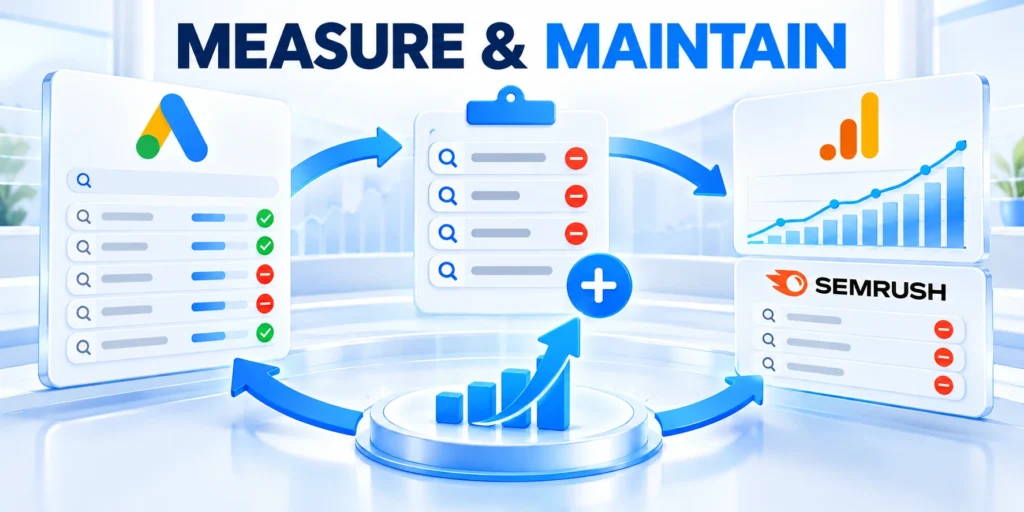
An exclusion program is successful when it improves qualified opportunity quality, not merely when it lowers clicks. Measure the commercial result after each material rule change.
Track volume, cost, engagement, qualified leads, meetings, opportunities, and revenue where attribution permits. Compare enough time before and after the change to avoid reacting to normal variation.
Make every exclusion reversible
Build a simple change log with the rule, owner, scope, rationale, expected result, implementation date, and review date. This supports reversal when evidence changes.
Use this operational checklist for the decision:
- Review search terms on a predictable cadence.
- Review negative lists before major launches or audience changes.
- Ask sales whether excluded themes include real buyer conversations.
- Remove stale rules when the offer, market, or targeting changes.
- Escalate suspicious patterns with the evidence needed for investigation.
The strongest system connects paid media data with CRM outcomes. That connection distinguishes low-value curiosity from the research behavior that often precedes an enterprise purchase.
Use exclusions to focus attention, not to create an artificially clean report. A smaller audience is useful only when it retains the people your business can genuinely help.
Use match types to control the blast radius
Negative keyword match types control how broadly a rule blocks traffic. The team should record the intended reach before adding a broad exclusion to a shared list.
Start with the most specific evidence available. Expand the rule only after another report cycle confirms that close variants also lack commercial value.
Use this operational checklist for the decision:
- Exact exclusions suit a confirmed, narrow unwanted query.
- Phrase exclusions suit a repeated unwanted theme with a stable meaning.
- Broad exclusions need the strongest review because they can suppress useful variation.
A shared list should state the match type beside each rule. This makes it possible to understand a delivery change without reconstructing historical campaign edits.
When a broad rule affects a key campaign, test the impact in a limited scope first. Preserve the previous settings so the team can reverse quickly.
Connect exclusions to the sales qualification process
Paid media cannot decide relevance alone. Sales teams often see why a lead looked weak in an advertising dashboard but still became a useful opportunity.
Define a feedback field for disqualified leads. It should distinguish irrelevant inquiry, poor fit, duplicate, competitor research, student research, and missing follow-up.
Use this operational checklist for the decision:
- Review patterns with sales operations rather than individual anecdotes.
- Link a query class to CRM stages when attribution data permits.
- Keep a sample of excluded themes available for periodic challenge.
- Make the campaign owner accountable for documenting the decision.
This feedback prevents an optimization loop that selects only easy conversions. Enterprise demand often includes long research cycles and several people influencing the decision.
Ask whether the exclusion improves sales capacity, not just dashboard conversion rate. The answer may be different for a product trial campaign and a high-value consultation campaign.
Run a controlled cleanup instead of a one-time purge
A large cleanup can hide the cause of a performance change. Deploy related rules in small groups when the account has enough activity to compare outcomes.
Set a baseline before the change. Preserve impressions, clicks, spend, conversion events, qualified leads, and opportunity rate for the affected campaign.
Use this operational checklist for the decision:
- Choose one confirmed waste pattern.
- Assign the narrowest campaign or shared-list scope.
- Record a measurable expectation.
- Allow enough volume for a fair comparison.
- Keep, narrow, expand, or remove the rule using observed results.
Controlled cleanup also simplifies troubleshooting. If qualified lead volume falls after one documented change, the team knows where to start its reversal review.
Retain access to previous list versions. A reversible operating process is safer than treating exclusions as permanent campaign configuration.
Use a review dashboard that exposes tradeoffs
A useful review dashboard compares attention before and after exclusions. It should show the search themes removed, the remaining demand, and the quality of downstream outcomes.
Do not judge a rule from cost per click alone. A higher-priced search can remain valuable when it produces qualified stakeholders, high-fit accounts, or repeatable opportunities.
Use this operational checklist for the decision:
- Coverage: how much query volume the rule affects.
- Cost: spend avoided and spend redirected.
- Quality: qualified lead, meeting, and opportunity rates.
- Risk: evidence that useful demand may have been blocked.
- Confidence: how much volume supports the decision.
Give stakeholders the same view during monthly planning. A visible tradeoff helps prevent pressure to exclude every expensive query before the business outcome is understood.
If data is sparse, retain the rule as a time-boxed hypothesis. Mark the next review date and the evidence needed to keep or remove it.
Prepare teams for exceptions and reversals
Every exclusion program needs an exception path. Product launches, new regions, changed pricing, and partner programs can make a formerly irrelevant query commercially important.
Let campaign owners request a reversal with a reason, scope, and review date. A small governance step avoids permanent lists that silently outlive the business decision.
Use this operational checklist for the decision:
- Record the original rule and its evidence.
- State the changed business condition.
- Restore the smallest affected scope first.
- Monitor search quality and CRM outcomes after restoration.
This approach keeps exclusions practical. The goal is not to achieve a perfect list, but to maintain a transparent system that learns from buyer behavior.
When teams can reverse a decision safely, they are more likely to document assumptions and improve the next optimization cycle.
Validate exclusions with a controlled change window
Capture the current query mix, spend, conversions, qualified leads, opportunities, and sales feedback before applying a material negative-keyword or targeting change.
Change one coherent rule set at a time. Combining unrelated exclusions, bids, audiences, creative, and landing-page edits makes the effect difficult to interpret.
Use this operational checklist for the decision:
- Record the exact excluded terms and scope.
- Name the owner and review date.
- Define expected quality improvement.
- Set a measurable reversal threshold.
Observe enough relevant search activity to evaluate the change, but review high-risk exclusions sooner. Competitor and broad negative rules can remove valuable demand quickly.
Compare downstream quality with the baseline. If spend falls while qualified opportunities also decline, the apparent efficiency gain may be a demand-loss problem.
Separate suspicious traffic evidence from assumptions
Unusual clicks do not prove fraud. Investigate patterns across search terms, locations, devices, networks, timestamps, sessions, conversions, and repeated behavior before changing campaign access.
Preserve the reporting window and evidence used for escalation. Platform invalid-traffic adjustments may occur separately from the advertiser’s own lead-quality review.
Use this operational checklist for the decision:
- Identify the affected campaigns and dates.
- Compare clicks with sessions and conversions.
- Review geographic and device concentration.
- Escalate with bounded supporting evidence.
Do not block a broad geography, network, or audience solely because one segment looks unfamiliar. Estimate the legitimate demand that the restriction could remove.
After a targeted control is applied, watch lead quality, conversion validation, and opportunity outcomes. Keep a rollback path if the evidence changes.
Maintain negative-keyword ownership across teams
Assign paid media ownership for implementation and revenue ownership for commercial relevance. Sales feedback should identify patterns, not trigger undocumented exclusions from isolated anecdotes.
Review shared lists when products, markets, positioning, competitors, or qualification criteria change. A rule that was correct for an earlier offer may remove current demand.
Use this operational checklist for the decision:
- Keep one approved change log.
- Record scope, rationale, and owner.
- Schedule recurring evidence reviews.
- Archive removed terms and outcomes.
When ownership transfers, verify account access, list placement, automation rules, reporting definitions, and pending reviews before the new team makes further changes.
Connect traffic exclusions to demand quality
Review exclusion changes against lead quality, opportunity creation, revenue evidence, and sales feedback instead of optimizing click volume in isolation.
For the broader acquisition model, read our B2B demand generation strategy.
Set traffic-quality thresholds before exclusions

Traffic-quality thresholds gives paid media teams a defined control before delivery conditions change. Identify the buyer outcome, campaign owner, and expected quality effect first.
Use a limited test for traffic-quality thresholds. A documented change is easier to measure and reverse than a broad exclusion lacking consistently reviewed qualified-demand performance evidence.
Define traffic-quality thresholds controls
Name the search pattern, scope, evidence, decision owner, and review date for traffic-quality thresholds. These details keep the change connected to a business purpose.
Keep the baseline campaign configuration available during traffic-quality thresholds. A visible baseline helps operators distinguish a real improvement from coincidental delivery changes.
Use these traffic-quality thresholds controls before release:
- Defined search pattern
- Qualified-response signal
- Approved campaign scope
- Named review owner
- Documented reversal rule
Review traffic-quality thresholds outcomes
Compare traffic-quality thresholds results with qualified responses, not click volume alone. Include search terms, lead quality, sales feedback, and downstream progression.
Record what traffic-quality thresholds confirmed, what remains uncertain, and the next action. This makes the exclusion process repeatable and accountable.
Keep traffic-quality thresholds tied to the campaign
Connect the traffic-quality thresholds decision to the relevant offer, audience, landing path, and sales workflow. This prevents a valid restriction from being copied outside its original context.
Review whether traffic-quality thresholds still supports the selected buyer outcome before expanding its scope. Current evidence should guide the next change.
Confirm traffic-quality thresholds evidence before extension
Check that traffic-quality thresholds evidence reflects the current campaign period and buyer behavior. Stale evidence should not determine a broader restriction.
Ask the accountable owner to confirm the next scope decision. This preserves a clear link between traffic-quality thresholds and business outcomes.
Use a change log for exclusion decisions

Exclusion change logging gives paid media teams a defined control before delivery conditions change. Identify the buyer outcome, campaign owner, and expected quality effect first.
Use a limited test for exclusion change logging. A documented change is easier to measure and reverse than a broad exclusion lacking consistently reviewed qualified-demand performance evidence.
Define exclusion change logging controls
Name the search pattern, scope, evidence, decision owner, and review date for exclusion change logging. These details keep the change connected to a business purpose.
Keep the baseline campaign configuration available during exclusion change logging. A visible baseline helps operators distinguish a real improvement from coincidental delivery changes.
Use these exclusion change logging controls before release:
- Exact negative term
- Applied match type
- Affected campaign scope
- Evidence and rationale
- Next review date
Review exclusion change logging outcomes
Compare exclusion change logging results with qualified responses, not click volume alone. Include search terms, lead quality, sales feedback, and downstream progression.
Record what exclusion change logging confirmed, what remains uncertain, and the next action. This makes the exclusion process repeatable and accountable.
Keep exclusion change logging tied to the campaign
Connect the exclusion change logging decision to the relevant offer, audience, landing path, and sales workflow. This prevents a valid restriction from being copied outside its original context.
Review whether exclusion change logging still supports the selected buyer outcome before expanding its scope. Current evidence should guide the next change.
Confirm exclusion change logging evidence before extension
Check that exclusion change logging evidence reflects the current campaign period and buyer behavior. Stale evidence should not determine a broader restriction.
Ask the accountable owner to confirm the next scope decision. This preserves a clear link between exclusion change logging and business outcomes.
Review exclusions with sales evidence
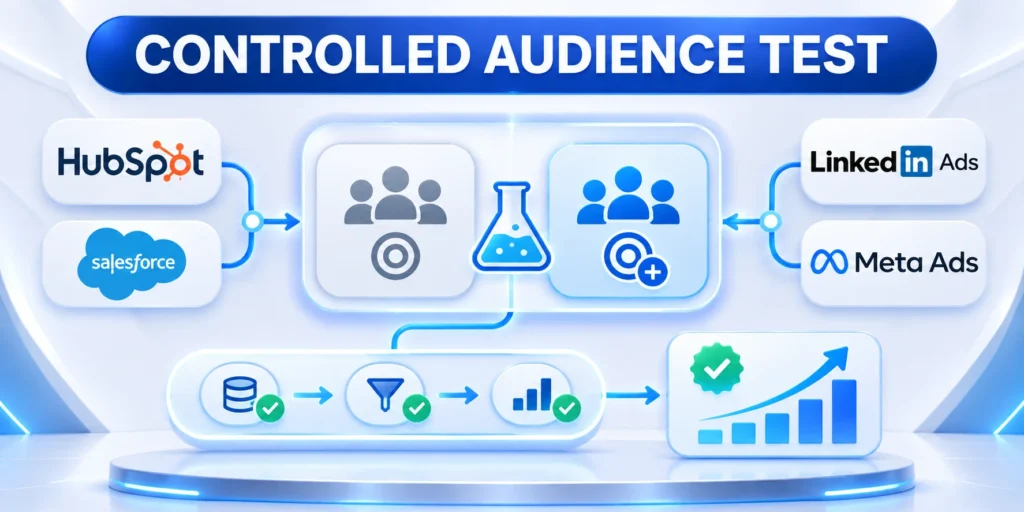
Sales-evidence review gives paid media teams a defined control before delivery conditions change. Identify the buyer outcome, campaign owner, and expected quality effect first.
Use a limited test for sales-evidence review. A documented change is easier to measure and reverse than a broad exclusion lacking consistently reviewed qualified-demand performance evidence.
Define sales-evidence review controls
Name the search pattern, scope, evidence, decision owner, and review date for sales-evidence review. These details keep the change connected to a business purpose.
Keep the baseline campaign configuration available during sales-evidence review. A visible baseline helps operators distinguish a real improvement from coincidental delivery changes.
Use these sales-evidence review controls before release:
- Named sales feedback
- Qualified-response sample
- Campaign comparison window
- Documented next decision
- Clear escalation owner
Review sales-evidence review outcomes
Compare sales-evidence review results with qualified responses, not click volume alone. Include search terms, lead quality, sales feedback, and downstream progression.
Record what sales-evidence review confirmed, what remains uncertain, and the next action. This makes the exclusion process repeatable and accountable.
Keep sales-evidence review tied to the campaign
Connect the sales-evidence review decision to the relevant offer, audience, landing path, and sales workflow. This prevents a valid restriction from being copied outside its original context.
Review whether sales-evidence review still supports the selected buyer outcome before expanding its scope. Current evidence should guide the next change.
Confirm sales-evidence review evidence before extension
Check that sales-evidence review evidence reflects the current campaign period and buyer behavior. Stale evidence should not determine a broader restriction.
Ask the accountable owner to confirm the next scope decision. This preserves a clear link between sales-evidence review and business outcomes.
FAQ
These answers clarify competitor exclusions, suspicious traffic signals, scope decisions, approval, and reversal criteria for B2B Google Ads programs.
Should every competitor name become a negative keyword?
No. Exclude clear navigational and support intent when it cannot lead to your offer. Review comparison and migration searches separately because they can represent active evaluation.
Can an IP exclusion stop invalid traffic?
It can block known IP addresses, such as an internal network. It does not replace Google’s invalid-traffic protections, accurate tracking, or evidence-based investigation.
How often should a negative keyword list be reviewed?
Review after enough search activity accumulates and before significant changes in offers, markets, targeting, or campaign structure. The right cadence depends on meaningful volume.
What should a B2B team measure after adding exclusions?
Measure qualified leads, meetings, opportunities, and revenue alongside spend and click volume. A lower click count is not a result unless downstream quality improves.
Where should exclusion decisions be documented?
Use a shared campaign change log with rationale, owner, scope, date, expected outcome, and review date. This makes future reversals evidence-based.
Should exclusions be shared across every campaign?
No. Share only rules with the same intent and risk. Keep product, market, language, and account-specific exclusions at the narrowest useful scope.
How should suspicious traffic be investigated?
Compare search terms, location, network, device, timing, sessions, conversion behavior, and platform evidence before changing targeting or blocking access.
Can negative keywords reduce valid demand?
Yes. Broad exclusions can block comparison, migration, or early research queries that later influence qualified opportunities. Monitor downstream effects and keep rollback criteria.
Who should approve competitor exclusions?
Paid media and revenue owners should review intent evidence, sales relevance, brand policy, expected savings, opportunity risk, and the planned review date.
What should trigger reversal of an exclusion?
Reverse it when qualified demand declines, new offers change intent, search behavior shifts, the rule blocks valuable queries, or the original evidence no longer applies.
Conclusion

Exclusions improve Google Ads when they are based on evidence, scoped to a real campaign problem, and reviewed against qualified demand rather than cheap traffic alone.
Protect valid research and comparison intent while removing patterns that repeatedly fail to support the commercial objective. Reversible controls create better learning than blanket blocks.
Maintain evidence-led ownership
Review search behavior, quality signals, sales feedback, and exclusion history together. This identifies whether a term should remain blocked, move to a narrower scope, or return to testing.
Keep each material exclusion tied to its owner, evidence, and next review date. A clear record protects performance and makes later changes explainable.
Keep these exclusion practices visible:
- Classify search intent
- Test narrow scope first
- Measure qualified demand
- Record every decision
- Keep reversal criteria
Protect the next campaign cycle
Use the learning record to improve the next campaign without copying assumptions blindly. A pattern that works for one offer or stage may fail in another context.
Pause or revise an exclusion when its evidence becomes outdated. Current buyer behavior should determine whether the control remains appropriate.
Keep the decision record current
Document the original evidence, applied scope, performance result, and next review date for every material change. A complete record helps new operators understand why the term was restricted.
Reopen the decision when search behavior, offers, sales feedback, or buyer stages change. A useful exclusion should remain responsive to current demand conditions.







Leave a Reply