


Validate Customer Problem

Startup MVP planning tests whether a defined group has a problem worth solving. Treat it as a learning tool, not a miniature product or feature collection.
Start with a user, a recurring situation, and an observable cost. Keep the first investigation focused on evidence of behavior, not enthusiasm for an idea.
Define the user and moment
Write a one-sentence hypothesis using a role, situation, job, and cost. For example: a finance manager loses two hours each week resolving a recurring invoice mismatch.
For example, an operations manager reconciling supplier invoices every Friday is more testable than a company that wants better finance software.
Use these actions to define the user and moment:
- Name the role, team size, and environment you can reach.
- Describe the trigger that makes the problem urgent.
- Record the workaround and its cost in time, money, errors, or delay.
Interview people about their last real occurrence. Ask what happened, what they tried, and what followed; avoid pitching a solution before learning the current workflow.
Collect behavioral evidence
Recruit people who recently encountered the situation, not only friends who support the founder. Focused interviews can reveal patterns. They do not estimate total market demand.
Ask participants to walk through an example or show a redacted artifact when appropriate. Protect confidential and personal data; never request credentials or sensitive records.
Distinguish observations from assumptions
Separate evidence from interpretation in your notes. “Three buyers export the same report weekly” is evidence; “the market needs our dashboard” is an interpretation.
If access to users is difficult, test that constraint too. A product that depends on unreachable buyers may have a distribution problem even when the pain is real.
Close discovery with a boundary
Discovery should narrow uncertainty about the problem. It should not become a broad survey of every feature a future product might include.
Close the phase with a named problem, qualified user, observed workflow, unresolved risk, and explicit decision about the next experiment.
Choose Smallest Testable MVP
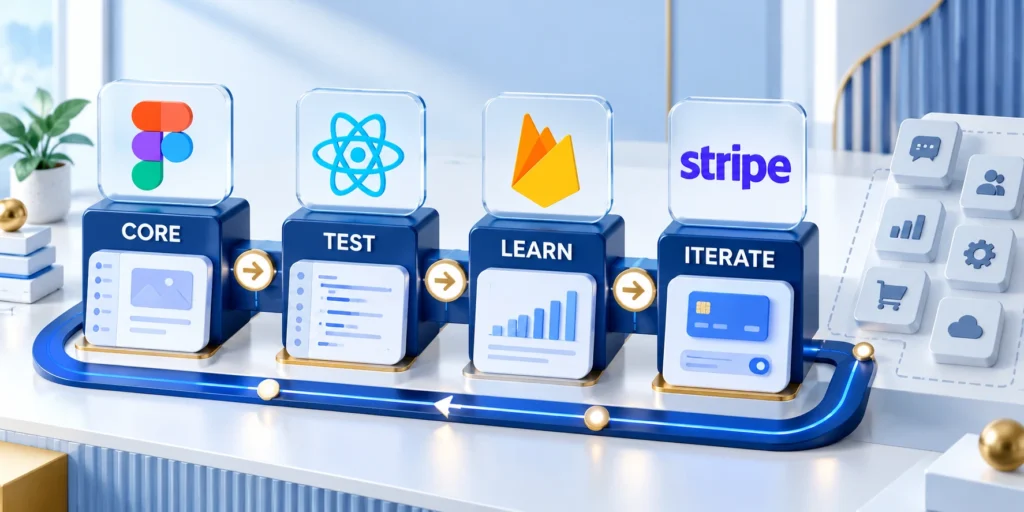
Translate the strongest problem evidence into one outcome a user can complete. The first MVP should test whether that outcome is valuable and feasible in a realistic context.
Draw the workflow from the user’s trigger to the outcome. Mark where existing work breaks down; that is usually more useful than starting with a feature list.
Draw the end-to-end workflow
For an invoice reconciliation concept, the workflow might be: import a file, identify mismatches, review a suggested correction, and export an approved result.
Everything else is a candidate for later: dashboards, multiple integrations, custom roles, advanced reporting, and automated approval chains.
Define success in user terms
Define a successful user outcome in plain language. “The user resolves a mismatch with less manual checking” is more useful than “the system has anomaly detection.”
Use these actions to define success in user terms:
- Include the minimum input needed to start the workflow.
- Show the user the result and a safe way to correct it.
- Keep human approval where errors could cause harm.
- State what the MVP deliberately will not do.
Connect the outcome to observable evidence. Completion, correction effort, and participant explanation reveal whether the workflow produces value rather than merely appearing polished.
Choose a test format
A clickable prototype tests comprehension and task flow. A concierge service tests outcome while a person performs steps manually. Limited software releases test real use with a small group.
Choose the least costly format that can produce credible evidence for the riskiest assumption. A landing page can test message response, but cannot prove users complete a complex workflow.
Protect participants and systems
When a manual test handles customer data, define access, retention, deletion, and disclosure before the first participant. Do not imply automation that the service does not provide.
For technical delivery, isolate the test environment from production systems. Use approved data, minimal permissions, logging, and a rollback path before inviting external users.
Keep scope evidence-led
A narrow test can feel complete if it handles one important job reliably. Scope is measured by uncertainty tested, not screen count in a demo.
Require evidence before adding scope. A requested capability belongs later unless it changes the current hypothesis, participant safety, or result credibility.
Turn MVP Assumptions Into Experiments
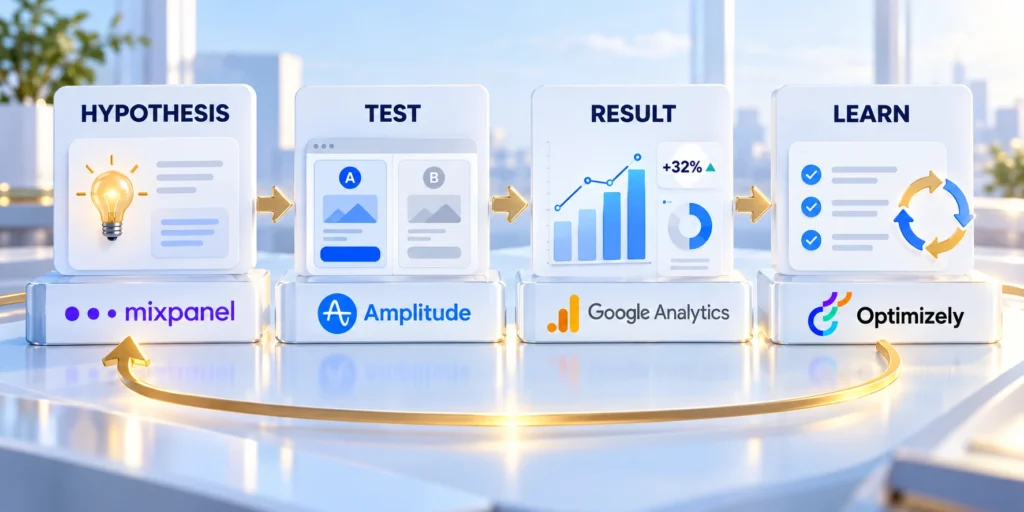
List what must be true for the idea to work, then rank assumptions by uncertainty and impact. Test the highest-risk assumption before committing to a larger build.
Separate desirability, feasibility, and viability questions. Users may want an outcome that is technically difficult, or easy to build but commercially unsustainable.
Write a falsifiable hypothesis
Use a statement that evidence can weaken: “Among finance managers at firms with 50–300 employees, at least four of six teams spend two weekly hours resolving this mismatch.”
These numbers are planning thresholds, not universal benchmarks. Choose them before the test and explain why they are sufficient for this decision.
Use these actions to write a falsifiable hypothesis:
- Assumption: what must be true?
- Method: what will participants do or show?
- Sample: who qualifies and how will you recruit them?
- Measure: what observable behavior counts?
- Threshold: what result supports, weakens, or leaves the idea uncertain?
- Decision: what will the team do for each outcome?
Run a bounded experiment
Use a short protocol so every participant receives the same prompt. Record completion, hesitation, workarounds, and explanations without coaching toward an expected answer.
A prototype test might ask a qualified user to complete a representative task. Observe whether they understand the next step and whether the result addresses their stated pain.
Compare approaches and watch drop-offs
A concierge test might deliver the result manually to a small group. Explain what is manual, avoid implying automation, and measure repeat use or concrete commitment.
Track refusals and early exits too. They may point to timing, trust, onboarding, or a low-priority problem; investigate before changing the product concept.
Avoid changing multiple variables
Change one major variable at a time when possible. If message, audience, workflow, and price all change together, results become hard to interpret.
When multiple changes are unavoidable, record each difference and reduce confidence in causal conclusions. Use the next experiment to isolate the strongest explanation.
Assign MVP Roles and Decision Ownership
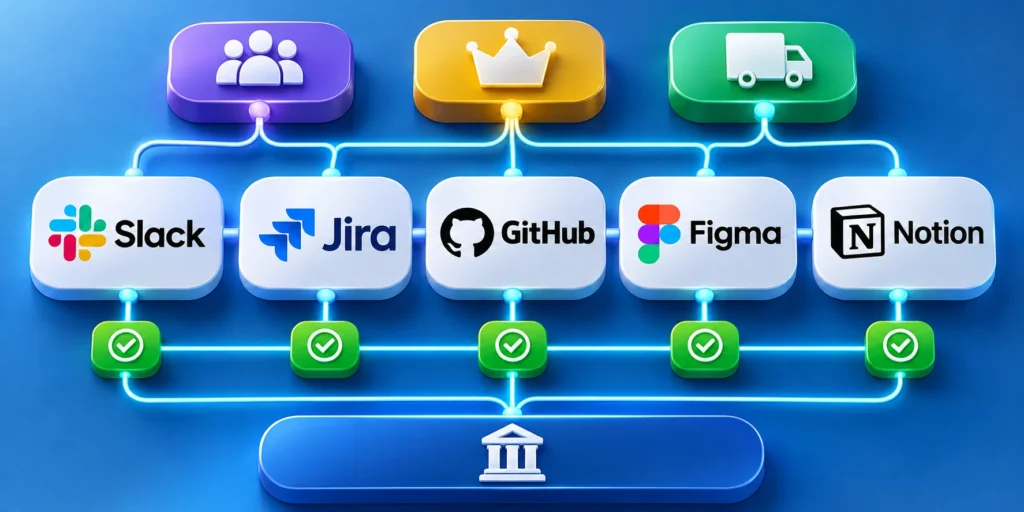
An MVP needs explicit ownership because learning, delivery, risk, and commercial decisions involve different expertise. One accountable decision owner must resolve conflicts without hiding dissent.
Define who approves the hypothesis, participant access, data handling, test release, evidence review, and next investment. Shared discussion should not create ambiguous authority.
Name decision rights before delivery
The product owner protects the learning objective and scope. Engineering owns technical feasibility and release safety, while research protects the protocol and evidence quality.
Security, legal, finance, or operations join when the experiment affects their risks. Their review should match exposure rather than becoming an automatic approval chain.
Assign these responsibilities before the first session:
- Own the hypothesis and final experiment decision.
- Approve participant recruitment and consent language.
- Control technical release, access, and rollback.
- Validate measures, observations, and evidence limitations.
- Authorize the next budget and delivery commitment.
Use a lightweight operating cadence
Schedule checkpoints around decisions, not status theater. Review readiness before recruitment, operational safety before release, and evidence only after the agreed test window closes.
Keep decisions in one accessible record with owner, date, evidence, limitation, and next checkpoint. Link detailed artifacts rather than duplicating notes across several tools.
| Checkpoint | Accountable owner | Required evidence |
|---|---|---|
| Hypothesis approval | Product owner | Problem and decision threshold |
| Test readiness | Research lead | Protocol and qualified sample |
| Release approval | Engineering lead | Access, rollback, and monitoring |
| Evidence review | Decision owner | Results, limits, and guardrails |
| Next commitment | Budget owner | Decision note and bounded scope |
Escalate evidence instead of opinions
When stakeholders disagree, identify the observation, assumption, or threshold behind the conflict. Commission a bounded test when additional evidence can materially change the decision.
Document unresolved disagreement when another test would not be proportional. The accountable owner then decides, records the rationale, and accepts the resulting risk.
Set MVP Success Metrics and Decision Rules

Pick one primary measure tied to the user outcome, then add guardrails for quality, safety, and effort. Page views or sign-ups alone do not prove value.
A useful measure describes an event, denominator, time window, and qualified user group. “Task completion within ten minutes among invited finance managers” is clearer than “engagement.”
Measure behavior and quality
Use these actions to measure behavior and quality:
- Activation: qualified users who reach the first meaningful outcome.
- Completion: users who finish the core task without intervention.
- Repeat value: users who return when the problem recurs.
- Quality: errors, corrections, support requests, or time to resolve.
- Guardrails: incidents, data exposure, failed handoffs, and staff effort.
Define instrumentation before the test. Agree on event names, sources, time windows, and who checks data quality; avoid collecting personal data the decision does not require.
For a small cohort, report raw counts beside percentages. Four completions out of six users communicates uncertainty honestly. It avoids a precise-looking conversion rate.
Use thresholds proportionally
Set thresholds that match the decision. A handful of sessions can guide a workflow revision; they cannot establish broad market size or long-term retention.
Use ranges when the sample is small and preserve raw counts. Tight precision can conceal uncertainty and encourage a larger commitment than evidence supports.
Precommit to decisions
Write down responses to three outcomes before reviewing results. This reduces the temptation to reinterpret every outcome as success after investing effort.
Key considerations for precommit to decisions include:
- If the threshold is met and guardrails pass, test the next riskiest assumption.
- If users value the outcome but struggle with the workflow, revise and retest.
- When urgency and behavior remain weak, change the segment or stop the idea.
Keep an experiment log with the date, hypothesis, sample, method, result, caveats, and decision owner. This helps distinguish learning from repeated opinion.
If a safety or privacy guardrail fails, pause the test and contain the issue first. A promising completion rate does not offset harm to participants or data.
Prioritize MVP Assumptions and Prepare the Test

Write assumptions as statements about a specific user, situation, and outcome. Avoid combining several uncertainties in one sentence; a single experiment should answer a focused question.
Rate each assumption by impact if false and uncertainty today. A high-impact assumption supported only by founder belief deserves a test before a lower-risk interface detail.
Prioritize assumptions using these practical decision signals:
- Impact on the core user outcome.
- Current strength of supporting evidence.
- Cost and time required to test.
- Risk created by learning too late.
Check adoption dependencies
Record dependencies too. A useful product may still fail if buyers cannot access required data, approve procurement, or introduce the tool into an existing workflow.
Internal link: the broader SaaS product lifecycle guide covers the later transition from validated MVP into delivery and scale.
Prepare the test session
Before inviting participants, name a facilitator, note taker, and decision owner. Share the hypothesis and protocol with the team, but avoid telling observers which result they are expected to see.
Prepare a realistic task that reflects the participant’s language. If the task depends on a made-up scenario, disclose that limitation and avoid interpreting hypothetical interest as actual adoption.
Rehearse the test
Test the setup with a colleague who is not building the feature. Confirm links, prototype state, consent language, timing, and the process for recording observations without personal data.
Decide how you will handle a participant who gets stuck. In usability work, observe first, then ask what they expected; intervention can hide a design problem.
Capture observations separately
After each session, capture observations separately from recommendations. Two reviewers can interpret the same behavior differently; preserving the evidence lets the team revisit assumptions.
Resolve differences during synthesis, not inside raw notes. Maintain a clear trail from observed behavior to interpretation, recommendation, and the final experiment decision.
Interpret MVP Evidence and Create the Experiment Brief
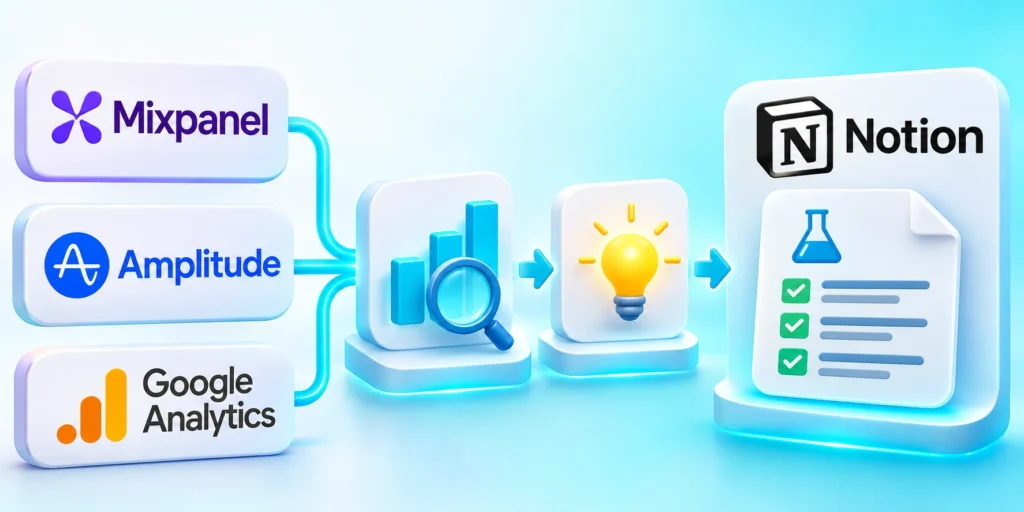
Evidence strength depends on the test and behavior. A completed prototype task says more about comprehension than a survey response. It says less about sustained use or willingness to pay.
Look for converging signals rather than one persuasive quote. Repeated workarounds, recent effort, stakeholder urgency, and follow-through may jointly support a stronger problem hypothesis.
Separate signal from market size
Do not convert a few interviews into a market-size claim. Use them to decide what to test next, then use broader research or operational data for population-level estimates.
When results conflict, preserve the disagreement. It may indicate distinct user segments, different levels of urgency, or a test that mixed several tasks.
Treat limitations explicitly
Negative evidence is useful when the method was credible. If recruiting or prototype quality was poor, record that limitation and rerun a better test before rejecting the problem.
State which claims the experiment cannot support. This protects later teams from treating directional learning as a validated forecast, segment conclusion, or scaling decision.
Create a one-page experiment brief
A brief keeps decisions visible across product, engineering, and commercial teams. It should fit on one page and link to the underlying notes rather than duplicate them.
Use these actions to create a one-page experiment brief:
- Problem and target user, using the participant’s actual context.
- Riskiest assumption and why it matters to the business.
- Experiment format, recruitment criteria, and dates.
- Primary behavioral measure plus safety and quality guardrails.
- Pre-agreed thresholds, caveats, and the accountable decision owner.
Share the brief before work begins. If stakeholders cannot agree on what evidence would change their minds, the experiment is not yet decision-ready.
Control MVP Cost and Run a Safe Pilot
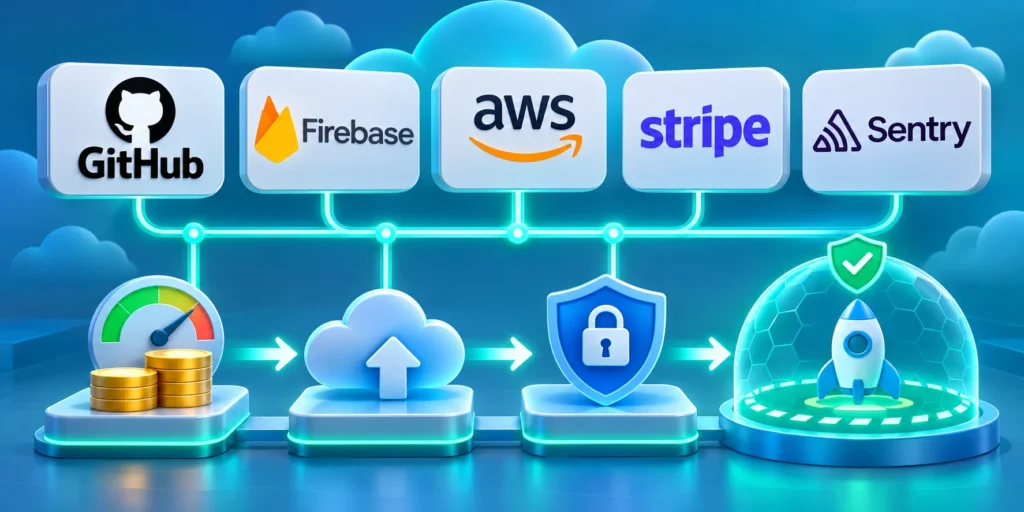
Make scope visible as a list of user outcomes, not an estimate of screens. For each item, ask whether removing it would prevent the experiment from testing its core assumption.
Keep the first deployment reversible. Prefer a limited cohort, feature flag, isolated environment, and explicit owner for disabling the test if it creates unexpected errors.
Protect cost and safety with these controls:
- Limit users, data, environments, and test duration.
- Define spending, support, and usage ceilings.
- Automate rollback for critical release failures.
- Name the owner who can stop access.
Defer unnecessary integration work
Before adding an integration, verify that it is necessary to test the outcome. A manual import may work for a short pilot. Disclose the limitation and protect data.
Estimate support and operations alongside development. If each participant needs extensive help, the test may reveal an onboarding cost that changes the business case.
End the experiment deliberately
At the end of a time-boxed sprint, review the evidence and decide whether to continue. Do not let an unfinished backlog silently turn an experiment into an open-ended product build.
Close access, preserve approved evidence, and reconcile outstanding support requests. A deliberate ending prevents temporary infrastructure and participant data from becoming unmanaged obligations.
Set a safe pilot boundary
Define participants, data limits, and what the team will do if a test fails. A pilot remains a real service. Users may rely on its output.
Use synthetic records whenever real data is unnecessary. If real information is required, limit collection, access, retention, and sharing to the smallest approved scope.
Be transparent about the pilot
Tell participants which parts are experimental and where support is available. Avoid exposing a prototype as production-ready when reliability or recovery has not been tested.
Document the exit path: disable access, export or delete test data as agreed, and notify affected users if the pilot changes or ends.
Make and Document the MVP Decision
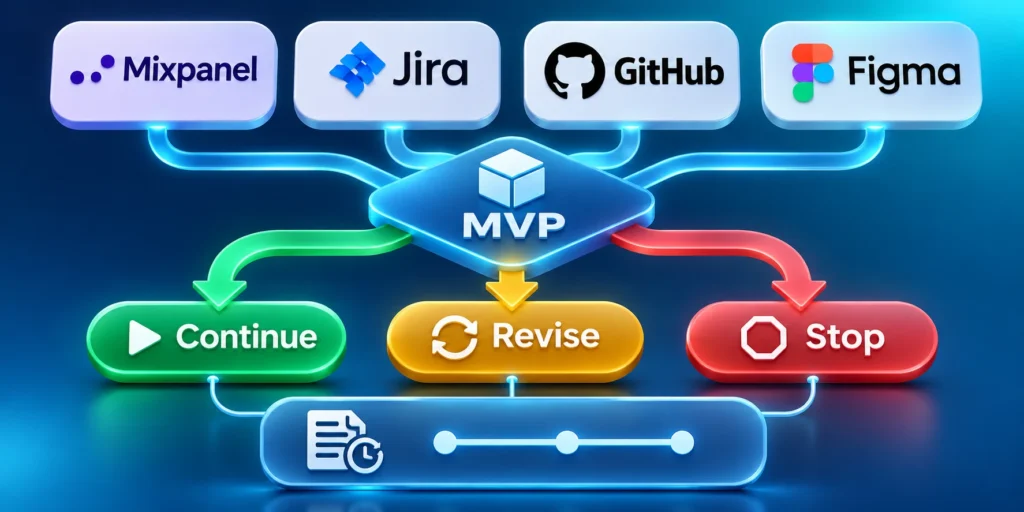
A positive signal supports the next test, not automatic scaling. Before expanding, check whether the outcome repeats across new participants. Confirm delivery remains safe and economical.
A weak signal can mean the problem is unimportant, the segment is wrong, or the experiment failed to represent reality. Identify the explanation supported by evidence.
Choose the next action using these evidence checks:
- Compare results with the pre-agreed threshold.
- Confirm safety and quality guardrails remained acceptable.
- Separate workflow friction from weak problem demand.
- Record limitations that reduce decision confidence.
- Fund only the next bounded learning commitment.
- Check whether the method represented real behavior.
- Identify evidence needed to resolve remaining uncertainty.
- Assign an owner and date for reassessment.
Choose the next evidence commitment
A continuation should target the most important uncertainty that remains. Define its owner, method, budget, participants, threshold, and completion date before expanding delivery scope.
A revision should explain what changes and why. A stop decision should close access, preserve authorized learning, release resources, and prevent the backlog from restarting silently.
Record why the decision changed
When the team changes its hypothesis, keep the previous version and reason for change. This prevents hindsight from making each iteration look inevitable.
Use a concise decision note: result, confidence, limitation, decision, owner, and next checkpoint. That record helps new stakeholders understand why a feature was built or removed.
FAQ
These answers address practical MVP planning, testing, scope, measurement, release, and stopping decisions for startup teams.
How long should an MVP take to build?
There is no universal timeline. Set a fixed discovery and test window based on user access, risk, and the smallest credible experiment. Split long delivery into decisions.
Does an MVP need to be software?
No. A prototype or manually delivered service can test demand when it represents the outcome honestly. Use software when real use or technical feasibility is uncertain.
How many users do we need for an MVP test?
Use enough qualified participants to observe patterns relevant to the decision. Small samples reveal usability issues or strong signals; they do not provide precise market estimates.
Should we launch an MVP publicly?
Only when experience, support, privacy, and risk controls are ready for that audience. A private pilot can limit exposure while the team learns from real workflows.
What if users request many features?
Record requests with their task and context. Prioritize repeated evidence tied to the target outcome; a feature wish alone does not establish urgency or adoption.
How should an MVP hypothesis be written?
State the target user, problem, proposed outcome, observable behavior, decision threshold, test window, and major limitation.
Should an MVP include payment?
Include payment when willingness to pay is the uncertainty and the offer, refund, support, and disclosure process are ready.
How is MVP scope protected?
Use a written decision, named owner, explicit exclusions, change criteria, and a backlog separate from the current experiment.
What should be measured during an MVP?
Measure the behavior tied to the hypothesis, delivery effort, failures, support burden, risks, and evidence quality.
When should an MVP be stopped?
Stop when evidence rejects the hypothesis, safety becomes unacceptable, access fails, or further testing cannot change the decision.
Conclusion

Treat the first result as a decision point, not a verdict on the company. Compare observed behavior with the threshold and note what the test could not establish.
Choose one next move: test the same assumption, revise a workflow, change the target segment, or stop. State the evidence that supports the choice.
Turn learning into the next cycle
Preserve useful artifacts: consented notes, experiment protocol, anonymized event summaries, limitations, and the decision log. Restrict access and delete data when retention is no longer needed.
If the signal is positive, test a new risk instead of expanding scope automatically. Pricing, repeated use, implementation effort, and support burden may remain unknown.
Compare segment-level results
If the signal is mixed, inspect differences between participants. A workflow may serve one role or situation well while failing another; update the segment hypothesis.
If the signal is weak, reduce sunk-cost reasoning. Stop or redirect when evidence does not support the problem, buyer access, or a safe delivery path.
Document the next commitment
The goal is a sequence of small, honest decisions. Each cycle should reduce a named uncertainty enough to justify the next investment.
Record the commitment in language that product, engineering, finance, and commercial owners can interpret consistently before new work begins.
Close the MVP cycle with these final actions:
- Preserve evidence and approved decision records.
- Name the next uncertainty and accountable owner.
- Bound the next scope, budget, and checkpoint.
- Close access and data no longer required.







Leave a Reply