

Define the Revenue Path for a B2B Mobile App

B2B mobile app monetization can come directly from the product, extend a larger software contract, or improve a service sold through another channel.
Choose the revenue path from the business outcome and buyer, not from the fact that an app has been built.
Separate the user, buyer, and beneficiary
The app user may be a technician, salesperson, dispatcher, or customer. The budget owner may be an operations director, IT leader, or procurement team.
Map these buying and adoption roles:
- User: completes the task in the field or at a customer site.
- Champion: explains the operational benefit to decision makers.
- Economic buyer: approves the budget and contract.
- Administrator: manages access, rollout, and support.
Map who experiences value, approves spending, administers accounts, and can stop adoption. A pricing model should make sense to each role.
Decide whether the app is the product or the channel
A standalone mobile product needs a clear reason to buy and renew. An app bundled with a broader platform can make an existing contract more valuable.
For a field-service platform, mobile work orders may belong in the base subscription. Advanced offline sync or multi-site controls might justify a higher tier.
Test whether the app needs a separate budget
Ask whether customers see the mobile workflow as a distinct purchase or part of an existing platform. Interview current buyers and frontline users.
If the app replaces paper or reduces site visits, estimate the time or cost change using the customer’s baseline. Do not promise assumed savings.
Record the business case before choosing a price
Write down which outcome the app owns, how the customer receives it, and which existing offer could already include it.
For a warehouse app, measure picking errors and time per order before rollout. Compare the same measures after adoption, separating app effects from staffing or process changes.
Compare the result with a baseline
Test compare the result with a baseline with representative customers, workflows, exceptions, and operating conditions before expanding the decision.
This evidence helps distinguish a product customers will fund from a useful feature that belongs inside a broader contract.
Choose the Meter Customers Pay For

A pricing meter defines what changes the customer’s bill: users, locations, usage, transactions, or a fixed organizational license.
Compare these pricing meter constraints:
- Buyer predictability
- Delivered value
- Variable cost
- Measurement quality
The meter should reflect value customers understand and costs the provider can forecast. A mismatch creates friction for both sides.
Compare common B2B meters
Define the owner, evidence, decision boundary, and expected result for compare common b2b meters in B2B mobile app monetization.
Test compare common b2b meters with representative customers, workflows, exceptions, and operating conditions before expanding the decision.
| Meter | Works well when | Watch for |
|---|---|---|
| Per seat | Value grows with active employee access | Shared or seasonal users can feel unfair |
| Per organization or site | Teams need predictable location access | Large site-size differences can distort value |
| Usage based | Value and delivery cost rise with activity | Unpredictable bills can slow adoption |
| Per transaction | The app supports repeatable exchanges | Revenue may swing with customer volume |
Check that the meter is controllable
Confirm the product can count the meter reliably and show customers how it is measured.
Define which events count, how duplicates are handled, when usage is finalized, and how customers dispute incorrect records.
Set predictable usage guardrails
If customers cannot predict or influence the bill, consider alerts, a spending cap, or an included allowance before overages.
Metered billing can fit variable workloads, while seats or site licenses offer steadier budgets. See Stripe’s metered billing documentation for billing mechanics.
Make usage evidence auditable
For example, a scheduling app may charge by completed job. Define whether canceled jobs, retries, and test records count before generating an invoice.
Show administrators a usage report that reconciles to the bill. A clear meter supports internal budget approvals and renewal conversations.
Version the counting rules
Test version the counting rules with representative customers, workflows, exceptions, and operating conditions before expanding the decision.
Keep event definitions versioned. If a counting rule changes, state its effective date and let customers compare old and new totals before the next invoice.
Package the Offer Around Buyer Workflows

Packaging groups app capabilities into offers a buyer can evaluate, procure, deploy, and renew.
Build packages around workflow outcomes and administration needs, rather than hiding arbitrary switches in a long feature checklist.
Separate core use from advanced administration
A base package might include task lists, customer records, and standard reporting. Higher tiers could add multi-site controls, audit history, or advanced integrations.
Package tiers around these workflow boundaries:
- Base: complete the primary mobile workflow.
- Team: coordinate supervisors, locations, and reporting.
- Enterprise: manage identity, governance, integrations, and negotiated support.
Only separate a capability when it supports a meaningful buyer choice. Splitting routine actions across tiers can make an app harder to explain.
Make included limits visible
State included seats, storage, locations, or monthly activity beside the plan. Explain what happens when customers approach a limit.
Offer a clear path to add capacity without requiring a contract change for every small fluctuation.
Match package boundaries to buying roles
For enterprise buyers, specify identity options, data handling, support hours, onboarding responsibilities, and renewal terms in sales materials and agreements.
Decide whether to support self-service purchase, a sales-assisted contract, or both. Store distribution and billing requirements may influence the choice.
Keep sales and procurement aligned
A team lead may compare per-seat costs, while procurement reviews annual commitment and supplier terms. Give both roles a consistent offer summary.
Document approved contract exceptions and their owners. Avoid a one-off package the sales team cannot support at renewal.
Reconcile the commercial offer
Test reconcile the commercial offer with representative customers, workflows, exceptions, and operating conditions before expanding the decision.
Before issuing a quote, reconcile the proposal, order form, in-app entitlements, and billing configuration. A mismatch can create disputes even when the headline price is clear.
Set clear pilot conversion terms
Test set clear pilot conversion terms with representative customers, workflows, exceptions, and operating conditions before expanding the decision.
Define pilot dates, capacity, and conversion terms. Include entitlement and billing checks in the app development scope. This prevents a temporary concession from silently becoming the permanent price.
Calculate a Price That Covers Delivery Cost

A price that attracts a buyer can still lose money if delivery, support, and account-specific work are left out.
Estimate recurring revenue and contribution per customer using the same billing interval. Treat figures as assumptions until customer evidence replaces them.
Build an illustrative monthly model
Suppose a team license costs $600 monthly and includes 40 seats. Support and infrastructure are estimated at $320, with payment and account costs at $310.
That leaves $570 before product development, sales, tax, and fixed overhead. This example is for modeling, not a market benchmark.
Calculate the contribution consistently
Test calculate the contribution consistently with representative customers, workflows, exceptions, and operating conditions before expanding the decision.
monthly contribution = recurring revenue - variable delivery costs
contribution margin = monthly contribution / recurring revenue
Under these assumptions, contribution equals 95 percent of the license price. Recheck it with actual support and hosting usage after a pilot.
Stress-test small and high-usage accounts
Model a small account that uses fewer seats but still requires onboarding and support. This shows whether the minimum contract covers fixed account effort.
Then model a high-usage account. Check whether storage, notifications, data processing, and support grow faster than the related revenue.
Separate implementation from recurring economics
Separate implementation revenue from recurring revenue. A large setup fee can hide weak renewal economics if customers never reach ongoing value.
Validate these pricing assumptions with evidence:
- Use actual usage distributions when available.
- Keep one-time services visible as a separate line.
- Revisit assumptions when support patterns change.
Track setup hours and recurring service costs separately by customer segment. If integrations require custom work, price or scope that work explicitly instead of burying it in subscription margin.
Include onboarding and account-specific work
Measure implementation hours separately from recurring service. Custom migration, configuration, or training can make a subscription understate delivery effort.
Model these delivery costs before pricing:
- Estimate hosting, storage, messaging, and third-party service costs.
- Count support and onboarding hours by customer segment.
- Check applicable payment or marketplace terms before using fee assumptions.
- Model low, expected, and high activity levels.
- Set a margin floor and revisit it with real usage data.
Decide whether onboarding is included, charged once, or handled by a partner. Put the scope and acceptance conditions in writing.
For broader product pricing, compare customer value, recurring costs, and operations in this SaaS product development lifecycle guide.
Handle Contracts, Procurement, and App Store Rules

A B2B app may come from a public store while its commercial relationship is governed by an organizational contract.
Keep the access flow, billing system, and contract language consistent about who pays and what the customer receives.
Design an enterprise purchase path
Procurement may require purchase orders, security documents, service terms, invoicing, and an approved vendor record before deployment.
Document these commercial agreement terms:
- Specify the legal customer and authorized user groups.
- Define billing interval, renewal, cancellation, and overage treatment.
- Describe service availability and support escalation.
- Set account provisioning and employee-offboarding steps.
- Reconcile usage records with invoice line items.
Prepare a sales handoff that captures seats, locations, renewal date, service owner, and negotiated usage allowance.
Classify each in-app payment carefully
Marketplace payment rules depend on the app, purchase, storefront, and current program terms. Do not assume every B2B subscription is exempt.
Apple permits certain enterprise apps sold directly to organizations to provide employees access to previously purchased subscriptions. Consumer or single-user sales differ.
Check each store and transaction type
Test check each store and transaction type with representative customers, workflows, exceptions, and operating conditions before expanding the decision.
Google Play generally requires its billing system for covered digital purchases in Play-distributed apps, while its policy lists exclusions and programs.
Confirm the intended storefront path
Before launch, classify the transaction and check the current Apple App Review Guidelines and Google Play payments policy for each storefront.
Store rules change and exceptions are narrow. Ask counsel or an experienced distribution specialist to review ambiguous cases before finalizing a purchase flow.
Measure Mobile App Revenue Quality
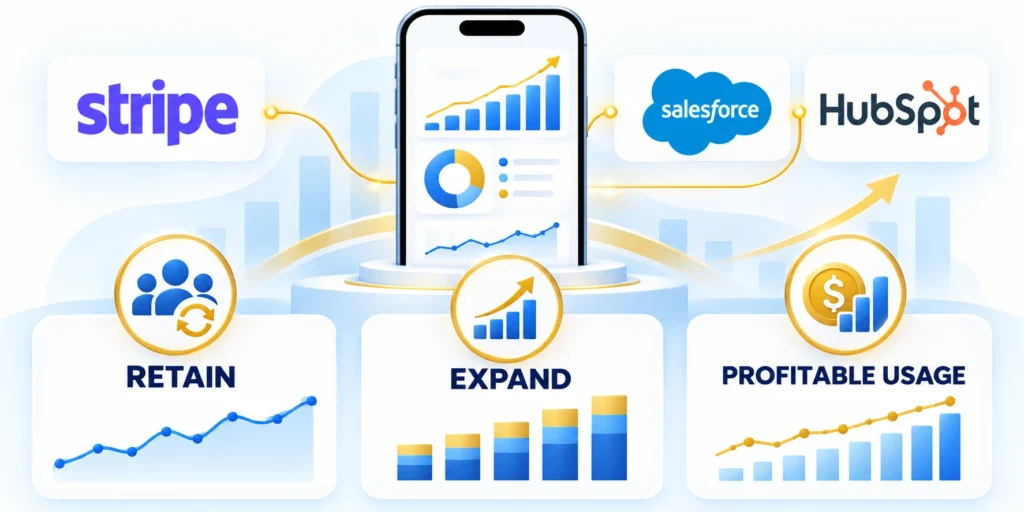
Downloads show distribution, not commercial success. Measure whether an account reaches value, keeps using the workflow, and renews at a sustainable cost.
Track these revenue quality signals:
- Activation
- Paid adoption
- Renewal
- Expansion
- Contribution
Define each metric with a time window and owner. Use account cohorts so one large customer does not hide weak adoption elsewhere.
Track a small set of revenue signals
Define the owner, evidence, decision boundary, and expected result for track a small set of revenue signals in B2B mobile app monetization.
Test track a small set of revenue signals with representative customers, workflows, exceptions, and operating conditions before expanding the decision.
| Signal | Practical definition | Decision supported |
|---|---|---|
| Activation | Account completes a meaningful first workflow | Whether onboarding works |
| Paid adoption | Paid seats or sites actively use the app | Whether the meter matches use |
| Renewal | Contract renews at the expected term | Whether delivered value lasts |
| Expansion | Account adds seats, sites, or a tier | Whether customer value can grow |
| Contribution | Revenue less variable service and support costs | Whether growth is sustainable |
Connect product activity to the contract
Assign each account a stable identifier across product analytics, support, and billing. Minimize personal data and document who can access each system.
Compare active usage with purchased quantities and renewal dates. Investigate mismatches with the account team instead of treating every idle seat as churn.
Review revenue quality with service effort
Review refunds, support burden, and failed payment or invoice events with revenue. A rising top line can hide poor experience or high service costs.
Compare renewal and expansion by cohort, not only as a company-wide average. A few large accounts can mask weak retention among smaller customers.
Test the Model Before Scaling

Test the pricing hypothesis with representative organizations before expanding sales or engineering commitments.
Confirm these pilot decision conditions:
- Representative accounts
- Written hypothesis
- Measured baseline
- Stop criteria
A pilot should answer a named question, such as whether a per-site offer is easier to buy than per-seat pricing.
Run a bounded commercial pilot
Define the owner, evidence, decision boundary, and expected result for run a bounded commercial pilot in B2B mobile app monetization.
Run the pricing pilot through these steps:
- Choose accounts resembling the intended buyer segment.
- Write the pricing hypothesis and expected workflow outcome.
- Define included users, locations, usage, and support scope.
- Record the baseline and how results will be measured.
- Review adoption, service cost, objections, and renewal intent together.
- Set a revise or stop decision at the pilot’s end.
Test run a bounded commercial pilot with representative customers, workflows, exceptions, and operating conditions before expanding the decision.
Ask buyers about decisions, not hypothetical intent
Ask what budget paid for the current process, who approves a replacement, and what evidence would justify renewal.
Show two or three understandable packages and ask buyers to explain the tradeoffs. Their questions can reveal unclear meters or missing terms.
Set a decision rule for the pilot
Test one change at a time. When price, packaging, onboarding, and product all change, the pilot cannot identify what affected adoption.
If buyers cannot connect the app to a measurable outcome, revisit workflow and positioning before cutting the price.
Review the evidence at the decision point
Test review the evidence at the decision point with representative customers, workflows, exceptions, and operating conditions before expanding the decision.
Agree in advance what evidence triggers a price revision, broader rollout, or stop. Include adoption, contribution, support load, and renewal intent rather than downloads alone.
Design Trials, Discounts, and Expansion Rules
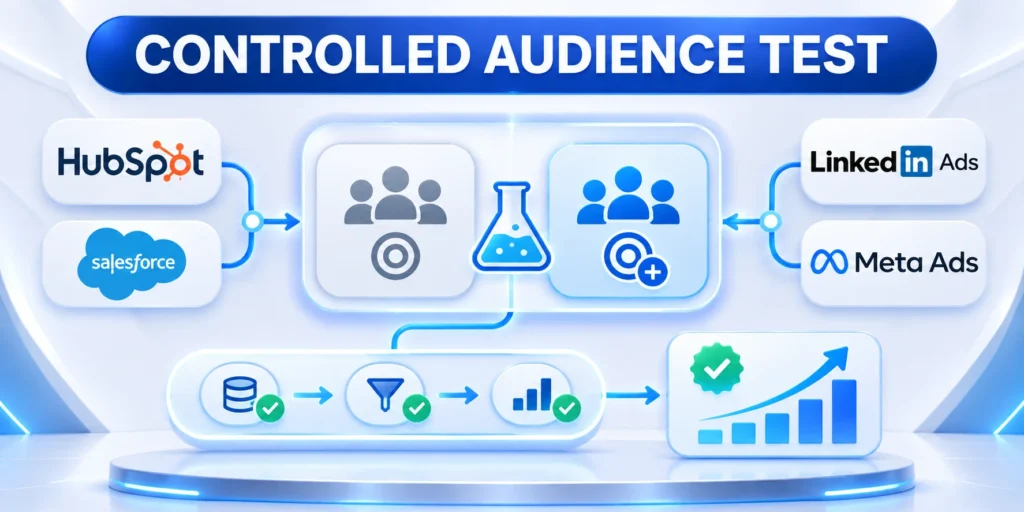
Trials should prove a paid workflow with representative users, data, integrations, and support conditions. Free access without a decision plan can produce activity that does not predict purchase.
Define the trial owner, duration, included scope, success evidence, conversion decision, and data handling. Align sales, product, finance, support, and the customer before access begins.
Bound commercial exceptions
Discounts should have a business reason, approver, expiration, and effect on renewal. Avoid permanent exceptions that hide an unsustainable list price or service cost.
Control these commercial exceptions carefully:
- Trial duration
- Included scope
- Discount owner
- Expiration date
- Renewal basis
Record which concessions affect implementation, support, usage, or contract terms. A price reduction should not silently expand service obligations.
Plan expansion from verified value
Connect additional seats, sites, transactions, or capabilities to outcomes the customer already measures. Expansion should follow adoption evidence rather than calendar pressure.
Give customers predictable notice of thresholds and pricing changes. Preserve usage records and an escalation path for disputed measurements or unexpected overages.
Define a conversion decision before launch
Specify who evaluates trial evidence, when the review occurs, and which commercial options follow success, partial success, or failure. Avoid an open-ended free extension.
Use the customer’s actual procurement and security steps in the timeline. A successful product test can still stall when ownership, contracting, or implementation remains unresolved.
Measure adoption without distorting behavior
Track completion of the paid workflow, active users, usage distribution, support demand, and stakeholder feedback. Vanity logins do not prove durable business value.
Do not remove realistic limits solely to improve trial activity. The trial should reveal how the proposed plan behaves under expected commercial conditions.
Govern Pricing Changes and Customer Migration

Pricing changes affect contracts, billing systems, app stores, sales materials, support, forecasts, and customer trust. Treat them as coordinated releases rather than a website edit.
Inventory customers by plan, contract, renewal date, negotiated terms, usage, and service scope. Define who remains grandfathered, who migrates, and which evidence supports each decision.
Version the commercial model
Keep plan names, meters, included usage, limits, fees, and service commitments aligned across every customer-facing and operational system.
Reconcile these critical pricing records:
- Contract terms
- Billing catalog
- App store offer
- Sales materials
- Support entitlement
Test invoices, entitlements, renewals, upgrades, downgrades, cancellations, and refunds before changing production. A correct price display does not prove correct billing behavior.
Communicate migration with context
Explain what changes, why it changes, when it applies, and which action the customer must take. Provide a named path for questions and contractual exceptions.
Monitor churn, expansion, support volume, billing disputes, and margin after migration. Correct operational failures quickly and separate them from normal price sensitivity.
Rehearse billing and entitlement migration
Create test customers representing standard, discounted, grandfathered, annual, monthly, marketplace, and enterprise contracts. Verify each migration outcome against approved commercial rules.
Reconcile quantities, taxes, credits, overages, renewal dates, and access before sending invoices. Preserve a rollback or correction path for material billing errors.
Protect customer trust during correction
Notify affected customers promptly when pricing, billing, or entitlement behavior is wrong. Explain the correction, timeline, financial effect, and contact path without minimizing impact.
Analyze the failure across systems and ownership boundaries. Prevent recurrence through tests, reconciliation, release controls, and clearer approval evidence instead of a one-time manual adjustment.
Conclusion

A sustainable B2B mobile app price connects a measurable customer workflow to a meter buyers understand and the provider can operate profitably.
Start with buyer roles, contract structure, delivery costs, adoption behavior, and renewal evidence. Do not copy consumer app pricing into an enterprise buying process.
Choose a meter customers can predict
Evaluate seats, sites, usage, transactions, or hybrid meters against delivered value, cost behavior, measurement reliability, procurement expectations, and the risk of discouraging adoption.
Use these final pricing checks:
- Clear value unit
- Predictable invoice
- Measured delivery cost
- Defined service scope
- Owned renewal process
Package capabilities around meaningful workflows and governance needs. Artificial feature splits make tiers harder to explain and can increase support without improving customer choice.
Prove margin and adoption together
Measure activation, paid use, renewal intent, expansion, service hours, infrastructure, partner fees, and support. Revenue without contribution evidence can reward growth that increases losses.
Use representative pilots with written assumptions and stop criteria. Record objections, concessions, implementation effort, and usage distribution before expanding the model.
Treat pricing as an operating system
Keep contracts, billing, entitlements, app store offers, sales materials, and support aligned. Version changes and test the full customer lifecycle before migration.
The strongest model remains understandable during purchase, use, renewal, and change. It earns trust by making value, limits, service, and commercial consequences explicit across every critical customer touchpoint.
FAQ
These answers clarify pricing meters, app store rules, enterprise contracts, trials, discounts, revenue quality, and the evidence required before scaling a B2B mobile app.
What is a common monetization model for a B2B mobile app?
Many B2B apps use a recurring organization, site, or seat license. Choose a meter that reflects customer value and can be counted reliably.
Should a B2B mobile app be free to download?
It can be free to download while access is provided through an organizational contract. Make access, purchase, and billing clear before release.
Is per-seat pricing always the best choice?
No. Seats fit products whose value scales with users, but site, usage, or transaction pricing may fit other workflows better.
How should I set the first price?
Estimate variable delivery costs, test buyer value and procurement constraints, then validate the model with a bounded pilot and real usage.
Can an enterprise app bill outside the app stores?
It depends on the app, purchase, storefront, and current platform rules. Review applicable Apple and Google policies before implementation.
For the broader framework, read Enterprise Mobile App Development: Cross-Platform Strategy.
Should a B2B mobile app charge per user?
Only when seats reflect customer value and administration; compare organization, usage, transaction, and hybrid models with evidence.
Can web and mobile purchases use different prices?
They can, but entitlement, disclosure, contract, tax, marketplace, support, and customer expectations must remain coherent.
How are free trials evaluated?
Measure qualified activation, retained use, support cost, conversion, payment success, expansion, and churn by comparable cohort.
What should happen after a failed payment?
Follow documented retries, notices, grace periods, access rules, recovery, support, and data-retention obligations across every channel.
When should a pricing plan be retired?
Retire it after reviewing contracts, entitlements, migrations, notices, billing, support, data, and outcomes for affected customers.






Leave a Reply